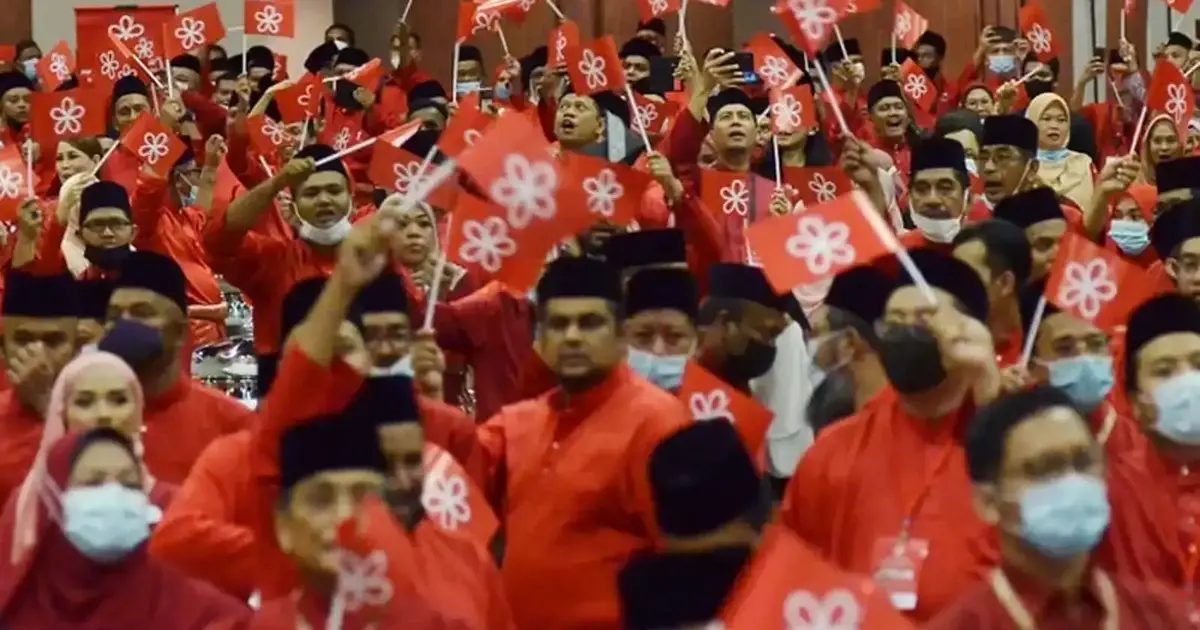
PAS treasurer Iskandar Abdul Samad has intensified scrutiny of Bersatu's role within Perikatan Nasional, contending that the party faces mounting obstacles to sustaining its presence as an effective coalition partner. The statement signals emerging fissures within PN's leadership and reflects broader tensions that have been building beneath the surface of Malaysia's opposition alliance.
The comments represent a notable escalation in the ongoing debate about Bersatu's trajectory since its split from Pakatan Harapan and subsequent rebranding as a core component of PN. As the party founded by former Prime Minister Muhyiddin Yassin grapples with dwindling parliamentary representation and organisational challenges, questions about its long-term viability within the wider coalition have become increasingly pointed. Iskandar's remarks underscore how internal discussions within PN now centre not merely on tactical cooperation, but on fundamental questions of membership sustainability.
Bersatu's difficulties stem from multiple overlapping pressures. The party has experienced significant erosion of its parliamentary strength following defections and electoral setbacks. More critically, its ideological positioning has come under strain, with the party attempting to maintain relevance across diverse constituencies while simultaneously managing expectations within a coalition that increasingly resembles a marriage of convenience rather than a unified political force. These structural weaknesses have prompted senior figures across PN to engage in frank reassessments of the coalition's composition.
The Malaysian political landscape has shifted substantially since Perikatan Nasional's formation. The coalition originally emerged as a counterweight to Pakatan Harapan, but its trajectory has proven more complicated than early proponents envisioned. With PAS consolidating its influence within PN and leveraging control of several state governments, other coalition members face pressure to justify their continuing participation. For Bersatu, this dynamic has become particularly acute, as the party lacks comparable organisational machinery or territorial strongholds that would guarantee its political survival independent of coalition dynamics.
Iskandar Abdul Samad's intervention reflects PAS's confidence in its own positioning within PN. As the party with the most extensive grassroots network and the strongest electoral performance in recent contests, PAS has emerged as the coalition's dominant player. This shift has implications extending beyond internal party dynamics, affecting how Malaysian voters perceive PN's future direction and coherence. The suggestion that Bersatu's position has become untenable naturally raises questions about what PAS envisions as the coalition's optimal composition going forward.
The timing of these comments carries particular significance given Malaysia's evolving political realignment. With federal politics characterised by unprecedented fluidity and shifting coalition mathematics, concerns about partner viability touch on questions of stability and governance capacity. A weakened or departing Bersatu could theoretically reshape parliamentary arithmetic in unexpected ways, depending on how individual MPs navigate potential party transitions. This uncertainty partly explains why public commentary about PN's internal health has acquired such heightened importance.
Bersatu's leadership has historically positioned the party as a bridge-builder capable of attracting independent-minded politicians and voters across traditional communal boundaries. However, this positioning has proven difficult to sustain when coalition partners openly question one's continued utility. The party's attempts to project relevance while confronting operational challenges create a precarious balancing act that becomes increasingly difficult with each critical assessment from within PN's ranks.
For Malaysian politics more broadly, the Bersatu situation illuminates how coalition politics operates in a context of weak party institutions and personalised leadership. When parties lack deep organisational roots or compelling ideological moorings, their coalition contributions become essentially transactional. The moment transactional value diminishes, questions about continued membership naturally arise. Iskandar's comments suggest that PAS leadership has calculated that Bersatu's transactional value has eroded significantly.
The implications extend to voters and regional observers monitoring PN's stability. Political coalitions derive legitimacy partly from demonstrable internal consensus and functional cooperation. When prominent coalition figures begin publicly questioning a member's viability, questions naturally arise about the coalition's broader coherence and durability. For Malaysian voters evaluating whether PN represents a credible alternative governing force, such internal scepticism carries weight in shaping electoral calculations.
Looking forward, Bersatu faces a strategic crossroads. The party could attempt to reinvigorate its political base and demonstrate renewed relevance to coalition partners, potentially through organisational renewal or repositioning. Alternatively, continued deterioration in its coalition standing could force consideration of alternatives, whether involving rapprochement with other political forces or transformation into a different type of political vehicle entirely. How Bersatu responds to pressure from within PN will substantially influence both its own future and the trajectory of Malaysian opposition politics.