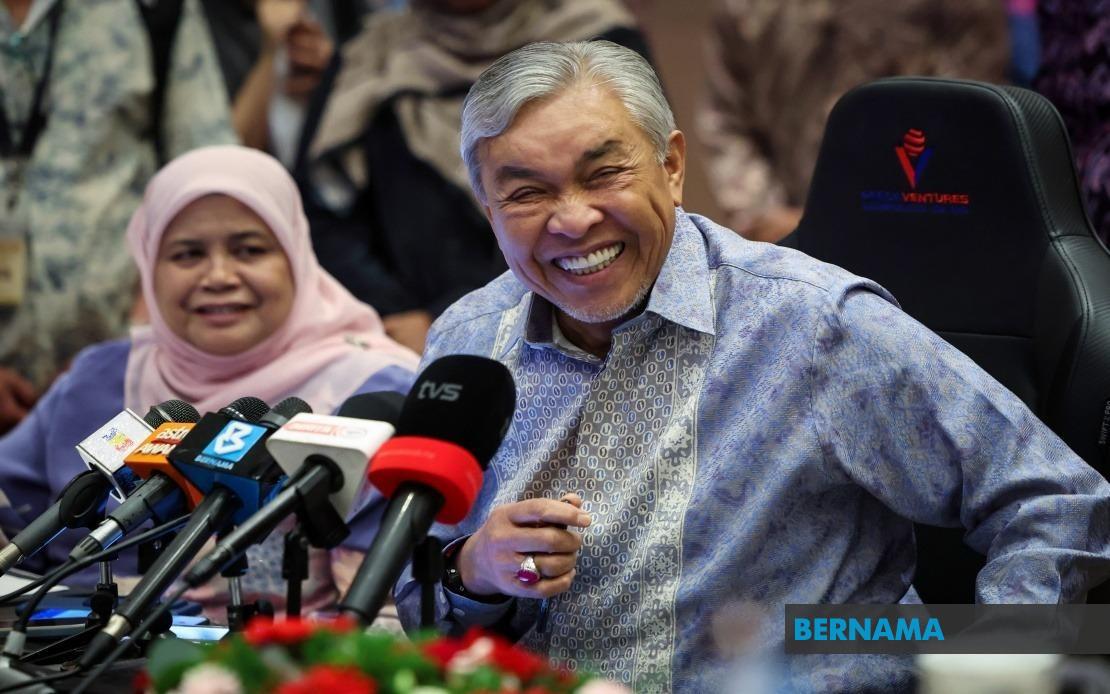
Barisan Nasional has issued an unequivocal statement of commitment to the Unity Government framework, with Deputy Prime Minister Datuk Seri Dr Ahmad Zahid Hamidi dismissing persistent rumours of political manoeuvring that might threaten Prime Minister Datuk Seri Anwar Ibrahim's administration. Speaking in George Town on July 23, Ahmad Zahid stated that BN's dedication to the coalition remains resolute and aligned with the Yang di-Pertuan Agong's initial decree that established the Unity Government following the 2022 General Election.
The stability afforded by the Unity Government represents a significant departure from Malaysia's earlier political volatility. The coalition, which brought together traditionally rival parties under a common governance platform, was regarded as a stabilizing force after years of governmental uncertainty. Ahmad Zahid's reaffirmation carries weight given that BN comprises UMNO, MCA, and MIC—historically dominant forces in Malaysian politics. His categorical rejection of potential disruption scenarios, specifically naming the "Bangkok Move" and "Dubai Move" references to alleged coups engineered from abroad, underscores the seriousness with which BN leadership treats the commitment.
The context of Ahmad Zahid's statement becomes clearer when examining ongoing tensions within Malaysia's political landscape. Speculation regarding BN's loyalty to the Unity Government has periodically surfaced, particularly when the coalition contests state elections against components of Pakatan Harapan or navigates internal disagreements. These moments of friction have historically prompted market watchers and political analysts to assess the stability of the broader coalition framework. By explicitly stating that BN's commitment extends through the full parliamentary term, Ahmad Zahid provides reassurance to investors, international observers, and ordinary Malaysians invested in sustained institutional stability.
While articulating this broader commitment, Ahmad Zahid simultaneously addressed operational challenges facing BN at the grassroots level. The shutdown of a BN polling district centre in Klawang, located within Negeri Sembilan, had become a point of tension during the state election campaign. The facility's operators reportedly suspended activities in protest against BN's decision not to field a candidate for that particular state seat, creating a visible disconnect between party leadership and party machinery that risked undermining organizational cohesion. Ahmad Zahid indicated that discussions with Negeri Sembilan UMNO chief Datuk Seri Jalaluddin Alias were underway and that the situation would be resolved within the nine-day window before polling commenced.
The Klawang contest itself illustrates the complex dynamics shaping Negeri Sembilan's election. The state seat features a three-way competition between Pakatan Harapan's Bakri Sawir, Perikatan Nasional's Danni Rais, and Bersatu's Muhammad Adib Musa. This fragmentation reflects broader trends in Malaysian electoral politics, where single-seat contests increasingly involve multiple challengers rather than the traditional two-party contests that characterized earlier eras. BN's decision to refrain from fielding a candidate in Klawang presumably reflects strategic calculations about resource allocation and winnable seats, though the choice generated frustration among local party activists.
Beyond Negeri Sembilan's immediate challenges, Ahmad Zahid addressed speculation regarding potential realignment with Perikatan Nasional through a proposed "Perikatan Barisan Nasional" alliance. He clarified that no formal negotiations had transpired between the two coalitions despite occasional references in campaign rhetoric. This distinction between informal rhetoric and substantive negotiation matters considerably; while politicians frequently deploy aspirational language during campaigning, official dialogue remains absent. Ahmad Zahid's emphasis that any such arrangement would require careful deliberation by relevant party bodies signals that BN is not contemplating dramatic restructuring despite pressure from various quarters.
The positioning of BN and PKR in the Negeri Sembilan campaign demonstrates the Unity Government's practical workings at state level. Despite their national coalition partnership, the parties campaign competitively for state seats, reflecting the hybrid nature of Malaysia's federal system. This simultaneous cooperation and competition requires sophisticated political management. Ahmad Zahid's light-hearted exchange with Prime Minister Anwar Ibrahim, involving traditional pantun verses, symbolizes the maintenance of personal cordiality even as the parties pursue divergent electoral interests in state contests. Such gestures, while seemingly trivial, serve important functions in sustaining relationships under stress.
The broader implications of BN's commitment statement extend beyond immediate parliamentary mechanics. Political stability remains central to Malaysia's economic trajectory and international standing. Domestic and foreign investors require predictability regarding governance frameworks and executive continuity. Repeated cycles of coalition instability harm capital formation, deter foreign direct investment, and undermine confidence in institutional governance. By affirming BN's commitment through the parliamentary term, Ahmad Zahid contributes to the narrative of institutional maturation and reduced political turbulence that characterizes post-2022 Malaysia.
Moreover, BN's positioning within the broader Southeast Asian context deserves consideration. Regional neighbors including Indonesia, Thailand, and the Philippines have experienced repeated democratic disruptions, military interventions, and constitutional crises. Malaysia's maintenance of civilian democratic governance, despite periodic turbulence, distinguishes it within the region. The Unity Government framework, though imperfect and requiring constant calibration, represents an institutional innovation aimed at preventing the winner-take-all politics that historically preceded democratic backsliding in neighboring countries.
The articulation of unwavering commitment also addresses a segment of BN's constituency concerned about party relevance and influence within the broader coalition structure. UMNO members in particular have grappled with reduced executive authority compared to the party's pre-2018 dominance. Reaffirming BN's role as a stabilizing force within government provides narratives of continued significance and constructive participation. Party activists derive satisfaction from narratives emphasizing responsibility and steady influence rather than tales of marginalization or loss.
Looking forward, Ahmad Zahid's statements establish parameters for evaluating BN's fidelity to its commitments. The fifteen parliamentary term will provide extended opportunity to assess whether stated principles withstand inevitable pressures, disagreements, and electoral disappointments. Negeri Sembilan's state election serves as an early test case, revealing whether BN can manage competitive campaigning while maintaining unity government cohesion. Future developments in parliamentary votes, budgetary allocations, and policy priorities will offer additional evidence regarding the durability of these declarations.
The sustainability of the Unity Government ultimately depends on continuous affirmation from constituent parties and willingness to accommodate competing interests within a framework prioritizing stability. Ahmad Zahid's emphatic statements represent one such affirmation, establishing expectations that BN will not pursue destabilizing manoeuvres through the parliamentary term. Whether other component parties maintain equivalent commitment under varying circumstances will determine whether Malaysia successfully navigates the transition from electoral uncertainty to consolidated governance frameworks resembling more mature democracies.

