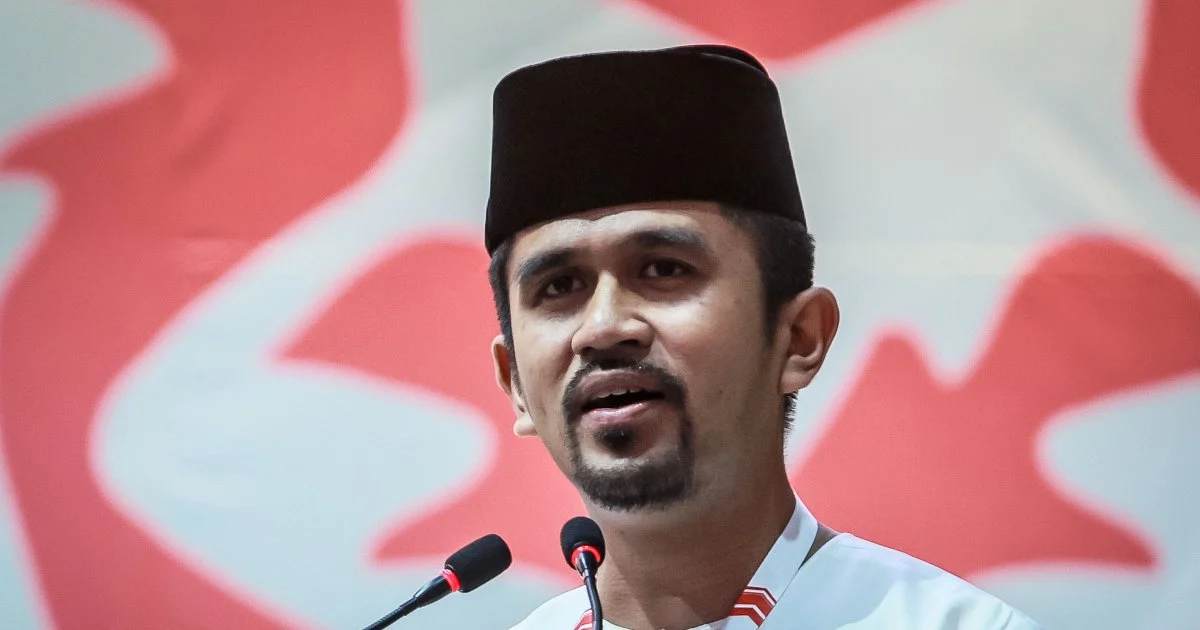
Barisan Nasional and Umno Youth secretary-general Hafiz Ariffin has raised questions about the conspicuous absence of several prominent Johor Pakatan Harapan (PH) leaders from the opposition coalition's candidate roster for the July 11 state election, suggesting potential rifts within the alliance.
The pointed criticism from the ruling coalition's youth wing underscores growing scrutiny of Pakatan Harapan's readiness ahead of the Johor state polls, one of Malaysia's most politically significant regional contests. Hafiz Ariffin's remarks appear designed to exploit any visible cracks in the opposition coalition's unity, a recurring vulnerability that has plagued PH since its formation.
The absence of these established political figures from the formal candidate line-up raises substantive questions about internal cohesion within Pakatan Harapan's Johor machinery. In state elections, senior leaders typically feature prominently in candidate lists, either contesting directly or playing high-profile roles in campaign strategy. Their exclusion signals either deliberate strategic repositioning or deeper organizational tensions that the coalition may struggle to explain publicly.
For Malaysian political observers, such gaps in candidate selection often reflect one of several underlying dynamics. Senior figures may withdraw to focus on federal-level responsibilities, particularly if they hold parliamentary seats or ministerial portfolios. Alternatively, leadership disputes or disagreements over electoral strategy can result in marginalization of certain factions within a coalition. In Johor specifically, where multiple parties operate under the PH banner—including PKR, DAP, and Amanah—balancing representation and seat allocation frequently becomes contentious.
Hafiz Ariffin's intervention serves as a tactical move within Johor's broader political theatre. By publicly highlighting the absence of heavyweight PH personalities, Barisan Nasional aims to amplify doubts about the opposition's internal stability and electoral preparedness. This rhetorical strategy is particularly effective in states like Johor, where voter confidence in coalition competence can swing electoral outcomes significantly. The implicit message is that Pakatan Harapan lacks the unified leadership commitment to govern effectively.
The timing of such criticism is noteworthy given Johor's strategic importance to Malaysian politics. As the nation's second-largest state by population and a historical Umno stronghold, control of Johor's state assembly carries outsized symbolic weight for both coalitions. For Barisan Nasional, maintaining dominance in Johor reinforces its broader federal legitimacy. For Pakatan Harapan, a strong showing—let alone victory—would represent a significant breakthrough in a state that has long resisted opposition advances.
Pakatan Harapan faces genuine organizational challenges in assembling candidates for state elections while managing the competing interests of multiple parties and factions. Senior leaders may deliberately position themselves as elder statesmen or strategists rather than frontline candidates, a common practice in mature political systems. However, this calculus becomes precarious when voters perceive weak leadership commitment to regional contests. The July 11 election will serve as a test of whether Johor voters view such arrangements as strategically shrewd or as evidence of coalition fragmentation.
The candidate selection process for Pakatan Harapan has historically been contentious, with seat negotiations often extending negotiations to the final hours before nomination day. Different parties within the coalition—PKR's Anwar Ibrahim faction, DAP's urban-oriented base, and Amanah's more religiously-conscious profile—frequently clash over seat distribution. These internal disputes can result in compromises that disappoint veteran politicians expecting prominent positions, potentially explaining the absence Hafiz Ariffin has highlighted.
For Barisan Nasional, particularly Umno, maintaining its Johor fortress remains crucial to national political balance. A weakened or divided-appearing opposition in the state plays directly into the coalition's electoral messaging. By questioning the opposition's commitment through visible absence of senior figures, Umno Youth attempts to preemptively define Pakatan Harapan as lacking substance and coherence. This narrative-setting exercise, if successful, could influence voter perceptions regardless of the actual strategic reasoning behind candidate selections.
Regionally, Johor's political direction carries implications beyond state boundaries. The state remains a microcosm of Malaysian coalition dynamics, with Barisan Nasional and Pakatan Harapan competing fiercely for legitimacy and electoral supremacy. A convincing Barisan Nasional victory would strengthen Umno's hand in federal politics and validate its regional governance model. Conversely, Pakatan Harapan gains would suggest the opposition maintains momentum despite federal challenges and internal pressures.
The upcoming election will ultimately determine whether Pakatan Harapan's candidate strategy—whatever its rationale—proves electorally viable. Voters will assess not merely the prominence of individual candidates but the overall competence and unity demonstrated during campaigning. If Johor voters perceive hesitation or internal discord within the opposition ranks, Barisan Nasional's criticism will have achieved its intended effect. The July 11 polls will thus become a referendum not only on governance records but on coalition cohesion and voter confidence in political leadership.

