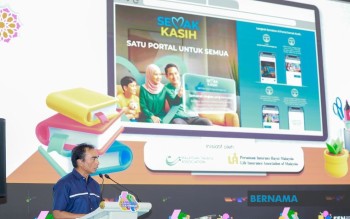
Bank Negara Malaysia has launched a new digital platform called Semak Kasih designed to reunite Malaysian families with insurance protection and takaful benefits that have gone unclaimed for years. The portal, unveiled at the Terengganu Financial Literacy Carnival, represents a significant step in addressing a long-standing gap in Malaysia's financial safety net system, where thousands of death benefits remain in limbo despite being intended to support grieving families during their most vulnerable moments.
BNM Deputy Governor Adnan Zaylani Mohamad Zahid explained that the initiative tackles a widespread problem: many beneficiaries remain unaware that their deceased relatives had purchased insurance policies or Islamic insurance (takaful) products to protect them financially. This lack of awareness means families miss out on crucial financial support at times when they need it most, whether for medical expenses, property damage recovery, or everyday living costs during periods of hardship. The portal streamlines the verification process by allowing beneficiaries to search for coverage in a single, user-friendly platform rather than contacting individual insurance providers.
The scale of the problem is substantial. Joint estimates from the Life Insurance Association of Malaysia (LIAM) and the Malaysian Takaful Association (MTA), represented at the event by CEO Mark O'Dell and Mohd Radzuan Mohamed respectively, indicate that approximately 50,000 unclaimed policies and takaful certificates involving death benefits remain outstanding. These represent millions of ringgit in benefits that should have reached grieving families but instead sit dormant in company systems. While insurance and takaful providers have attempted to contact beneficiaries through letters and field agents, these traditional outreach methods have clearly proven insufficient in bridging the information gap.
The Semak Kasih portal addresses this inefficiency by centralising access to information about unclaimed benefits. Rather than placing the burden on beneficiaries to contact multiple providers, the system enables them to verify whether coverage exists and identify the appropriate company to contact for claims processing. This shift from reactive outreach to proactive digital access represents a modernisation of how Malaysia's insurance industry manages communication with grieving families—a critical vulnerability in the current system that leaves families vulnerable during periods of emotional distress and financial uncertainty.
Beyond insurance protection itself, Adnan Zaylani emphasised that Malaysia's financial security depends on broader cultural adoption of protective mechanisms combined with stronger financial literacy. He argued that insurance and takaful serve essential roles in helping individuals and families navigate disasters ranging from sudden illness and accidents to property destruction. The portal launch coincided with a broader financial literacy carnival in Terengganu, signalling BNM's commitment to educating the public about protection mechanisms as part of comprehensive financial resilience planning.
The timing of this initiative reflects growing awareness of vulnerability in Malaysian households. Economic headwinds including rising living costs and global uncertainties have intensified pressure on family budgets, making forgotten insurance benefits even more consequential. For vulnerable populations and lower-income households, unclaimed death benefits could mean the difference between financial stability and crisis in the aftermath of losing a breadwinner. BNM's decision to prioritise digital accessibility suggests recognition that traditional notification methods have failed to reach all eligible beneficiaries, particularly those less engaged with formal financial institutions.
Beyond the Semak Kasih portal, BNM highlighted complementary initiatives supporting financial resilience across Malaysian society. Microfinancing programmes offering up to RM100,000 without guarantor requirements reflect efforts to broaden access to credit for small entrepreneurs. The RM5 billion SME Stabilisation Relief Facility, which provides working capital financing up to RM750,000 for companies affected by geopolitical crises in West Asia, demonstrates BNM's responsiveness to external economic shocks affecting Malaysian businesses. These measures collectively signal a central bank approach that combines consumer protection with productive economic support.
The iTekad initiative has already reached over 14,000 participants nationwide, with approximately 600 in Terengganu, by improving income and living standards through skills development and financial inclusion. This programme demonstrates that financial empowerment extends beyond traditional insurance into broader capability-building for economically marginalised groups. The Financial Education Forum (FEN) initiative similarly seeks to democratise financial knowledge by developing inclusive digital platforms accessible to persons with disabilities and other underserved communities, positioning financial education as a public good rather than privilege.
Digital financial expansion presents both opportunities and risks that concern policymakers. Research cited by Adnan Zaylani reveals that 37 per cent of Malaysians engage in impulsive online purchases, while 26 per cent report unsustainable debt burdens. These statistics suggest that rapid digitalisation of financial services has outpaced consumer education about prudent digital money management. The deputy governor's emphasis on teaching financial discipline from childhood reflects BNM's recognition that sustainable financial security requires behavioural change alongside institutional innovation. Programmes including the MyDuitStory competition and FEN Proaktif 2.0 collaboration with Universiti Malaysia Terengganu attempt to embed financial wisdom into educational systems before problematic habits develop.
For Malaysian households, the Semak Kasih portal represents opportunity to recover financial protection that may already belong to them. Beyond the immediate benefit of unclaimed claims, the portal's existence signals broader institutional commitment to ensuring that insurance and takaful products actually serve their intended purpose of protecting families during crises. As Malaysia navigates economic uncertainty and rising living costs, ensuring that existing protection mechanisms reach eligible beneficiaries efficiently has become an essential public policy priority. The portal addresses what might be termed a "last-mile problem" in Malaysia's insurance architecture—not the availability of protective products, but ensuring families actually receive the benefits they have already purchased.

