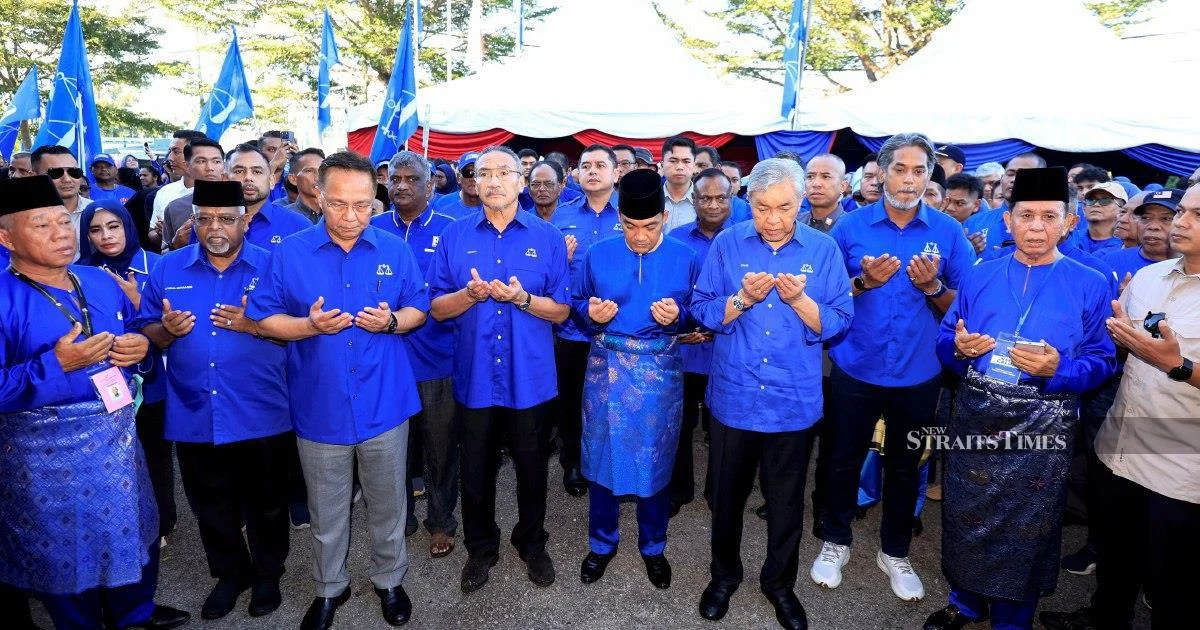
The arrival of multiple senior Barisan Nasional figures at Simpang Renggam District Council headquarters on Thursday underscored the coalition's determination to project unity and organisational coherence around Datuk Onn Hafiz Ghazi, Johor's Chief Minister and a pivotal figure in Malaysian politics. The carefully orchestrated gathering served as a public affirmation of support at a moment when electoral dynamics in Malaysia's second-largest state remained in flux, with BN seeking to consolidate its traditional stronghold.
Onn Hafiz has emerged as one of the most influential political operators in contemporary Johor, commanding significant grassroots networks and institutional machinery. His position within the BN framework carries implications beyond state politics, as Johor remains a bellwether for national coalition performance. The presence of multiple heavyweight leaders—drawn from across the BN component parties and federal echelons—reflected the paramount importance attached to maintaining momentum in the state and preventing any fracturing of alliance discipline.
For Malaysian observers, such displays of political solidarity carry particular significance. BN's electoral fortunes have fluctuated considerably in recent years, making the maintenance of internal cohesion and visible leadership support critical to party morale and public perception. The Johor gathering exemplified how contemporary Malaysian politics functions through carefully managed public theatre, where physical presence and symbolic gestures communicate messages about hierarchy, loyalty, and coalition durability to both party members and the broader electorate.
SimPang Renggam, located within the Simpang Renggam parliamentary constituency, holds strategic importance in Johor's political geography. The choice of venue was unlikely accidental; such locations are selected to convey proximity to grassroots supporters and administrative capacity. For Onn Hafiz's faction within BN, demonstrating the ability to command high-level political attention serves multiple purposes: reinforcing his standing with local party machinery, signalling to potential opponents the costs of challenging his position, and assuring ordinary voters that their representative commands influence within national power structures.
The choreography of such political events has become increasingly refined in Malaysian politics. The convergence of senior figures requires coordination across party lines and federal-state relationships, suggesting that arrangements had been negotiated in advance among BN leadership circles. Such precision indicates that Onn Hafiz's position enjoys not merely tacit acceptance but active cultivation by other major political figures within the coalition framework.
Johor's political trajectory has become more complex in recent years, with demographic changes, economic restructuring, and shifting voter preferences creating unpredictability that once seemed absent. BN's traditional dominance in the state, particularly among Malay Muslim voters and in rural constituencies, can no longer be taken entirely for granted. The rally effect of high-profile leadership visits therefore serves to energise party workers and reinforce messaging about BN's continued relevance and competitive strength.
The broader Southeast Asian context makes Malaysian coalition politics particularly important. As a major regional economy and the custodian of the ASEAN chair for 2024, political stability in Malaysia and the coherence of its governing structures carry spillover implications for the wider region. BN's capacity to maintain internal discipline and project unified leadership becomes a signal about Malaysia's political reliability in the eyes of international observers and trading partners.
For grassroots BN members and supporters in Johor, the gathering communicated reassurance about their political future. At times when coalition politics can feel turbulent and leadership positions unstable, high-level endorsements provide concrete evidence that their chosen representatives retain influence. This psychological dimension of electoral politics is often underestimated but proves crucial in maintaining party organisation and volunteer commitment.
Onn Hafiz's consolidation of BN support also reflects calculations about potential rivals and opposing coalitions. The PKR-led Pakatan Harapan coalition remains a significant electoral force in some Johor constituencies, whilst PAS retains strength in certain northern districts. By securing unified BN messaging and leadership backing, Onn Hafiz and his allies can project strength across multiple fronts and inhibit potential defections or split votes that might benefit opposition parties.
The symbolism of multiparty BN representation—with leaders from UMNO, MCA, MIC, and other component parties appearing together—conveyed a particularly important message about coalition unity. Malaysian coalition politics frequently suffer from component party tensions over candidate selection, resource allocation, and policy direction. Demonstrating such unity requires careful negotiation and suggests that Onn Hafiz's political standing transcends any single party faction.
Looking ahead, how effectively BN can maintain such cohesion throughout the election campaign will significantly impact results in Johor. The state's 26 state seats and multiple parliamentary constituencies offer considerable stakes for both the ruling coalition and opposition forces. Public displays of leadership unity, whilst potentially influential with some voter segments, must translate into effective campaign organisation, persuasive messaging, and demonstrable policy delivery to secure electoral victory.
The gathering at Simpang Renggam thus represented more than a routine political event. It symbolised BN's attempt to reassert command over Malaysian politics through consolidated state-level performance, backed by undivided national leadership attention. Whether such demonstrations of unity can withstand the pressures of actual campaigning and convert into durable electoral advantages remains an open question as Johor moves closer to its electoral moment.

