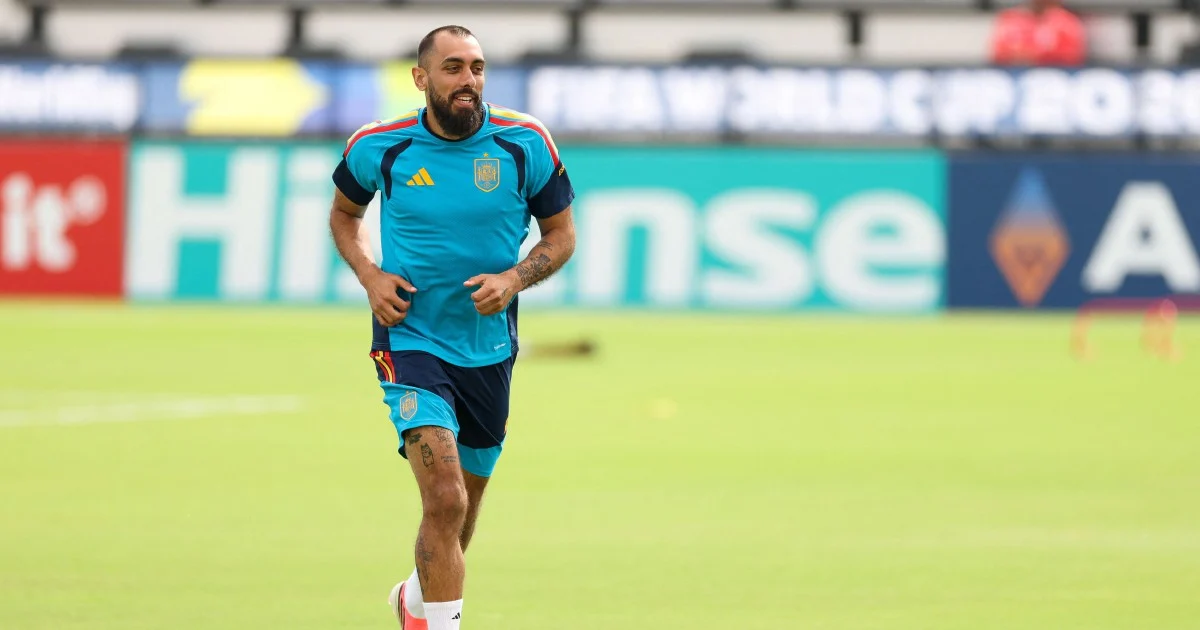
Borja Iglesias stands apart in professional football not merely for his abilities as a striker who competed in Spain's World Cup campaigns, but for his willingness to challenge the sport's traditional boundaries on activism and personal expression. In an interview conducted in Chattanooga, the Barcelona-based player demonstrated the candour that has earned him the somewhat bemused label of "the alien of football" among those who encounter his approach to contemporary social and political matters.
The Spanish forward's refusal to compartmentalize his life into a purely sporting identity reflects a broader generational shift among European athletes. Rather than maintaining the neutral public persona long considered standard in professional sports, Iglesias has chosen visibility on contentious topics that many of his peers avoid entirely. His willingness to paint his nails as a personal style choice further underscores his commitment to rejecting the narrow aesthetic codes that govern much of elite football culture. This combination of sartorial nonconformity and political outspokenness distinguishes him from the carefully managed public personas that dominate the sport.
The issues Iglesias addresses carry particular weight within football's global context. Gaza remains one of the most fraught geopolitical conflicts, yet athletes have historically exercised extreme caution in public commentary, fearing commercial repercussions or accusations of straying beyond their remit. His willingness to engage substantively rather than offering platitudes demonstrates a confidence that transcends typical career anxiety. Homophobia within football represents a persistent institutional problem that continues to deter many players from openly discussing their sexual orientation, with the sport lagging significantly behind other professional domains in creating inclusive environments.
For Southeast Asian readers, Iglesias's approach carries particular resonance. Many countries throughout this region grapple with balancing traditional social conservatism against evolving attitudes toward personal freedoms and individual expression. Football's prevalence as a unifying cultural force across Malaysia, Singapore, Indonesia, and Thailand means that high-profile athletes' public positions on inclusive values and social justice can influence broader conversations. When a player of Iglesias's stature prioritizes these discussions, it sends implicit signals to younger athletes and fans about the legitimacy and importance of such engagement.
The epithet "alien of football" suggests considerable social friction between Iglesias's worldview and the sport's institutional norms. This characterization itself warrants scrutiny, as it frames commitment to social consciousness as anomalous rather than recognizing football's potential role in advancing progressive values. The framing reflects how normalcy in professional sport has historically centered on political silence and conformity to conventional masculinity standards. By operating outside these expectations, Iglesias inadvertently exposes how constrained the discourse around athlete activism has been.
Spain's position as a football superpower with significant global influence means that Spanish players' public statements carry amplified weight. The country has its own complex history with social activism within sport, ranging from the anti-fascist symbolism embedded in certain club traditions to contemporary debates about athlete responsibilities. Iglesias's openness aligns with broader Spanish cultural conversations about social responsibility, even as it positions him as exceptional within the international football context.
His approach also challenges the commercial logic that has increasingly dominated professional athletics. Sponsorship agreements, brand partnerships, and media rights contracts typically incentivize athletes to minimize controversial positions that might alienate segments of global audiences. Iglesias's persistence in discussing Gaza and homophobia suggests either exceptional conviction or a calculated assessment that authentic representation of his values carries greater long-term value than maximizing commercial appeal. Either interpretation reflects a fundamentally different calculus than that employed by most professional athletes navigating contemporary sports marketing.
The question of athlete activism remains contested globally. Some argue that sports figures possess no special moral authority beyond their technical prowess, while others contend that public platforms carry inherent ethical weight and that athletes' silence on injustice constitutes complicity. Iglesias appears to occupy the latter camp, viewing his visibility as creating opportunity rather than obligation. This distinction matters, as it frames activism not as burden imposed by external pressure but as personal commitment aligned with his identity.
Within Spanish football specifically, Iglesias joins a tradition of players who have occasionally expressed political consciousness, though rarely with such consistency across divisive contemporary issues. His approach suggests potential for gradual normalization of athlete engagement with social matters, particularly among younger professionals who may feel less constrained by the precedents that shaped previous generations' career strategies. The European football environment, with its greater freedom of speech protections than many regions, enables such activism in ways that would carry higher professional risk elsewhere.
Looking forward, Iglesias's persistence in these discussions may contribute to evolving norms within professional football about the relationship between athletic identity and broader social participation. Whether his example encourages other players toward similar openness or simply confirms his status as an anomaly remains an open question. What seems clear, however, is that his refusal to perform political neutrality has made him genuinely consequential beyond his statistical contributions to matches—a distinction rarely achieved in contemporary sport.

