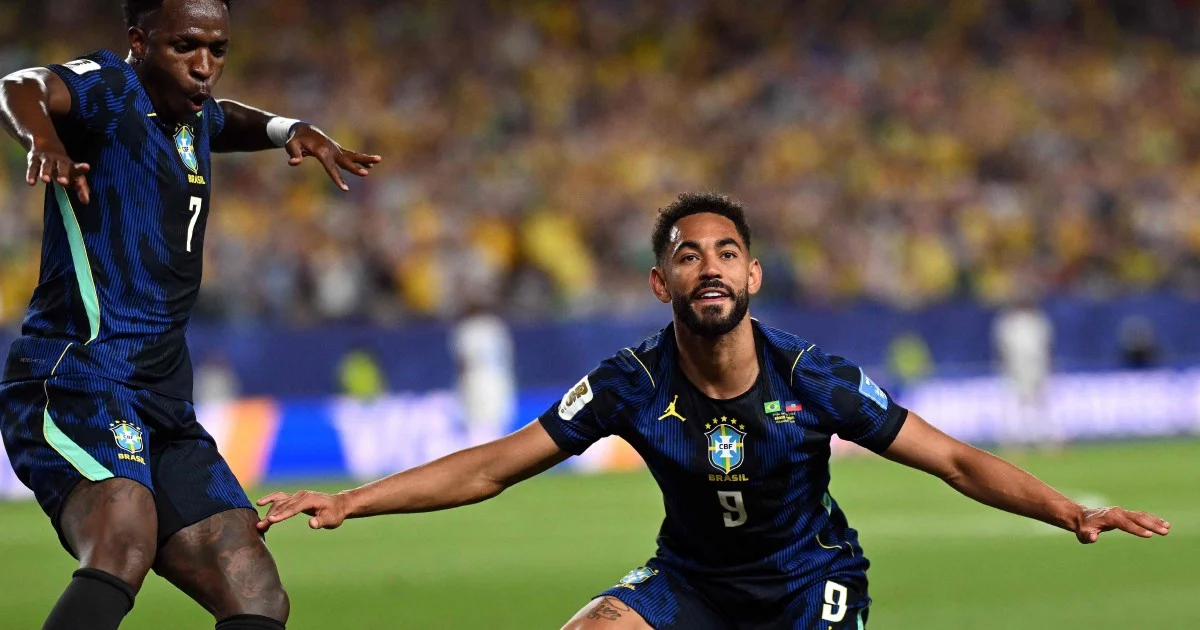
Brazil mounted a commanding display against Haiti in Philadelphia on Friday, securing a convincing 3-0 triumph that signals a potential turning point in their World Cup campaign. The South American nation's emphatic victory provides fresh momentum after what had been a sluggish start to their tournament, with Matheus Cunha's two-goal performance anchoring the winning effort and demonstrating the kind of clinical finishing that had been lacking in earlier matches.
Cunha's contribution exemplified Brazil's ability to find the back of the net when given opportunities, a quality that had proven inconsistent during the early stages of their World Cup challenge. The striker's brace showcased his positioning and composure in the final third, attributes that suggest the team's attacking unit is beginning to function with greater precision and confidence. This performance should provide Brazilian coaching staff with considerable encouragement as they prepare for subsequent fixtures, knowing that their forwards possess the capacity to deliver under tournament pressure.
The resounding margin of victory against Haiti served multiple purposes beyond the three points themselves. It restored a degree of psychological confidence within the squad that had inevitably developed following a slower opening to the competition. International tournaments often require teams to find rhythm gradually, and Brazil's impressive showing demonstrated that their underlying quality remains intact despite earlier inconsistency. The convincing nature of the result also sent a message to rival teams about Brazil's capacity to accelerate their performance when it matters most.
Brazil's path through the group stage has now taken on added significance, as they position themselves advantageously for qualification to the knockout rounds. The victory substantially improved their standing in what remains a competitive grouping, with the path to the last 32 now appearing considerably more achievable. Securing progression from the group phase represents an essential foundation for any serious World Cup campaign, and this result has materially enhanced Brazil's prospects of moving forward in the tournament.
The context of facing Haiti carried particular weight for Brazil, presenting an opportunity to demonstrate superiority against an opponent perceived as vulnerable. Brazil's ability to convert such advantages into decisive results reveals an important dimension of tournament football—translating expected dominance into tangible outcomes. Too many teams falter against weaker opposition, surrendering opportunities through overconfidence or complacency. Brazil's straightforward approach in Philadelphia showed few signs of such complacency, instead displaying the methodical approach that characterizes successful international campaigns.
For Southeast Asian followers of World Cup competition, Brazil's resurgence carries broader implications for tournament dynamics. A confident Brazilian squad represents a formidable force capable of progressing deeply into the competition, and their re-establishment of form in this fixture suggests that observers who had written off their campaign prematurely may have been premature in doing so. The tournament's narrative constantly shifts based on individual match results, and a single dominant performance can substantially alter perceptions of a team's trajectory.
The location of the match in Philadelphia underscored the global reach of World Cup football, with major metropolitan centers across North America hosting fixtures that command considerable international viewership. For Malaysian audiences and regional observers, such tournaments provide opportunities to witness elite international competition and evaluate how top-tier nations respond to pressure. Brazil's performance served as a reminder of the technical quality and tactical sophistication that distinguishes leading footballing nations.
Looking ahead, Brazil's challenge will involve maintaining this elevated standard of performance while managing the demands of successive fixtures. Tournament progression requires not merely impressive individual performances but consistent application of technical skill and tactical discipline across multiple matches. The victory over Haiti establishes a platform, but subsequent fixtures will determine whether this performance represented a genuine turning point or a temporary respite within a broader pattern of inconsistency.
Brazil's improvement in this encounter also reflected tactical adjustments that coaching staff may have implemented between matches. International teams frequently refine their approach based on observed weaknesses, and Brazil's more fluid attacking display suggested that previous strategic discussions had borne fruit. Such refinements often prove decisive in tournaments where the margins between progression and elimination frequently prove razor-thin.
The broader significance of this result extends beyond Brazil's individual campaign trajectory. World Cup tournaments depend upon established football nations demonstrating their expected quality, and Brazil's return to form contributes to a compelling competitive narrative throughout the group stage. As the tournament progresses and additional matches unfold across multiple venues, results like Brazil's convincing victory establish important reference points for assessing which teams possess genuine championship credentials.
With qualification prospects now substantially improved following this dominant showing, Brazil can approach their remaining group fixtures with a degree of security previously absent. This psychological advantage often translates into more confident, expansive football that simultaneously increases entertainment value and winning probability. Observers across Southeast Asia and beyond will monitor whether Brazil's reinvigorated campaign can sustain this momentum through subsequent rounds.

