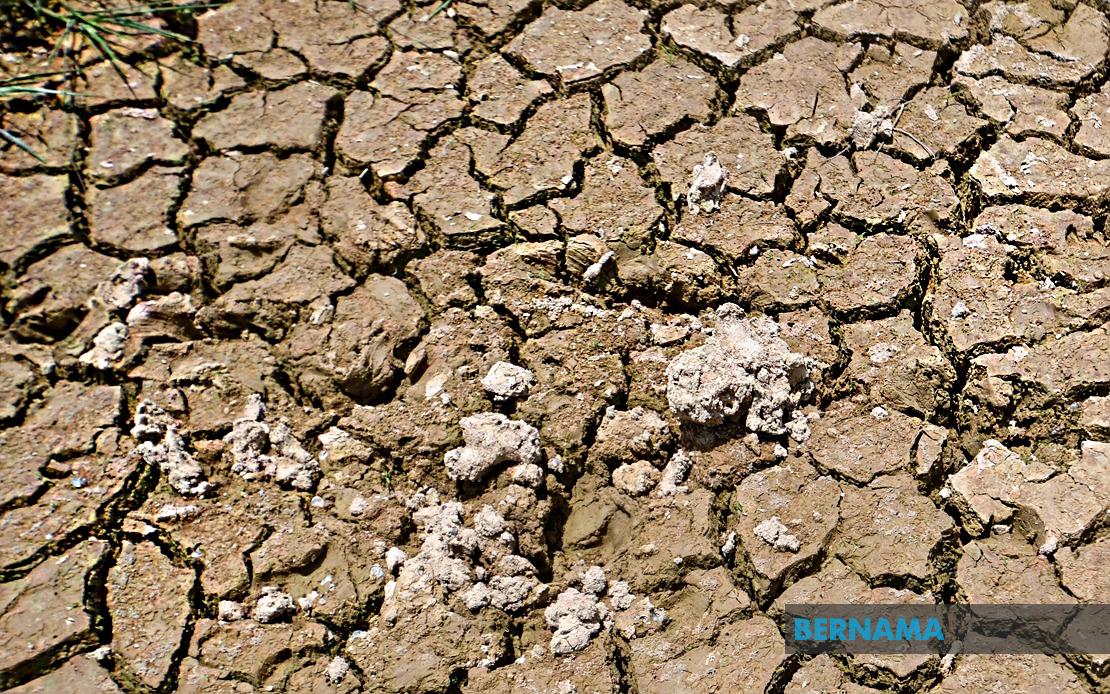
Environmental degradation driven by drought and desertification now ranks among the most pressing crises facing BRICS nations, where the convergence of sprawling agricultural sectors, dense populations, and climatic stress creates a perfect storm for resource scarcity. The threat extends far beyond environmental concern, emerging as a complex economic challenge that demands urgent regional cooperation and substantial financial commitment, particularly as these five nations collectively represent the interests of more than half the global population while managing critical freshwater reserves, extensive forest systems, and vast tracts of arable land.
Data from the United Nations Convention to Combat Desertification reveals an alarming acceleration in global land degradation. Over the three decades preceding 2020, more than three-quarters of the world's land surface—77.6 per cent—experienced measurably drier conditions compared with the preceding thirty-year baseline. This shift represents not merely a statistical anomaly but a fundamental restructuring of planetary water cycles, with profound implications for agricultural regions spanning from South Asia to Southern Africa and across Latin America. For BRICS countries, many of which depend substantially on rain-fed agriculture and surface water systems, this trend translates into direct pressure on food production and economic stability.
China illustrates both the scale of the challenge and the long-term nature of response required. Despite implementing anti-desertification programmes continuously for more than fifty years, the country still contends with approximately 27 per cent of its territory classified as desert or arid land. While significant progress in afforestation initiatives demonstrates political commitment, the persistence of such extensive degraded zones reveals how entrenched these environmental problems have become. The vast financial and technological investments made by Beijing underscore the complexity of reversing centuries of land degradation once it has reached advanced stages.
India and South Africa confront mounting pressures on interconnected resource systems. Both nations face accelerating challenges to water availability, soil quality, and agricultural productivity, with desertification risks compounded by episodes of extreme heat and prolonged water deficits that directly undermine food security. The challenge intensifies as urbanisation and industrialisation compete with agriculture for limited water resources, creating policy dilemmas with no easy solutions. In South Africa, where water stress already constrains major urban centres, the prospect of expanding dryland conditions threatens economic development across multiple sectors.
Brazil's experience demonstrates how desertification intersects with broader climate instability. Rising drought patterns in the north-eastern and semi-arid interior regions have already degraded agricultural output and jeopardised food security in those zones. Simultaneously, the Amazon and Pantanal regions face an escalating cycle of water scarcity and uncontrolled wildfires, creating feedback loops that accelerate forest loss and further reduce regional precipitation. This represents a critical concern not only for Brazil but for the entire South American climate system, as tropical forest destruction diminishes atmospheric moisture availability across the continent.
Russia's struggle with arid conditions differs somewhat in character from classical desertification but proves equally consequential. Rather than advancing desert margins, Russia confronts a mosaic of water shortages, climatic volatility, and progressive soil deterioration concentrated in vulnerable regions, particularly southern zones where agricultural production concentrates. Despite possessing vast humid territories, these distant reserves offer limited practical benefit to farming communities facing intensifying drought cycles in economically critical agricultural districts.
Iran and the United Arab Emirates inhabit naturally hyper-arid regions where water scarcity reaches extreme levels, creating permanent constraints on agricultural expansion and population capacity. For these nations, drought represents not a cyclical challenge but a fundamental structural limitation on development options, requiring engineering solutions and regional cooperation to access freshwater from beyond their borders.
Hydraulic infrastructure projects have emerged as the primary technological response to water scarcity across the BRICS region. These schemes enable storage and managed distribution of water supplies while buffering against seasonal fluctuations and climate disruptions. The Al-Hammam Plant in Egypt—the world's largest agricultural wastewater treatment facility—exemplifies this approach, processing wastewater to produce 7.5 million cubic metres of clean water daily as part of the broader New Delta initiative. Such projects demonstrate how engineering and technology can transform marginal lands, though they require substantial capital investment and expertise that not all developing nations can readily mobilise.
The BRICS bloc has established institutional mechanisms to coordinate environmental response across member states. The Environment Working Group provides a forum for policy alignment, while the New Development Bank has become a critical funding source, approving more than 120 projects valued at approximately US$40 billion, with priorities centred on infrastructure development and sustainable economic transition. This financial commitment signals serious intent but also highlights the scale of required investment—a reality that demands both increased funding and more efficient project implementation.
International initiatives increasingly recognise land restoration as central to desertification response. The Silk Road Caravan initiative, launched by UNCCD in 2026, will traverse multiple Eurasian states to highlight land degradation before concluding at the 17th Conference of the Parties to UNCCD in Ulaanbaatar, Mongolia in August. More directly, the BRICS Partnership for Land Restoration, established in 2025, targets restoration of degraded ecosystems including mangroves, riverbanks, and wetlands—environments that provide essential services for water retention and biodiversity preservation.
Experts and policymakers increasingly converge on a consensus regarding necessary response dimensions. Coordinated regional action, additional financial resources, scientifically rigorous approaches, and modernised agricultural techniques incorporating precision irrigation and climate-responsive crop selection have become non-negotiable elements of any credible strategy. The urgency derives partly from grim forecasts suggesting continued expansion of arid zones under multiple climate scenarios, creating a narrowing window for proactive intervention before tipping points render some degradation irreversible.
Understanding the drivers of intensifying water stress proves essential for formulating effective responses. Global warming continues accelerating in many BRICS regions, directly reducing water availability while simultaneously expanding consumption demand through population growth and expanding economic activity. As hundreds of millions of additional people move into middle-class consumption patterns across India, China, and Brazil, water extraction from natural ecosystems accelerates precisely when climatic conditions are reducing natural replenishment. This collision between rising demand and declining supply creates structural pressures that technological solutions alone cannot fully address, requiring also fundamental shifts in agricultural systems, industrial processes, and consumption patterns.
For Malaysia and other Southeast Asian nations, the BRICS desertification crisis carries significant implications. Water stress in major agricultural regions could reshape global commodity prices and food security calculations, while successful land restoration efforts in BRICS countries might generate technological approaches adaptable to regional contexts. The financial mechanisms being deployed—particularly New Development Bank financing—establish precedents and funding flows that could eventually extend to other developing regions facing similar environmental pressures.

