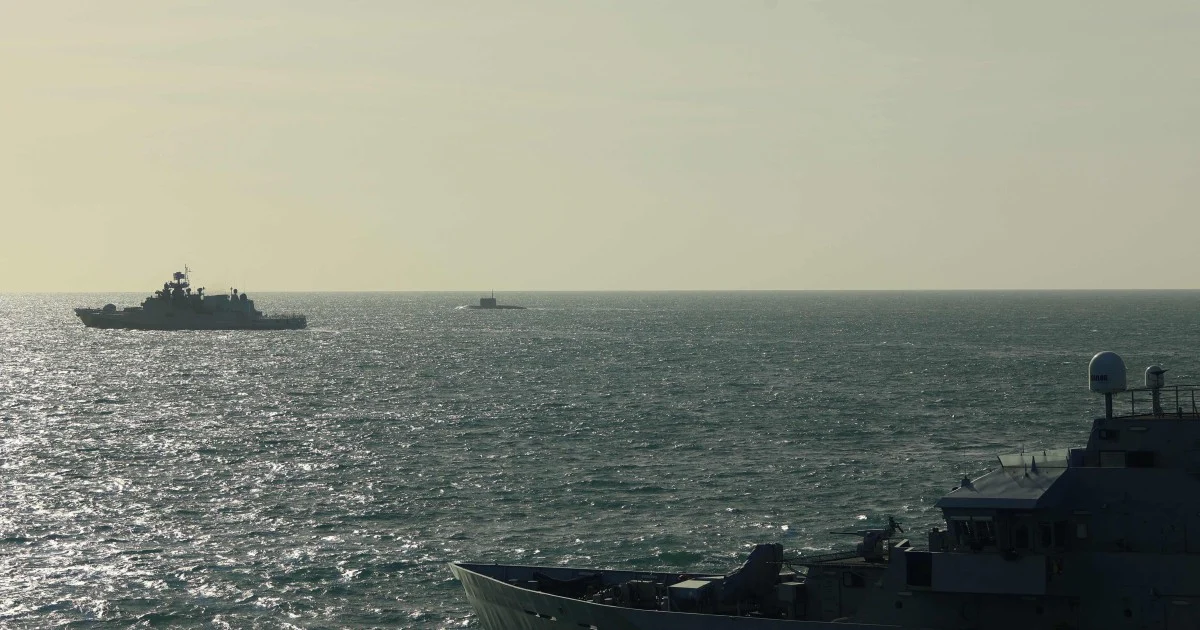
British Prime Minister Keir Starmer has sought to frame the latest confrontation between UK and Russian naval forces in cautious terms, describing the discharge of warning shots by a Russian warship near a civilian vessel in the English Channel as an act of recklessness rather than calculated provocation. His characterisation on Wednesday reflects the UK government's attempts to respond firmly to escalating maritime incidents without unnecessarily amplifying tensions or triggering further confrontation in one of Europe's busiest shipping lanes.
The incident involved a Russian naval vessel firing warning shots in close proximity to a yacht operating in the English Channel, one of the world's most heavily trafficked waterways and a corridor of significant strategic importance for British and European maritime commerce. Such incidents have become increasingly common as Cold War-style tensions resurface between NATO allies and Moscow, with the English Channel serving as a flashpoint for military posturing and demonstrations of sea power. The waters between Britain and France represent more than a physical boundary; they constitute a vital artery through which enormous volumes of cargo and passengers transit daily.
Starmer's decision to label the incident as reckless rather than sinister carries meaningful implications for how the UK intends to manage its response to Russian military activities. By employing the term reckless, he suggests that the actions reflect poor judgement and dangerous disregard for maritime safety regulations rather than a calculated strategy to intimidate or test British resolve. This linguistic distinction matters significantly in diplomatic circles, as it allows London to condemn the behaviour without interpreting it as a deliberate act of hostile intent that might require escalatory counter-measures or a fundamental recalibration of defence posture.
The incident represents the latest in a string of tense encounters involving Russian military assets operating near British territorial waters and NATO boundaries. These confrontations have intensified substantially since Russia's invasion of Ukraine, as Moscow increasingly employs its military apparatus to project power and signal defiance toward Western nations and their alliances. The frequency of these incidents underscores a broader pattern of Russian vessels testing NATO's response capabilities and pushing against established maritime boundaries and protocols.
For Malaysia and other Southeast Asian nations monitoring global security developments, such incidents illustrate how maritime tensions persist even in regions far from direct territorial disputes. The English Channel episodes parallel concerns about freedom of navigation and the rights of naval vessels to operate in international waters, issues that resonate deeply across Southeast Asia given the region's dependence on open sea lanes and ongoing disputes in the South China Sea. The way Britain manages these Russian encounters provides a case study in balancing firm defence of sovereignty with pragmatic restraint that avoids unnecessary escalation.
Starmer's comments also reflect the broader challenge facing Western leadership in responding to Russian provocations without allowing such incidents to hijack political agendas or derail diplomatic channels entirely. The British government must demonstrate resolve and commitment to maritime safety while maintaining its focus on supporting Ukraine and coordinating with NATO allies on a coherent Russia strategy. Overreacting to individual incidents, however dangerous, risks allowing Moscow to dictate the terms of engagement through repeated provocations.
The incident occurs against a backdrop of increased Russian military activity along NATO's eastern and northern flanks, as well as heightened Russian naval operations in the Atlantic and waters surrounding the British Isles. Intelligence assessments suggest these activities form part of a broader Russian strategy to test NATO response times, demonstrate military capability, and create friction within the alliance by generating incidents that require coordinated responses. The warning shots in the English Channel should be understood within this larger operational context rather than as an isolated incident.
British authorities are likely conducting thorough investigations into the specifics of the warship encounter, including the precise circumstances that prompted the warning shots, the distance at which they were fired, and whether international maritime protocols were violated. Such investigative work helps distinguish between genuinely dangerous behaviour and routine military operations conducted at close range. The findings will inform whether additional diplomatic complaints are lodged through official channels and whether the incident warrants amplification in public statements or security briefings.
The characterisation of the incident as reckless also acknowledges that maritime operations near crowded shipping lanes carry inherent dangers, particularly when military vessels from opposing powers operate in close proximity with limited communication protocols. The English Channel's congestion means that any military manoeuvre could potentially endanger commercial vessels, fishing boats, or other civilian maritime traffic. Starmer's framing acknowledges these safety risks without necessarily attributing hostile motives to Russian commanders, a distinction that preserves space for continued operational engagement and maritime protocols.
Looking forward, British security officials will likely intensify monitoring of Russian naval movements near UK waters while considering whether additional safeguards or communication mechanisms are needed to prevent dangerous escalation. NATO coordination on maritime security in European waters may be strengthened, with allied nations sharing intelligence on Russian activities and coordinating responses to ensure consistent messaging and operational coherence. Such measures reflect the reality that isolated incidents, if mishandled or misinterpreted, can spiral into broader confrontations.
For international observers assessing Britain's security posture, Starmer's measured response signals that the UK intends to remain engaged in managing tensions through existing diplomatic and military channels rather than pursuing policies of deliberate confrontation. This approach allows Britain to maintain its firm commitment to NATO while preserving flexibility in its long-term relationship with Russia as global circumstances continue to evolve. The incident ultimately illustrates the delicate balance required when managing interstate relations in an era of heightened military activity and persistent great power competition.