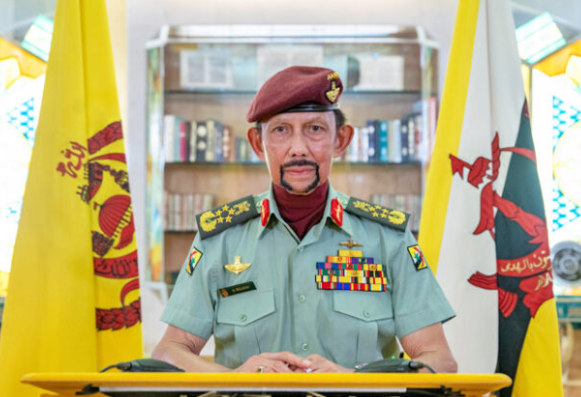
Sultan Hassanal Bolkiah marked the arrival of 1448 Hijrah with a comprehensive address emphasising that genuine national advancement requires unrelenting dedication across both material and spiritual dimensions. The monarch's message reframed the significance of a new calendar year, positioning it not as a moment to commence planning but rather as an opportunity to reinvigorate existing commitments and resolve. This distinction carries particular weight in the Islamic tradition, where the Hijrah calendar itself commemorates a pivotal moment of transformation and collective purpose in Islamic history.
The Sultan identified two distinct yet interconnected spheres demanding sustained attention from Brunei's citizens and institutions. The material dimension encompasses economic vitality and tangible infrastructure development—the visible foundations of a functioning modern state. The spiritual sphere, by contrast, encompasses knowledge acquisition, formal educational advancement, and dakwah, the Islamic concept of inviting others toward faith and moral living. This dual framework reflects an Islamic governance philosophy that resists the Western dichotomy between secular and religious matters, instead viewing them as complementary aspects of societal wellbeing.
In contextualising his message, the Sultan acknowledged the turbulent regional and global landscape that continues to generate conflict and displacement. He observed that warfare inherently produces widespread suffering that transcends national or factional boundaries, a particularly resonant observation for Southeast Asian nations sensitive to regional tensions and their potential spillover effects. Yet he contrasted this grim international backdrop with Brunei's comparatively fortunate position, attributing the nation's freedom from war and major natural disasters to deliberate spiritual practices including prayer, remembrance of God, and Quranic recitation woven into the fabric of national life.
Despite celebrating this relative stability, the Sultan did not permit complacency to take root. He pivoted directly to addressing criminal activity as a festering wound requiring immediate collective intervention. Drug-related offences, theft, and related criminal conduct emerged as his primary concern, characterised not merely as legal violations but as acts that corrode national prestige and violate Islamic ethical principles. This framing demonstrates how Southeast Asian Muslim-majority nations increasingly integrate religious teachings with conventional law enforcement perspectives when addressing societal dysfunction.
The Sultan's emphasis on crime prevention carries particular significance for Malaysia and other regional neighbours grappling with similar challenges. Drug trafficking networks operate across porous borders throughout Southeast Asia, and organised crime increasingly penetrates urban centres. Brunei's articulation of crime as a spiritual and moral failure—not simply a security problem—offers a different analytical lens from purely law-enforcement approaches. This integrated perspective suggests that lasting solutions require engaging religious institutions, educational systems, and community leaders alongside traditional police and judicial mechanisms.
He issued a specific directive to relevant government agencies, particularly those managing security and religious affairs, to respond with urgency and effectiveness. This institutional call reflects a sophisticated understanding of governance structures, acknowledging that the Sultan's moral authority alone cannot eliminate criminal behaviour without coordinated action across multiple bureaucratic domains. The explicit mention of religious affairs agencies underscores the expectation that mosque networks, Islamic scholars, and religious educators should function as active partners in crime prevention.
Regarding religious institutions specifically, the Sultan articulated a comprehensive strategy for countering criminal inclination through intensified religious education and enhanced dakwah initiatives. Rather than punitive approaches alone, he advocated for preventive consciousness-raising that would enable communities to recognise and reject drugs and criminality through informed Islamic understanding. This preventive emphasis aligns with emerging best practices in social policy across the region, where root-cause intervention increasingly supplements traditional enforcement.
The Sultan underscored the psychological and spiritual dimension of national protection, calling upon citizens to maintain vigorous prayer and supplication for divine safeguarding. This religious language—invoking divine blessing and protection—serves multiple functions simultaneously: it appeals to the faith commitments of believers, it positions the Sultan within the Islamic spiritual tradition rather than as a purely secular administrator, and it distributes responsibility for national safety beyond government institutions to the entire Muslim population. Such discourse resonates powerfully in predominantly Muslim societies where religious authority and political authority remain substantially intertwined.
Central to his message was the principle of collective responsibility and shared vigilance. The Sultan rejected the notion that state institutions bear sole accountability for combating crime, instead framing safety as a responsibility distributed across families, communities, religious organisations, and individuals. This represents a significant shift from security approaches that concentrate authority and action primarily within government agencies. For Malaysian observers, this collective framing echoes ongoing national debates about community policing and public participation in crime prevention initiatives.
The Sultan articulated specific conditions necessary for maintaining this collective vigilance: continuous alertness without complacency, intensified remembrance of God through prayer and religious practice, and steadfast reliance upon divine assistance. This formulation combines Islamic spiritual practice with practical security awareness, suggesting that religious devotion and practical caution operate as complementary rather than competing approaches to national protection. The phrase "Insya Allah"—God willing—introduces Islamic acceptance of outcomes beyond human control, tempering expectations while maintaining hope.
Broadly contextualising this address reveals how smaller Southeast Asian nations like Brunei articulate national identity and governance priorities through Islamic frameworks. Unlike secular frameworks that might distinguish sharply between religious and governmental spheres, Brunei's official discourse integrates them extensively. This integration shapes policy priorities, institutional design, and public expectations about legitimate authority and collective responsibility. For Malaysia and other regional states, Brunei's approach offers a case study in how Islamic governance principles can be operationalised across diverse policy domains from crime prevention to economic development.
The Sultan's message ultimately synthesised urgent practical concerns about rising crime with aspirational visions of spiritual renewal and material progress. By framing the Islamic New Year as a renewal moment rather than a commencement point, he encouraged continuous improvement rather than cyclical restart. This philosophical positioning—combined with explicit calls for institutional coordination and community engagement—demonstrates how national leadership in a Southeast Asian Islamic context navigates contemporary challenges while remaining grounded in religious and cultural foundations.
As Brunei enters 1448 Hijrah, the Sultan and royal family extended conventional seasonal greetings to all inhabitants, recognising both citizens and residents of the nation. This inclusive language reflects how modern nation-states administer to diverse populations regardless of religious affiliation or citizenship status. Yet the substantive content of the address remained distinctly Islamic in framework, vocabulary, and aspiration—illustrating the distinctive character of Islamic governance in contemporary Southeast Asia.