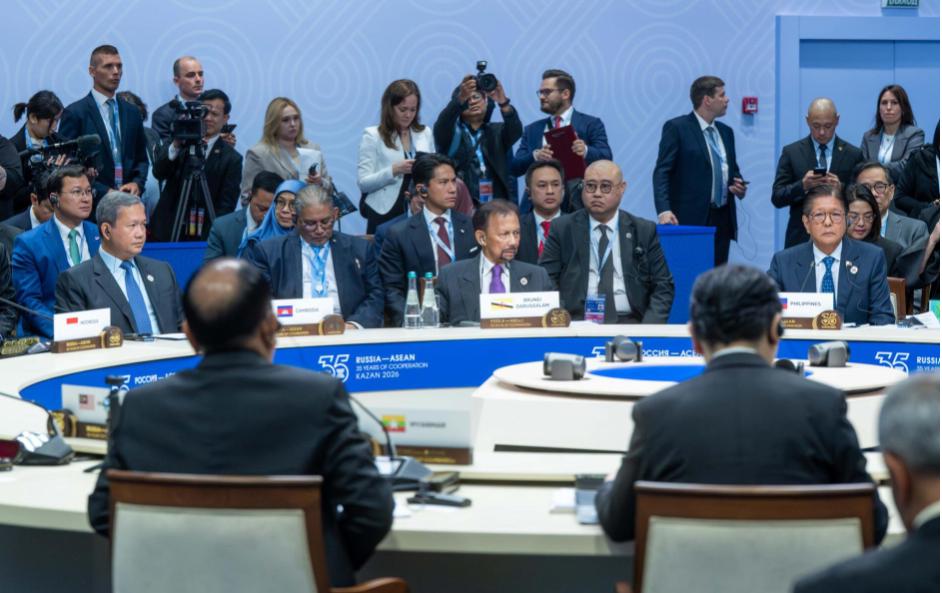
Sultan Hassanal Bolkiah travelled to Kazan, Russia on 18 June to attend the Asean-Russia Commemorative Summit, marking a significant diplomatic engagement as the bloc seeks to reinforce its strategic partnerships amid an increasingly fragmented international landscape. The Brunei monarch's attendance at the gathering, held at the Kazan Expo International Exhibition Centre, underscored the importance both Southeast Asia and Moscow place on their bilateral and multilateral relationships. During his remarks, the Sultan expressed gratitude to Russian President Vladimir Putin for the warm reception accorded to the visiting Asean delegations, while also acknowledging the hospitality extended by the government of Tatarstan and the local administration of Kazan.
The Sultan's delegation included Minister of Foreign Affairs Prince 'Abdul Mateen, reflecting Brunei's commitment to the diplomatic processes unfolding at the summit. Beyond ceremonial acknowledgements, the monarch took the opportunity to convey formal condolences to Thailand's Prime Minister Anutin Charnvirakul following the death of Princess Bajrakitiyabha, demonstrating the close cultural and political bonds that link Asean members and their commitment to mutual support during times of grief.
At the heart of the Sultan's address lay a comprehensive assessment of the Asean-Russia Dialogue Partnership, which has now spanned 35 years of engagement. The monarch characterised this relationship as one that has proven remarkably durable and increasingly consequential, maintaining its relevance even as the global order undergoes profound transformation. Rather than viewing bilateral ties as static or ceremonial, the Sultan argued that cooperation has matured substantially across the full spectrum of the Asean Community framework, encompassing political and security pillars, economic integration mechanisms, and socio-cultural initiatives. This multidimensional approach has yielded concrete outcomes, according to the Sultan, translating diplomatic commitments into tangible benefits for both populations and contributing to stronger person-to-person connections that transcend government-level interactions.
The monarch identified several pressing global challenges that necessitate intensified collaboration between Asean and Russia, particularly as both regions navigate a period marked by geopolitical tensions, economic protectionism, and climate instability. The acceleration of technological change presents both opportunities and risks, the Sultan noted, requiring coordinated responses that balance innovation with safeguarding societal interests. For Malaysia and its Asean neighbours, such challenges directly threaten economic stability, environmental sustainability, and social cohesion, making the relevance of this partnership particularly acute for the wider Southeast Asian region.
In his discussion of Asean's Vision 2045 agenda, the Sultan positioned Russia as an essential partner in realising the bloc's long-term aspirations. He specifically highlighted energy and food security as domains where deepened cooperation could yield substantial dividends, particularly given Russia's significant role as a global energy supplier and agricultural producer. For energy-dependent economies across Southeast Asia, including Malaysia, stable and diversified sourcing arrangements with Russia offer a hedge against supply disruptions and price volatility. Similarly, food security has emerged as an increasingly critical concern for the region, particularly given climate pressures and supply chain vulnerabilities exposed by recent global disruptions.
Climate action and disaster management represent additional focal points for potential collaboration, reflecting the reality that environmental challenges transcend borders and demand multilateral solutions. The Sultan emphasised that Asean and Russia must jointly address non-traditional security threats, a term encompassing transnational challenges such as pandemics, cybersecurity threats, and organised crime. These areas of cooperation, when pursued effectively, can deliver measurable improvements in regional stability and public welfare, benefiting Malaysian citizens directly through enhanced disaster preparedness and climate resilience measures.
The Sultan further stressed the strategic importance of human capital development, arguing that education, professional exchanges, and training initiatives form the bedrock upon which sustained partnerships are built. By investing in the next generation of academics, policymakers, technicians, and business professionals, Asean and Russia can ensure that bilateral relationships deepen organically through networks of mutual understanding and shared expertise. For Malaysia's ambitious development agenda, such exchanges provide critical avenues for knowledge transfer and skills acquisition in fields ranging from renewable energy to advanced manufacturing.
At the conclusion of formal proceedings, delegates adopted four significant outcome documents. The Kazan Declaration 2026: Asean-Russian Federation – Unity in Diversity: 35 Years Together represents the political centrepiece of the summit, affirming both sides' commitment to strengthened engagement. The Comprehensive Plan of Action to Implement the Asean-Russian Federation Strategic Partnership (2026–2030) provides concrete operational guidance for the next five-year cycle, establishing specific targets and mechanisms for cooperation. Joint statements on energy cooperation and cultural cooperation signal sectoral prioritisation, with energy cooperation carrying particular weight given its centrality to regional economic prosperity and development trajectories across Southeast Asia.
The summit's second plenary session convened as a working lunch to examine integration processes unfolding across Eurasia, featuring contributions from Asean's Secretary-General, the Shanghai Cooperation Organisation's secretary-general, and the Eurasian Economic Commission's board chairman. This broader engagement reflects recognition that Asean-Russia cooperation exists within a wider context of regional and continental integration dynamics involving multiple institutional players. For Malaysian policymakers, such discussions illuminate the interconnected nature of regional frameworks and the importance of active participation in shaping emerging institutional architectures.
Particularly noteworthy was the positive reception afforded the Asean-Russia Business Forum, which convened on 17 June as a parallel event during the summit. The forum's prominence indicates growing appreciation for commercial dimensions of the partnership, with private sector engagement increasingly recognised as essential to translating political commitments into sustained economic collaboration. Malaysian businesses operating across energy, agriculture, technology, and manufacturing sectors stand to benefit from expanded commercial networks and investment opportunities that such forums catalyse, though success will depend on maintaining the momentum generated at the diplomatic level through follow-up mechanisms and dedicated institutional support.

