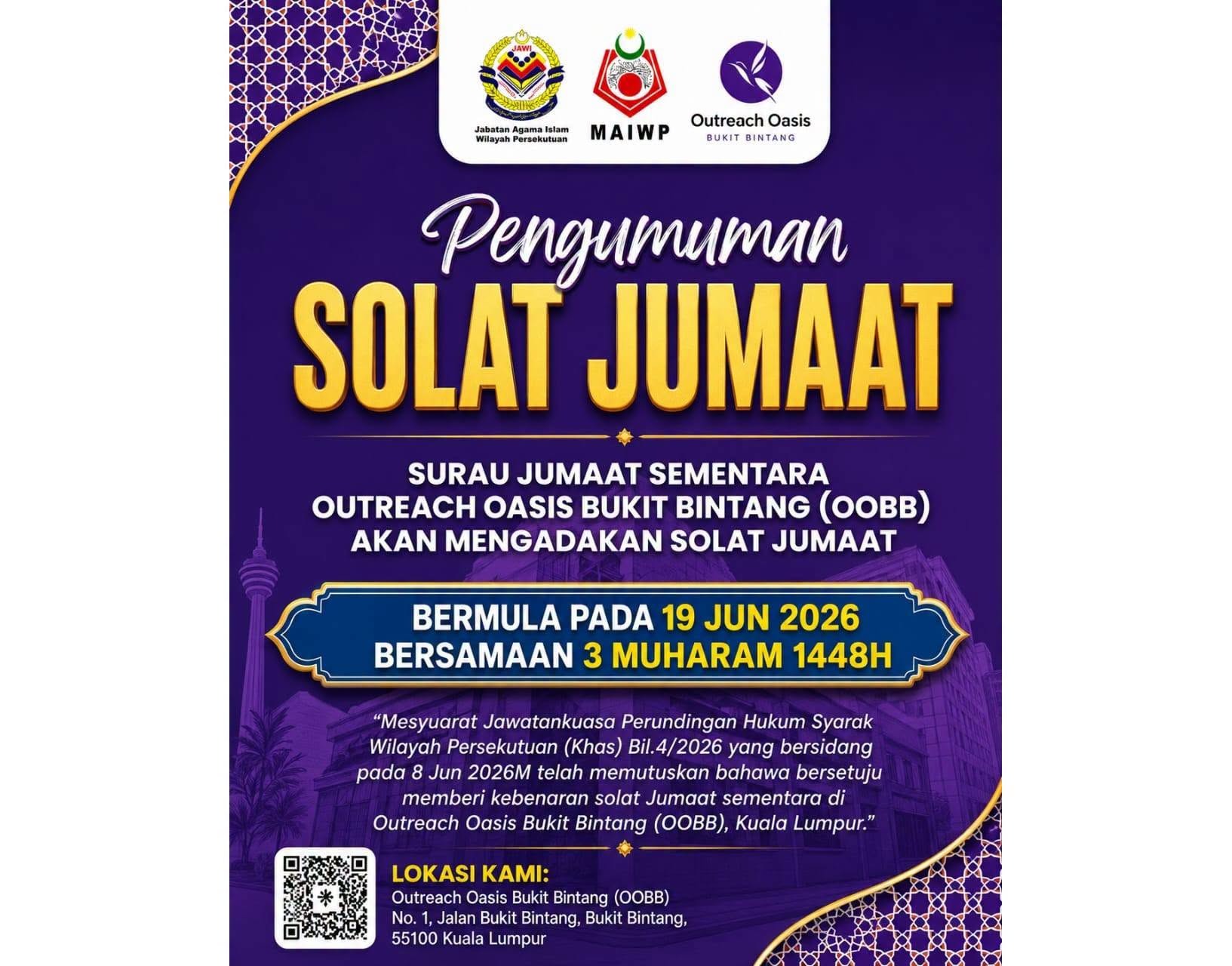
Muslims in the bustling Bukit Bintang area of Kuala Lumpur now have a dedicated space to perform their Friday prayers, with the Bukit Bintang Outreach Oasis beginning operations as a temporary prayer facility from June 19. The approval marks a significant step toward addressing the long-standing gap in Islamic worship infrastructure within one of Malaysia's most prominent commercial and tourism districts, where the concentration of office workers, shoppers, and visitors has created pressing demand for accessible prayer facilities.
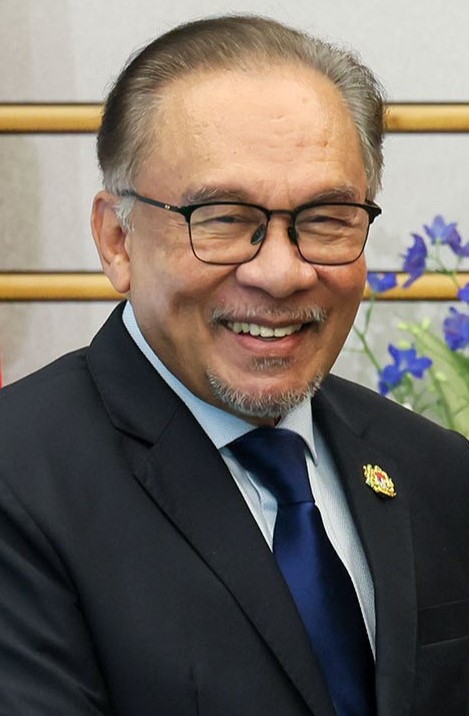
Dr. Zulkifli Hassan, the Minister in the Prime Minister's Department (Religious Affairs), announced the development through a social media statement, emphasizing that the temporary arrangement will remain in place only until a purpose-built Friday surau at the location reaches completion. This phased approach reflects the government's recognition that while construction of permanent facilities proceeds, the immediate spiritual needs of the Muslim community must be accommodated without further delay.
The minister's enthusiasm for the initiative underscores broader government efforts to enhance Islamic infrastructure within urban commercial zones. His statement highlighted that the arrangement would eliminate the current inconvenience faced by Muslim workers and visitors who must travel considerable distances or navigate crowds to find appropriate prayer spaces during Friday congregational worship. For a district as dynamic and densely populated as Bukit Bintang, such accessibility has become essential to maintaining religious observance within the constraints of modern urban life.
Plans for a permanent Friday surau at Bukit Bintang have been in development for some time, with authorities previously announcing intentions to establish a facility that would meet contemporary standards for comfort and capacity. The timeline for completing this permanent structure has not been publicly specified, though the temporary arrangement suggests construction will require several months at minimum. This graduated implementation strategy allows the government to demonstrate responsiveness to community needs while ensuring the final facility meets proper specifications.
Dr. Zulkifli's invitation to the Bukit Bintang community to attend and support the Friday prayers carries significant social messaging. By framing attendance as an act of solidarity and a demonstration of Islamic eminence in the district, the minister sought to transform the opening into a community-building moment rather than merely a logistical convenience. Such framing is particularly relevant in Bukit Bintang, where the Muslim population must navigate a predominantly commercial, secular environment while maintaining religious observance.
The practical implications for Malaysia's urban Muslim workforce are considerable. Kuala Lumpur's central business districts have historically presented challenges for Friday prayer participation, with many workers relying on distant suraus or, in some cases, forgoing congregational worship during working days. The Bukit Bintang facility addresses this gap directly, potentially enabling thousands of professionals to fulfill their religious obligations without scheduling disruptions or excessive commuting.
Beyond immediate convenience, the initiative reflects broader government policy toward integrating Islamic facilities into major urban centers. Southeast Asia's largest economies increasingly recognize that accommodating diverse religious practices in shared commercial spaces strengthens social cohesion and demonstrates inclusive governance. Malaysia, as a Muslim-majority nation with significant religious minorities, has particular interest in modeling how Islamic infrastructure can coexist constructively with secular commercial development.
The temporary surau arrangement also provides practical data for final facility design. By observing attendance patterns, space utilization, and congregational preferences during the temporary phase, planners can refine the permanent structure to better serve actual community needs rather than relying solely on projections. This iterative approach often yields facilities better matched to real-world demand than those designed in isolation.
Regional context matters here as well. Within Southeast Asia, where Muslim-majority nations have varying urban prayer infrastructure, Malaysia's proactive approach in commercial districts offers a model worth attention. Singapore, Indonesia, and Thailand each handle Islamic facilities differently, and Malaysia's integration of suraus into premium commercial real estate demonstrates confidence in balancing religious accommodation with economic vitality.
For the Bukit Bintang business community and visitors, the prayer facility also carries symbolic importance. It acknowledges that the district, popular with both domestic and international tourists, serves not merely as a consumption space but as a neighborhood where residents and workers practice their daily lives, including religious observance. This recognition may enhance the area's appeal to Muslim-majority tourist markets and demonstrate Malaysia's commitment to serving all community segments.
The enthusiasm expressed by Dr. Zulkifli suggests the government intends the Bukit Bintang surau as a template for similar initiatives in other major commercial zones. Kuala Lumpur's Petronas Twin Towers area, Midvalley Megamall vicinity, and Bangsar office districts face similar worship infrastructure challenges. Success in Bukit Bintang could justify expanding the model systematically across the city's commercial landscape.
Longer-term, this initiative may reshape how Malaysian urban planners approach religious infrastructure. Rather than relegating suraus to peripheral locations or residential neighborhoods, developers and authorities may increasingly embed them within premium commercial districts as essential community amenities. This shift recognizes that modern Muslim city-dwellers require prayer facilities integrated into their daily environments, not separated from them.