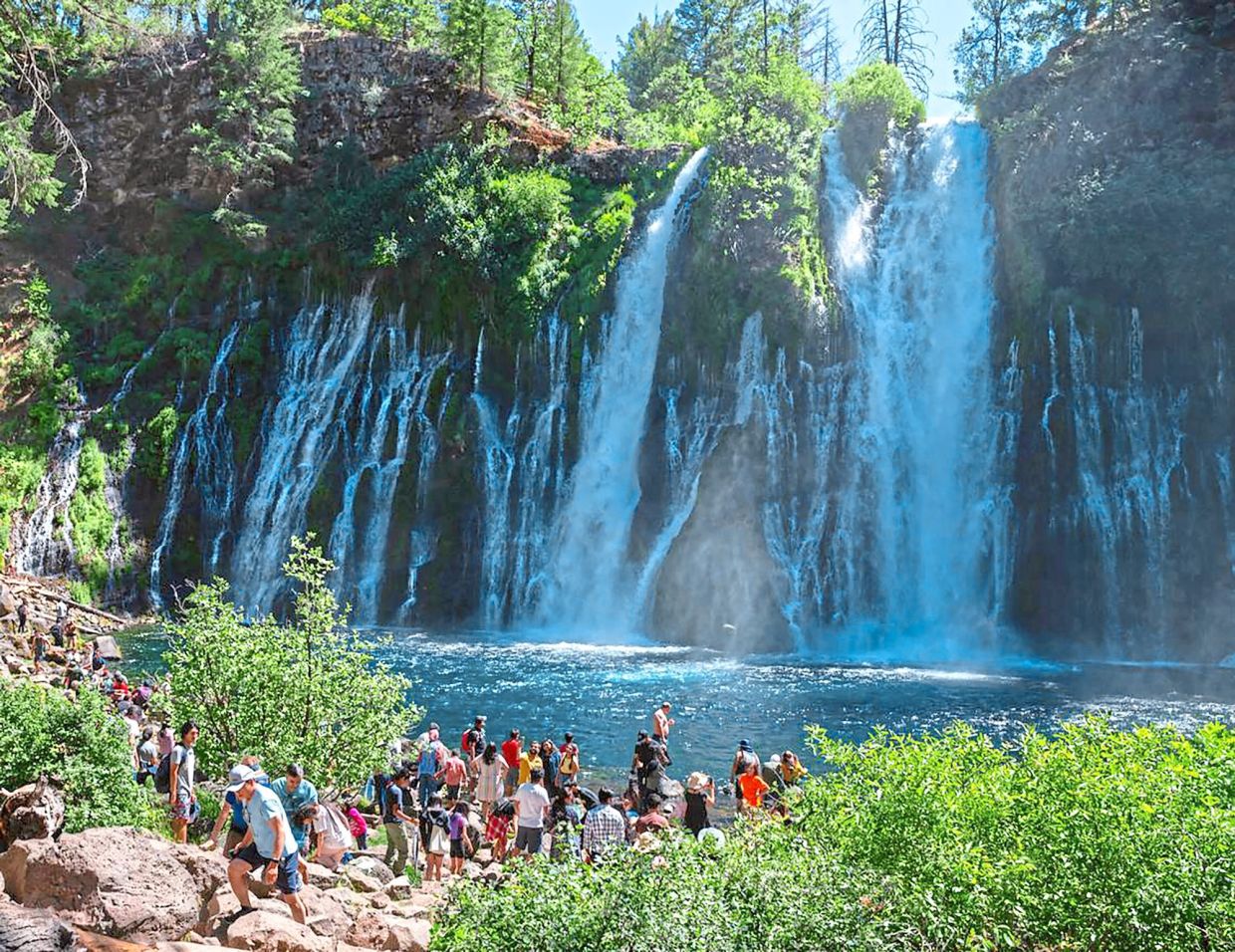
One of California's most spectacular natural attractions has become a victim of its own popularity. Burney Falls, a 39-metre waterfall cascading from a basalt cliff face in Shasta County, has undergone a dramatic transformation from a well-kept regional secret to an Instagram sensation, forcing authorities to implement a ticketing system that fundamentally changes how visitors can experience the landmark. Starting this summer, the California Department of Parks and Recreation will require online reservations for entry on most days through September 27, marking a significant shift in how the state manages one of its crown jewels.
The waterfall's emergence as a viral destination represents a broader challenge facing natural attractions across North America. Theodore Roosevelt once dubbed Burney Falls the "Eighth Wonder of the World," yet for generations it remained largely unknown outside northern California circles, drawing fewer than 122,000 visitors annually as recently as 2015. The explosion arrived with explosive force: visitation peaked at 322,192 in 2020 during the Covid-19 pandemic when indoor recreational spaces closed, and has stabilised around 220,000 annual visitors since then. These figures count only those entering through official gates, deliberately excluding the unmeasured thousands who park illegally along roadside shoulders and access the falls via unmarked trails.
The consequences of this unprecedented surge have become unmistakable across the landscape. Established pathways show severe erosion and degradation, sensitive vegetation has been trampled by foot traffic, and areas holding cultural significance to local indigenous tribes have suffered environmental damage. State Highway 89, the main thoroughfare through this heavily forested county region, now experiences dangerous congestion and illegal parking that creates public safety risks and complicates emergency evacuation routes during fire season—a critical concern in California's increasingly volatile climate. The situation became so dire that in summer 2024, authorities closed all waterfall access entirely to undertake emergency restoration of trails and slopes ravaged by the combination of heavy foot traffic and storm-related erosion.
The human experience at the site has deteriorated correspondingly. Visitors fortunate enough to secure parking now contend with extreme congestion, queues stretching beyond reasonable waiting times for restroom facilities, and waste management systems overwhelmed by sheer volume. Gate closures lasting up to several hours daily have become routine. Campers holding overnight reservations face a dilemma: leaving the park to explore surrounding areas risks being unable to return for hours, fundamentally altering the visitor experience. What was once marketed as a serene immersion in natural beauty has transformed into a frustrating, crowded spectacle that satisfies neither the environment nor those seeking authentic connection with the landscape.
State Parks director Armando Quintero framed the reservation requirement as a necessary intervention to preserve what makes Burney Falls exceptional. By allowing advance bookings, the system aims to stabilise visitor flows while protecting park infrastructure from continued degradation. The approach reflects growing recognition among California's park administrators that unlimited access to finite natural resources inevitably leads to environmental destruction and compromised visitor satisfaction. Rather than operating on a first-come, first-served basis that rewards early arrival and encourages unsafe practices, the reservation model distributes access more rationally across available capacity.
The logistics of the system demonstrate a carefully calculated approach to congestion management. McArthur-Burney Falls Memorial State Park will issue 103 parking passes for the morning slot (8am to noon), an equal 103 passes for the afternoon period (1pm to 5pm), and 35 all-day passes on Fridays, Saturdays, Sundays, and designated holidays during the summer peak season. This tiered structure encourages visitors to spread across time slots rather than clustering during conventional weekend hours. Day-use pass holders will pay modest fees with senior and disability discounts, though holders of California State Parks annual passes receive no additional charge provided they reserve in advance. Overnight campers and cabin guests bypass the day-use pass requirement entirely, maintaining their access privileges.
The broader context illuminates how social media has fundamentally altered tourism patterns across the developed world. Platforms like Instagram and TikTok have transformed obscure natural locations into bucket-list destinations almost overnight, creating sudden, unsustainable demand that infrastructure and land management practices cannot absorb. Burney Falls exemplifies this phenomenon: decades of relative anonymity ended when content creators discovered its photogenic appeal and shareability, triggering a cascade of viral posts that shattered its status as a local treasure. The waterfall's dramatic appearance, picturesque rainbow effect, and accessibility combined to make it ideal for the aspirational travel content that dominates social platforms, essentially marketing itself to millions worldwide without any corresponding expansion in park capacity or management resources.
State senator Megan Dahle, whose district encompasses Shasta County, acknowledged the reservation system will inevitably disrupt some visitor plans during the transition period. Her perspective emphasises that something substantial had to change, as the trajectory was clearly unsustainable. Yet she characterised the current measure as potentially temporary, suggesting that longer-term solutions may involve infrastructure expansion or other modifications to accommodate growing demand without sacrificing environmental integrity. This framing reveals the inherent tension in modern tourism management: how to balance public access to natural wonders with the imperative to preserve those wonders for future generations.
The California Department of Parks and Recreation will evaluate the pilot programme's effectiveness at the conclusion of the summer season, with adjustments planned for future peak periods based on early results. Administrators face a delicate calibration: setting capacity limits too low risks disappointing visitors and failing to capture potential revenue, while establishing ceilings too high permits the problems that prompted intervention in the first place. The system's success will depend partly on how effectively it discourages the illegal parking and off-trail access that have compounded environmental damage, and whether visitors accept advance planning as a reasonable trade-off for experiencing the waterfall.
For Malaysian and Southeast Asian travellers, Burney Falls' evolving management approach offers instructive lessons. As tourism to natural attractions across the region intensifies, destinations from Thailand's limestone karsts to Indonesia's lesser-known islands may confront similar capacity constraints and environmental pressures. The California system suggests that proactive reservation mandates, implemented before crises force emergency closures, represent a more visitor-friendly alternative to reactive shutdowns. However, success requires sustained commitment to capacity limits even during periods of economic pressure, coupled with investment in trail restoration and environmental monitoring—demands that strain budgets in developing economies. The Burney Falls case demonstrates both the necessity and difficulty of preserving natural heritage in an age of democratised global tourism.