Cambodia's leadership has signalled a decisive shift in education policy by placing girls' schooling at the centre of the country's economic development strategy. Prime Minister Hun Manet, speaking at the 39th World Conference of the World Association of Girl Guides and Girl Scouts in June, argued that female education represents not merely a social imperative but an economic necessity for steering the nation forward. His remarks reflect a pragmatic assessment: Cambodian women are already reshaping the economy across multiple sectors, yet systemic barriers continue to limit their potential. The government's willingness to elevate this issue on the policy agenda suggests recognition that unlocking female human capital is essential to Cambodia's ambitions of graduating from Least Developed Country status by 2029 and achieving upper-middle-income classification by 2030.
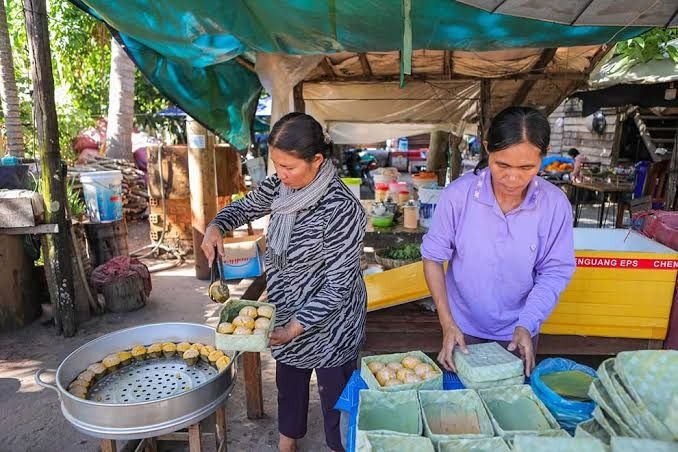
The economic landscape of Cambodia reveals the already substantial footprint women have established. Nearly 60 per cent of the kingdom's micro, small, and medium enterprises are owned by women, a figure that underscores their centrality to private-sector dynamism. This entrepreneurial energy extends across diverse segments—from food production and agricultural exports to hospitality and professional services. Women operate accounting and law firms, manage medical and dental clinics, run private educational institutions, and drive the retail and food-and-beverage industries. These enterprises are not peripheral to the economy but constitute a primary engine of growth in a nation where traditional employment structures remain constrained. The garment, textile, and footwear sector alone employs more than 700,000 women and generates approximately US$16 billion annually, making it one of Cambodia's most significant foreign-exchange earners. This scale of female participation in manufacturing demonstrates that women are not merely supplementary to economic activity but foundational to it.
Educational attainment among Cambodian women has improved markedly, creating a foundation upon which further progress must be built. Female literacy has surpassed 80 per cent according to World Bank data, a substantial achievement given the region's development trajectory. Girls' primary enrolment reached 100 per cent in 2021, indicating that access barriers at the foundational level have largely been overcome. However, these headline statistics mask persistent structural challenges that prevent girls from converting school access into long-term educational completion and economic participation. Early dropout, driven by poverty, cultural expectations, and safety concerns, remains endemic. Many girls leave school before completing secondary education, truncating their earning potential and limiting their access to professional and managerial roles. The transition from enrolment to attainment remains the critical bottleneck.
Cultural and social barriers continue to obstruct girls' educational pathways despite legal frameworks and government commitments. Early marriage remains widespread, removing girls from classrooms during their formative years and foreclosing opportunities for skill acquisition. Gender-based violence and safety concerns—both within and outside educational institutions—create psychological and practical obstacles to regular school attendance. Families facing economic hardship frequently prioritise boys' education or withdraw daughters to contribute to household labour. Civil society organisations have documented how these intersecting pressures create cumulative disadvantage, particularly in rural areas where infrastructure and enforcement mechanisms remain weak. Addressing these barriers requires interventions that extend beyond school infrastructure to encompass family economic support, community engagement, and accountability mechanisms within educational systems.
The government has articulated a commitment to expanding investment in gender equality and women's empowerment, positioning such efforts as integral to capturing a demographic dividend. With women constituting nearly half the population and the majority under age 30, the demographic profile of Cambodia creates a window of opportunity for transforming human capital accumulation. However, articulated commitment must translate into sustained resource allocation and institutional reform. This includes not only removing formal barriers to school attendance but also ensuring that curricula prepare girls for economic participation, addressing safety concerns within educational facilities, and creating pathways from secondary education into higher learning and professional training. The quality of education matters as much as enrolment; rote learning and traditional pedagogies may not develop the critical thinking and technical skills that modern economies demand.
Prime Minister Hun Manet's framing of female education as a peace-building tool reflects broader regional and global discourse on women's roles in stability and development. By characterising women as not merely beneficiaries of peace but active contributors to its construction and maintenance at multiple levels, he positions gender equality as foundational to national resilience. This perspective aligns with evidence suggesting that societies with greater female representation in decision-making institutions and economic structures experience lower conflict and greater political stability. For Cambodia, a nation emerging from decades of instability, investing in women's education and economic participation carries implications beyond economics—it touches on questions of social cohesion, institutional legitimacy, and sustainable governance.
The corporate sector increasingly demonstrates the capabilities of Cambodian women in managerial and professional roles, yet representation in senior leadership remains concentrated. Women successfully operate and manage firms across legal, medical, educational, and financial services, but advancement into executive and board-level positions still faces structural constraints. These constraints often reflect not individual capability but institutional cultures, mentorship gaps, and structural inequalities in career progression. Expanding girls' education must therefore be paired with workplace reforms and conscious efforts to create pipelines into leadership. Companies and professional associations have roles to play in recognising that talent development is a mutual responsibility of educational institutions, employers, and government.
Comparative experience from regional economies offers instructive lessons for Cambodia. Thailand, Vietnam, and Indonesia have similarly witnessed rapid expansion of female educational attainment alongside growth in female labour-force participation and entrepreneurship. These experiences reveal that educational investment yields returns, but also that institutional and cultural change often lags behind formal policy commitments. Female labour-force participation rates, wage gaps, and occupational segregation persist despite high educational attainment in several Southeast Asian economies, suggesting that schooling alone is insufficient. Cambodia's policymakers would benefit from examining how neighbouring nations have addressed the gap between educational credentials and economic opportunity.
The intersection of Cambodia's development goals and gender equity creates both opportunities and vulnerabilities. As the nation pursues graduation from LDC status and aims for upper-middle-income classification within the current decade, female human capital represents an underutilised asset. Conversely, failure to expand girls' education and remove barriers to female economic participation would squander demographic advantage at a critical juncture. The window for capitalising on a youthful population structure is finite; as populations age, the labour-force growth that has driven Southeast Asian growth begins to decelerate. Cambodia's competitive advantage depends partly on its demographic profile—investing in the education and productive capacity of female workers constitutes a rational economic strategy, quite apart from equity considerations.
Implementing expanded girls' education requires coordinated action across multiple domains. The government must increase resource flows to secondary and tertiary education, ensure safety within and around schools, and enforce compulsory-education requirements while simultaneously addressing household-level barriers to attendance. Civil society organisations play critical roles in advocacy, monitoring, and filling service gaps. Private employers must recognise their stake in female human capital development and contribute through workplace policies, apprenticeships, and mentorship. Educational institutions must reform curricula and teaching practices to ensure relevance to evolving economic opportunities. Without this coordinated effort, policies announced at international conferences risk remaining aspirational rather than transformative. The challenge facing Cambodia's leadership is therefore not merely rhetorical commitment but sustained, adequately resourced implementation across institutions and communities.

