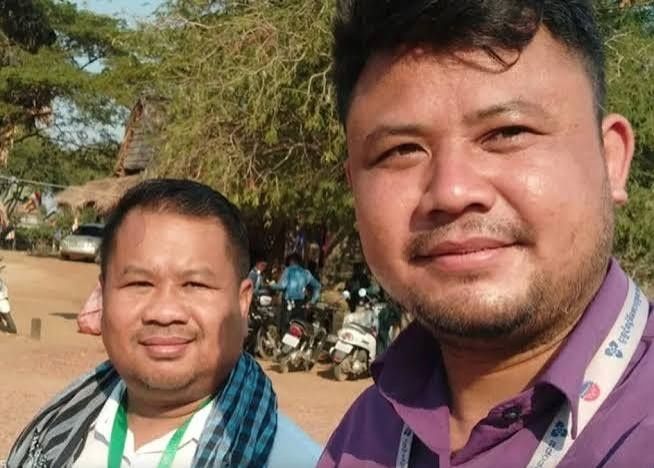
Cambodia's Supreme Court was prepared to deliver a verdict on the treason appeal filed by Phorn Sopheap and Pheap Pheara, two journalists each serving 14-year sentences after being convicted of breaching national security laws by sharing photographs from restricted areas along the kingdom's contested border with Thailand. The determination represented a significant moment for press freedom in Southeast Asia, coming as international media watchdogs increasingly scrutinise the stability and impartiality of Cambodia's highest court.
Phorn Sopheap, who works with Battambang Post TV Online, and Pheap Pheara from TSP 68 TV Online, were detained in July after returning from reporting assignments near the border. Prosecutors alleged that both men had entered a militarised zone without proper clearance and subsequently posted their photographs to Facebook, thereby committing treason by exposing sensitive military information. The journalists have consistently maintained that they possessed appropriate authorisation to be in the disputed territory and that their work constituted legitimate journalistic investigation rather than espionage.
The underlying incident that triggered their arrest stemmed from border violence between Cambodian and Thai forces that erupted in July and again in December of the previous year. During these clashes, hundreds of thousands of civilians on both sides of the frontier were displaced, and approximately one hundred military personnel and non-combatants were killed in the fighting. One photograph released by the journalists showing anti-personnel mines proved particularly contentious, as Thai media organisations circulated it widely to substantiate claims that Cambodia had deployed new mine fields that had wounded Thai soldiers conducting patrols along the boundary.
Cambodia's government vehemently disputed these allegations, insisting it had never deployed mines and maintained full compliance with international treaties prohibiting their use. Officials instead suggested that any mines present were remnants of Cambodia's decades-long civil conflict, which had concluded in the late 1990s. The diplomatic dispute over the mines highlighted how the journalists' photographs became weaponised in a broader geopolitical confrontation, transforming what might ordinarily be considered routine border reporting into a matter of alleged national defence compromise.
The December 2024 conviction by Siem Reap Provincial Court found both men guilty of "supplying a foreign state with information prejudicial to national defence," a charge so vague it encompasses nearly any reporting on military matters. In March, a lower appellate court upheld the convictions, prompting the men to petition the Supreme Court for a final review. The Supreme Court's decision carried enormous symbolic weight beyond these two individuals, functioning as a barometer of judicial independence in a nation with a troubling record of political persecution disguised as prosecutions.
The timing of this ruling proved particularly revealing, arriving just days after the same Supreme Court upheld the incitement conviction of Rong Chhun, a 56-year-old opposition politician prosecuted for meeting with villagers affected by government development projects. Rong Chhun's conviction last year sent shockwaves through Cambodia's already-fragile civil society, and its affirmation by the highest court reinforced perceptions that the judiciary serves as an instrument of state control rather than an independent arbiter. The proximity of these two cases underscored a troubling pattern whereby Cambodia's courts repeatedly validated prosecutions widely understood as political retaliation.
International journalism organisations mounted sustained advocacy on behalf of the detained reporters. More than a dozen national and international press associations issued a joint appeal urging the Cambodian government to abandon its case, particularly after the appellate court rejected their initial defence in March. The Committee to Protect Journalists, based in New York, explicitly characterised the prosecutions as examples of the government "using vague national security laws to criminalise legitimate reporting." These appeals reflected a global consensus that the charges represented an attack on press freedom rather than a genuine national security investigation.
Human Rights Watch directly attributed the conviction patterns to what it described as the "lack of independence from the ruling party" exhibited by Cambodia's judicial system, a charge the government categorically rejected while insisting the Supreme Court operated with complete impartiality. This transparent contradiction highlighted the fundamental crisis of legitimacy facing Cambodia's institutions. The dispute between international observers and official Cambodian statements exposed a chasm in how the two sides understood the meaning and purpose of an independent judiciary.
The broader context for these prosecutions extends beyond the current government. Under Hun Sen, Cambodia's prime minister for nearly four decades until August 2023, the nation became synonymous with systematic suppression of free expression and assembly. Hun Sen's administration faced consistent international condemnation for human rights violations ranging from arbitrary detention to extrajudicial killings. His successor, Hun Manet, his American-educated son, inherited a system thoroughly structured around executive dominance. Despite international hopes that a generational leadership change might herald political opening, Cambodia has witnessed virtually no liberalisation of the restrictive environment Hun Sen constructed.
Cambodia's standing in global press freedom rankings starkly illustrated the severity of the situation. The 2025 Reporters Without Borders World Press Freedom Index positioned Cambodia 161st among 180 countries and territories assessed, classifying it among nations experiencing "very serious" threats to journalistic work. This dismal positioning reflected decades of accumulated restrictions, yet the persistent prosecutions of journalists like Phorn Sopheap and Pheap Pheara indicated that the problem was not historical but actively maintained through deliberate state action.
The implications of the Supreme Court's decision extended far beyond Cambodia's borders. Southeast Asia's regional standing as a zone respecting press freedom and democratic norms partly depends on whether individual nations allow journalists to operate without fear of prosecution for their reporting. Thailand itself has struggled with press freedom issues, making Cambodia's trajectory particularly significant for regional credibility. A Supreme Court decision upholding the convictions would signal that Cambodia's leadership had concluded that controlling information and suppressing criticism took precedence over international norms regarding judicial independence and press freedom.
The Supreme Court's choice also tested whether any institutional checks remained on executive power in Cambodia. A reversal of the convictions would indicate that Cambodia's highest court retained some capacity to resist political pressure and assert genuine independence. Conversely, confirmation of the verdicts would suggest that even Cambodia's most elevated judicial institution had become completely subordinate to government control, foreclosing any hope that the system contained mechanisms for protecting constitutional rights or restraining state overreach.

