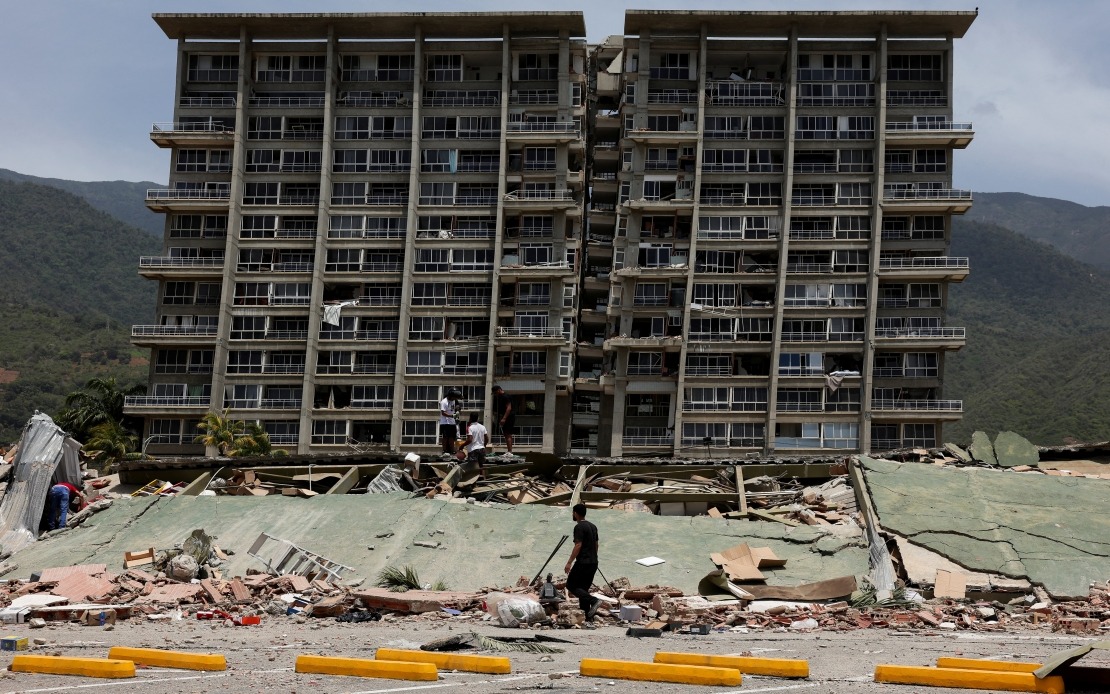
Canada's Foreign Ministry has announced a substantial humanitarian package worth US$5 million to assist Venezuela in the aftermath of devastating earthquakes that have left communities across the country reeling from significant casualties and infrastructure damage. The initial funding commitment, disclosed on Thursday in Geneva, represents Ottawa's response to what officials describe as a catastrophic natural disaster that has created urgent humanitarian needs across the South American nation.
The full extent of the earthquake damage remains uncertain, though Canadian authorities have warned that the toll on human life and property destruction is severe. Early assessments suggest that hundreds of thousands of Venezuelan residents may face displacement, injury, or loss of essential services in the coming weeks and months. The Canadian government has characterized the situation as one requiring immediate international coordination and sustained assistance to prevent a secondary humanitarian crisis stemming from the breakdown of critical infrastructure and supply chains.
Foreign Minister Anita Anand issued a statement emphasizing Canada's commitment to the Venezuelan people during this period of acute vulnerability. She described the devastation as heartbreaking, noting that families have been torn apart and communities destroyed by the seismic events. Anand's remarks underscore Ottawa's diplomatic positioning as a supportive actor within the hemisphere, particularly relevant given the complex geopolitical dynamics surrounding Venezuela in recent years. Canada's willingness to provide rapid aid demonstrates a humanitarian approach that transcends political tensions affecting the country's international relationships.
The allocation of resources will be directed through established humanitarian organizations with proven operational capacity in Venezuela. The funding will specifically support the delivery of emergency food supplies, potable water systems, sanitation infrastructure, and medical services to affected populations. Beyond immediate relief, the money will also finance protection mechanisms for vulnerable groups, including children separated from families and displaced persons, as well as logistical operations necessary to transport aid through damaged transportation networks.
This US$5 million commitment builds upon earlier Canadian humanitarian investments in Venezuela. The Canadian government had previously allocated nearly US$4.5 million in assistance funds during 2024 to address pre-existing humanitarian challenges in the country, including food insecurity, health system collapse, and economic deterioration. The new earthquake response funding represents an acceleration of Canada's engagement with Venezuelan humanitarian needs, suggesting that Ottawa views the seismic disaster as having dramatically worsened an already precarious situation for vulnerable populations.
Canadian officials have indicated that the new funds represent only an initial phase of the country's earthquake response. The ministry has stated that additional details regarding the specific allocation of the US$5 million will be released in the coming days as assessments of damage and humanitarian requirements become clearer. This phased approach is typical of modern humanitarian response, allowing governments to adjust spending as ground-truth information replaces preliminary estimates about the scale and nature of disaster impacts.
Government representatives in Ottawa remain actively engaged with regional partner nations and international humanitarian organizations to coordinate a comprehensive relief effort. This multilateral approach reflects recognition that Venezuela's institutional capacity for disaster response is constrained, requiring sustained international cooperation to prevent catastrophic loss of life. Canada's positioning within these coordination mechanisms demonstrates its commitment to playing a constructive role in regional stability and humanitarian support.
The timing and scale of Canada's response carries particular significance for Southeast Asian observers. Venezuela's earthquake crisis illustrates the vulnerability of developing nations to natural disasters when combined with underlying institutional weakness and economic stress. For countries across the region facing similar seismic risks and economic constraints, the Canadian response model—combining rapid initial funding with coordination among regional and international partners—offers relevant lessons about managing disaster response in complex operational environments.
Canada's humanitarian engagement with Venezuela also reflects broader patterns of Canadian foreign policy in Latin America, where Ottawa has increasingly positioned itself as a stable democratic partner offering non-political assistance during crises. This approach contrasts with more ideologically-driven engagement from other international actors and may explain why Venezuelan authorities have been receptive to Canadian assistance despite diplomatic tensions elsewhere. For Malaysian policymakers observing international humanitarian coordination, such patterns demonstrate how nations can maintain effective development and relief relationships even amid broader political disagreements.
The Venezuelan earthquake response will likely require sustained international engagement extending well beyond the immediate relief phase. Reconstruction of damaged housing, healthcare facilities, and transportation infrastructure could occupy humanitarian and development organizations for years. Canada's willingness to commit resources and personnel to this extended timeline will be important for establishing whether the initial US$5 million represents the beginning of substantive long-term support or a symbolic gesture. Regional observers, particularly in Southeast Asia where similar disaster risks persist, should monitor how effectively this Canadian-supported relief effort translates into meaningful improvements in Venezuelan living conditions and disaster resilience.

