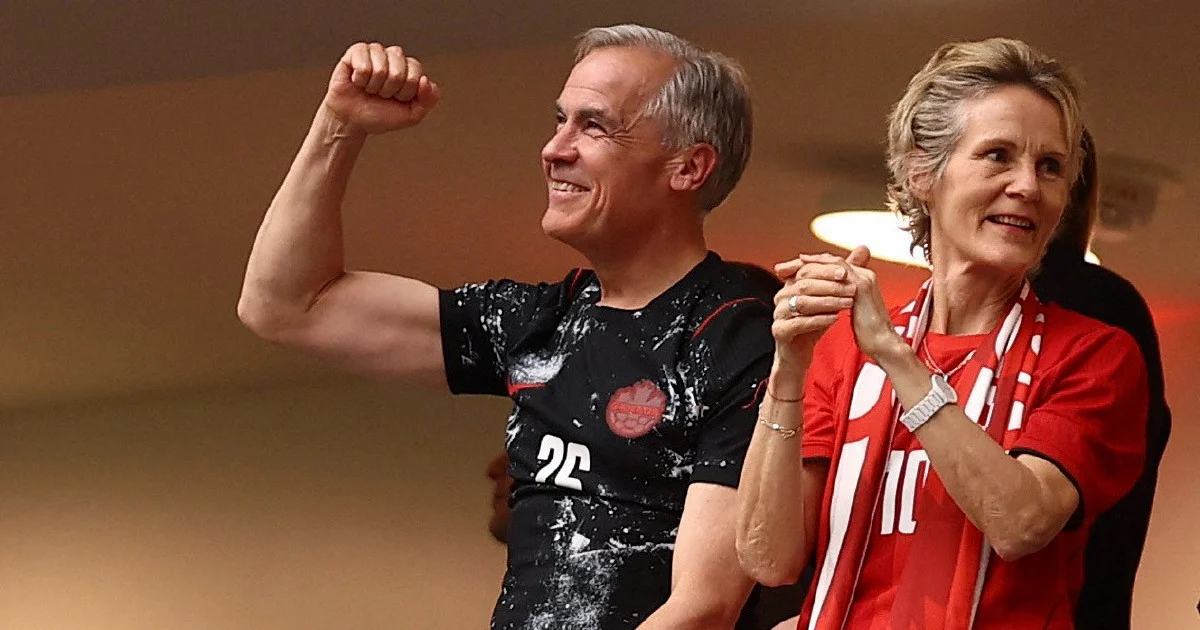
Canada has reached a historic milestone in international football, with Prime Minister Mark Carney making a rare locker room appearance to acknowledge the men's national team's maiden World Cup finals triumph. The momentous occasion marks a watershed for Canadian soccer, which has long struggled to compete on the sport's grandest stage. Carney's personal visit underscores the significance of the breakthrough, signalling that the achievement resonates well beyond the pitch and into the upper echelons of national leadership.
The Canadian squad's victory carries particular weight given the adversity they confronted during the match itself. One of the side's key players sustained a broken leg during play, an injury that could have destabilised team morale and tactical cohesion. Instead of allowing the setback to derail their momentum, the remaining players demonstrated the mental fortitude and team unity that Carney sought to recognise during his post-match engagement with the squad.
For Malaysian and Southeast Asian observers of global football, Canada's World Cup progression represents an important reminder of how developing footballing nations can break through competitive barriers. Like several ASEAN countries, Canada has historically existed outside the traditional football powerhouse hierarchy, yet their qualification and subsequent victory demonstrate that consistent investment, player development, and organisational commitment can yield tangible results on the international stage.
The injury to their teammate tested the Canadian team's depth and psychological resilience in a manner that transcends ordinary match circumstances. Recovery from such a significant blow—both literally and figuratively—required the remaining outfield players to recalibrate their tactical approach while maintaining offensive and defensive intensity. This adaptability, which Carney specifically commended, reflects the hallmarks of teams that progress furthest in knockout tournaments where the margin between elimination and advancement remains razor-thin.
Prime ministerial involvement in sports achievements has become increasingly commonplace as governments recognise the diplomatic and cultural dividend generated by international sporting success. Carney's decision to venture into the locker room rather than conduct a formal public ceremony suggests a deliberate effort to connect directly with players, acknowledging their individual contributions to a collective triumph. Such gestures carry symbolic weight in reinforcing the connection between sporting endeavour and national pride.
Canada's trajectory in international football has long been constrained by structural factors, including the sport's secondary status relative to ice hockey in the national sporting hierarchy and limited grassroots participation compared to traditional football nations. Their World Cup finals victory therefore represents not merely a single match result but a potential inflection point in the sport's development within the country. Increased investment, media attention, and youth engagement could follow in the coming years, mirroring patterns observed in other nations that experienced breakthrough World Cup performances.
The broken leg sustained by their teammate introduces a narrative thread that extends beyond the immediate match context. Medical staff attention, squad depth preparation, and the player's long-term recovery become focal points for the broader football community. Should the injured player make a successful return to elite competition, his journey will likely symbolise resilience to Canadian audiences and inspire younger footballers navigating their own injury obstacles.
For neighbouring United States football observers and regional competitors across CONCACAF, Canada's World Cup performance demands reassessment of competitive hierarchies and tactical approaches within the confederation. The victory announces that Canada possesses the capability to compete against established international opponents, potentially reshaping qualifications for future tournaments and continental competitions.
Carney's acknowledgment of team character rather than focusing exclusively on tactical execution or individual brilliance suggests a philosophical commitment to values-based leadership that extends into the sporting realm. Character—defined through resilience, compassion for injured teammates, and collective determination—arguably represents the most transferable currency across different life domains. By publicly emphasising these qualities, the Prime Minister contextualises athletic achievement within a broader framework of national values.
Looking forward, Canada's World Cup success carries implications for player development pathways and commercial opportunities in Canadian football. Television rights, sponsorship deals, and ticket revenue will likely attract increased capital investment into domestic football infrastructure. Youth academies may experience heightened recruitment efforts, while the professional domestic league could benefit from elevated sponsorship and broadcasting interest.
The locker room visit constitutes a moment of shared celebration but also carries expectations. Carney's presence implicitly encourages the team to build upon this foundation, suggesting that Canadian football supporters and political leadership now anticipate sustained competitiveness rather than viewing World Cup participation itself as the ultimate achievement. This psychological shift, from aspiration to expectation, often accelerates player development and organisational professionalism.
As the Canadian team contemplates their next World Cup campaign and domestic supporters process this historic victory, the image of the Prime Minister acknowledging teammates' character amid adversity will likely persist in the national sporting consciousness. The moment encapsulates not merely football progression but a broader narrative about Canadian ambition, resilience, and the capacity to overcome structural disadvantages through sustained commitment and collective effort.

