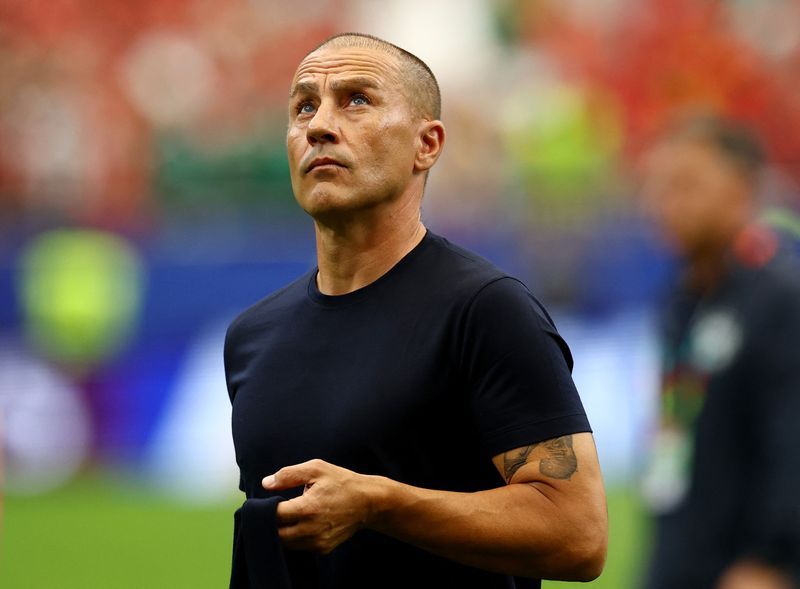
Uzbekistan coach Fabio Cannavaro has accepted full responsibility for his team's humbling 5-0 defeat to Portugal on Tuesday, even as the Central Asian nation faces the prospect of an early exit from their maiden World Cup campaign. The former Italian defender and World Cup winner, speaking after the Group K match in Houston, took the blame squarely upon himself rather than criticising his players for the lopsided scoreline. His readiness to shoulder responsibility reflects the philosophy he has instilled throughout his tenure, one that prioritises protecting his squad's confidence during what is proving to be a trial-by-fire introduction to world football's biggest stage.
Uzbekistan's World Cup debut has become a cautionary tale of the gap between continental champions and the global elite. After this comprehensive loss to Portugal, coupled with an earlier 3-1 defeat to Colombia, the Uzbeks sit in a perilous position within Group K with just one remaining fixture. Their survival hopes rest entirely on achieving victory against the Democratic Republic of Congo on Saturday, a result that would merely keep them mathematically alive for the round-of-32 knockout stage. For a nation competing in the World Cup for the first time, the combination of heavy defeats and technical shortcomings has underscored just how far they must travel to compete consistently at this level.
Cannavaro's statement to reporters, delivered in the aftermath of defeat, revealed a coach grappling with the weight of leading a novice team through their most demanding international examination. He acknowledged that his players had given their maximum effort and expressed genuine pride in their commitment, even as the scoreboard told a starkly different story. His insistence that the responsibility for such a comprehensive defeat rests with tactical and strategic decisions rather than individual player performance demonstrates the kind of leadership experience brings. In professional football, where blame is frequently distributed and deflected, Cannavaro's acceptance of accountability stands as a notable departure from the defensive posturing that often follows heavy losses.
The disallowance of a goal by midfielder Azizjon Ganiev when the score stood at 2-0 proved to be a pivotal and demoralising moment during the encounter. Cannavaro recognised that the decision to rule out what would have been a dramatic equaliser had a profound psychological impact on his team's confidence and momentum. The goal, rescinded for a foul committed in the build-up play, represented a genuine opportunity for Uzbekistan to shift the narrative of the match and inject belief into their campaign. When such a moment is taken away, it compounds the challenge facing a team already confronting vastly superior technical and tactical resources from their opponents.
Cannavaro, who himself lifted the World Cup trophy as captain of Italy in 2006, brings credibility to his assertion that defeat, however severe, can serve as a catalyst for growth. He explained to his squad that their first World Cup appearance should be viewed through the lens of accumulated experience rather than immediate results. This perspective, while unlikely to soften the immediate sting of conceding five goals, positions the tournament as a learning opportunity rather than simply a platform for humiliation. The Italian coach's two-decade career in elite football has equipped him to see beyond the immediate scorecard to the longer trajectory of a team's development.
He revealed the strategic emphasis he has placed on encouraging his players to embrace boldness and creativity rather than retreat into fearful, defensive football. When instructing his squad to take risks, pass more freely, and play with the kind of attacking intent that had characterised their performance against Colombia, Cannavaro was consciously building a foundation for improvement. The paradox he faces is that this philosophy of free expression and courage, while ideal for long-term development, leaves teams exposed to punishment from technically superior opponents in the short term. Portugal's clinical finishing ruthlessly exposed the vulnerabilities inherent in Uzbekistan's approach.
The significance of Uzbekistan's World Cup participation extends beyond the immediate outcomes in Houston. As a nation emerging from relative obscurity on the global football stage, their qualification itself represented a landmark achievement for Central Asian football development. However, the scale of their defeats against established powerhouses has laid bare the structural gaps between emerging nations and the established hierarchy of world football. For Malaysian readers particularly, Uzbekistan's struggles offer a sobering reminder of the investment and institutional development required to compete at the World Cup's highest level, challenges not entirely unfamiliar to Southeast Asian football programmes.
Cannavaro's philosophy of maintaining optimism and extracting lessons from defeat speaks to the mentality required for long-term footballing development. Rather than dwell on the magnitude of the losses, he has framed the experience as foundational to building a more competitive programme. His repeated emphasis on the need for players to grow individually and collectively suggests he views this World Cup campaign as the opening chapter in an extended narrative rather than a final judgment. This perspective, while challenging to maintain after such devastating defeats, reflects the maturity of a coach who has experienced both triumph and adversity at the sport's summit.
Looking ahead to the final group match against the Democratic Republic of Congo, Uzbekistan will need to demonstrate not merely technical proficiency but also psychological resilience. The back-to-back defeats have inflicted emotional damage that goes beyond mere tactical adjustments. Cannavaro's challenge will be to maintain the belief that allowed his team to compete with Colombia and Portugal, however imperfectly, while extracting concrete improvements in defensive organisation and clinical finishing. Success against Congo would provide at least a measure of redemption and proof that the opening matches, while devastating, need not define the entirety of their World Cup experience.

