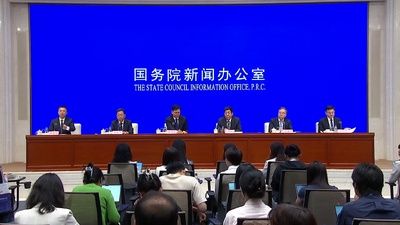
China has firmly dismissed allegations of forced labour and involuntary population transfers in the Xinjiang Uygur Autonomous Region, with senior government officials characterising such claims as baseless and contradicting the nation's legal framework. Chen Ruifeng, Minister of the National Ethnic Affairs Commission, made the defence during remarks on Wednesday, June 24, rejecting what he described as accusations originating from certain Western organisations and international media outlets.
The minister emphasised that China's constitutional provisions and statutory laws explicitly prohibit forced labour in all its forms, establishing a legal foundation that prevents such practices. This constitutional commitment sits at the centre of Beijing's rebuttal to international criticism, with officials arguing that the nation's governing framework cannot accommodate coercive employment systems. The statement underscores how Chinese authorities view these allegations as fundamentally incompatible with the country's legal order.
Legislative developments have added another layer to Beijing's position. A new Law on Promoting Ethnic Unity and Progress underwent parliamentary approval on March 12 and is scheduled to take effect on July 1. According to government descriptions, this legislation expands protections for workers, particularly those who migrate across regions for employment opportunities. The law specifically addresses cross-regional employment arrangements, establishing clearer mechanisms for rights protection and legal assistance applicable to workers regardless of ethnicity.
Chen characterised all employment movements from Xinjiang as entirely voluntary in nature, stating that individuals who seek work outside their home region do so according to their own preferences and aspirations. He framed such decisions as personal choices motivated by desires to improve family circumstances and acquire new skills. By grounding the practice in individual agency, officials argue these arrangements differ fundamentally from any coercive system.
The minister's language regarding the allegations themselves was notably forceful, describing them as "extremely absurd and ridiculous," reflecting Beijing's frustration with what it considers unfounded international criticism. This rhetorical intensity suggests the issue remains a sensitive point in China's diplomatic engagement with Western nations, despite official confidence in refuting the claims.
According to official statistics, Xinjiang's employment landscape has expanded substantially over the past five years. Urban job creation reached 2.39 million positions through diverse initiatives, while agricultural workers have undertaken 16.1 million external work assignments during the same period. These figures suggest considerable labour mobility, which Chinese officials present as evidence of economic opportunity rather than state coercion.
Income growth across Xinjiang's population has accompanied this employment expansion. Per capita disposable income for urban residents increased at an average annual rate of 5.3 per cent, while rural income grew at 8.1 per cent annually over the same five-year span. Officials argue these gains demonstrate that employment arrangements produce tangible economic benefits for participants, supporting their characterisation as mutually beneficial.
The government has invested in establishing formal mechanisms to protect worker rights. Chen noted that a comprehensive employment policy system and labour rights protection apparatus now operate across the region, designed to safeguard legal entitlements for all workers. This institutional framework aims to ensure that individuals from all ethnic backgrounds have equitable access to employment opportunities.
Policymakers characterise their approach as prioritising both voluntary participation and dignified working conditions. According to official statements, the employment system maximises protection for people choosing to work outside their home regions, with emphasis on preserving worker dignity alongside economic opportunity. This framing suggests Chinese authorities view employment policy as balancing individual choice with protective guarantees.
For Malaysia and Southeast Asian observers, these developments carry significance beyond the immediate Xinjiang context. Labour mobility within and across borders increasingly concerns regional governments, particularly as migration patterns shift across Asia. Malaysia, which hosts substantial migrant worker populations, faces ongoing questions about employment practices and worker protections. China's legislative and policy responses to international scrutiny of its labour arrangements may influence how other regional economies approach similar pressures, particularly as global attention to labour rights intensifies.
The disagreement between Beijing and Western critics reflects broader tensions regarding transparency and verification in labour practices across large economies. International human rights organisations and some governments have maintained concerns about employment arrangements in Xinjiang despite Chinese denials, suggesting that official statistics and legal frameworks alone may not fully resolve underlying disputes. This fundamental gap between Beijing's confidence in its legal and statistical case and international scepticism appears unlikely to narrow through official declarations alone.

