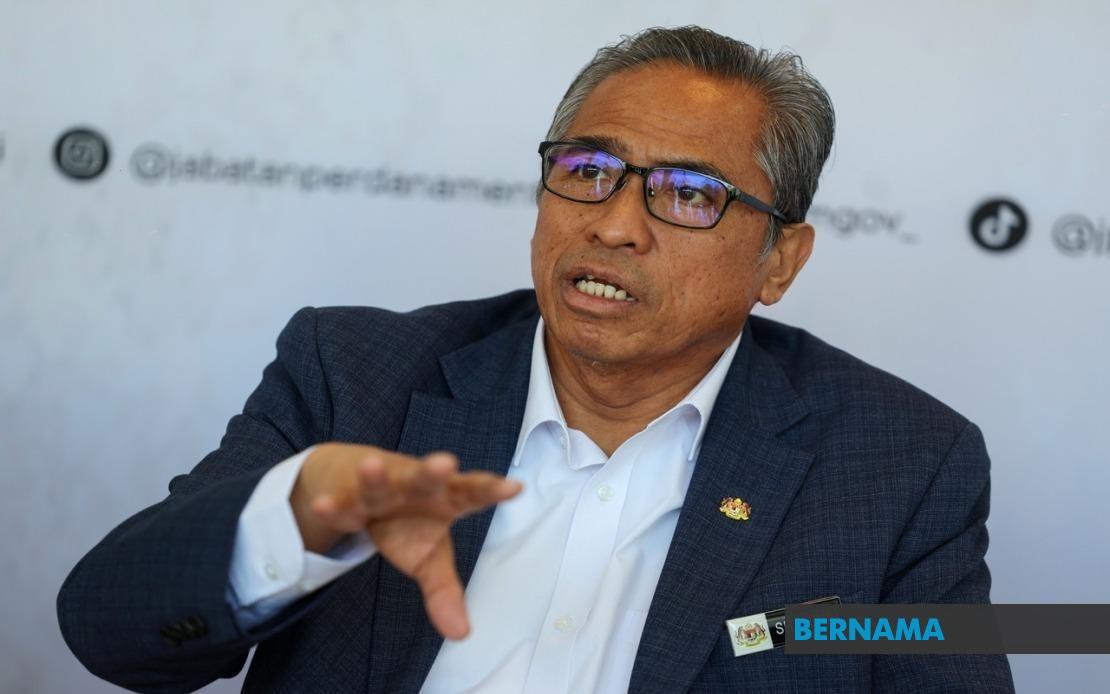
Malaysia's top civil servant has issued a clarion call for the public sector to become the execution engine behind the country's emerging global diplomatic and economic strategy. In remarks highlighting the connection between foreign policy success and domestic institutional performance, Chief Secretary to the Government Tan Sri Shamsul Azri Abu Bakar underscored that recent working visits by Prime Minister Datuk Seri Anwar Ibrahim to Russia and Turkmenistan represent more than symbolic foreign policy achievements—they demand immediate, coordinated action across government agencies to capitalise on the strategic openings these visits have created.
The timing of Shamsul Azri's intervention reflects growing recognition within Malaysia's governing machinery that diplomatic breakthroughs alone cannot sustain national competitiveness. The Prime Minister's outreach to Russia and Turkmenistan, particularly significant given Malaysia's need to diversify trading relationships and explore emerging markets beyond traditional Western partners, has positioned the country as a willing participant in reshaping global economic partnerships. Yet, as Shamsul Azri made plain, this positioning lacks substance without corresponding institutional readiness. The civil service, he argued, must evolve from its traditional role as policy implementer to become a proactive facilitator of Malaysia's integration into shifting international economic structures.
Central to this transformation is what Shamsul Azri termed the elevation of a "global mindset" across the public sector. He specifically identified ministries responsible for economy, trade, and investment as requiring heightened preparedness and operational agility. These agencies, currently tasked with implementing initiatives like Ease of Doing Business reforms, must develop the capacity to rapidly translate international agreements into functional domestic arrangements. For Malaysian businesses and investors, this translates into reducing friction in accessing markets that diplomatic channels have opened. Without this operational follow-through, the gains from MADANI Diplomacy—the government's stated approach to international engagement emphasising mutual benefit and strategic partnerships—risk remaining mere diplomatic gestures.
The concept of MADANI Diplomacy itself warrants scrutiny in the Malaysian context. Rather than pursuing alignment with any single global power bloc, the framework attempts to position Malaysia as a bridge-builder and strategic partner capable of engaging diverse international actors. Russia and Turkmenistan represent distinct spheres of influence and economic interest; Russia offers potential energy partnerships and geopolitical positioning within Eurasian frameworks, while Turkmenistan provides connectivity to Central Asian markets and resources. For Malaysian policymakers, these relationships address a strategic vulnerability: over-dependence on traditional trading partners in the West and within ASEAN. However, converting diplomatic access into sustained economic benefit requires more than ministerial enthusiasm; it demands bureaucratic systems capable of managing complex international transactions and regulatory environments.
Shamsul Azri's emphasis on a "Whole-of-Government" approach reflects this complexity. Rather than allowing individual ministries to operate in silos, effective international engagement requires coordinated action spanning trade, investment, infrastructure, and regulatory agencies. For instance, if Malaysia negotiates preferential trade access in Turkmenistan, success depends not only on the trade ministry's negotiating skill but on customs authorities' readiness to facilitate movement of goods, on financial regulators' willingness to streamline cross-border transactions, and on industry bodies' capacity to help Malaysian exporters understand new market dynamics. The absence of this coordination has historically hindered Malaysia's ability to fully exploit bilateral agreements reached with international partners.
The Chief Secretary's invocation of the Public Service Reform Agenda (ARPA) and its "internationalisation" enabler signals that institutional transformation is already underway, though implementation remains uneven. ARPA represents an attempt to rebuild Malaysia's civil service around principles of performance, accountability, and strategic capability. For the international dimension specifically, this means attracting and retaining civil servants with genuine expertise in global markets, regulatory frameworks, and strategic economic positioning—not merely administrators trained in domestic procedures. This requires competitive compensation, professional development opportunities, and career pathways that reward expertise in international affairs. Currently, Malaysia's civil service competes globally for such talent while simultaneously maintaining hierarchies and compensation structures designed for a different era.
The challenge extends beyond institutional capacity to mindset and culture. Shamsul Azri's call for public servants to "possess a global mindset and the capability to act as international-class strategic partners" acknowledges a deeper issue: that parts of Malaysia's bureaucracy remain oriented toward domestic regulatory compliance rather than proactive economic facilitation. This distinction matters enormously for how Malaysia competes for investment. When multinational companies or strategic investors evaluate locations, they assess not merely formal policy frameworks but the speed and sophistication with which government agencies can navigate complex approvals, resolve regulatory ambiguities, and facilitate operations. Competitors like Singapore and Vietnam have cultivated reputations for administrative responsiveness precisely because their civil services view business facilitation as a core mission rather than a secondary function.
The promise of "high-income job opportunities for locals" that Shamsul Azri highlighted represents the ultimate political metric for success. International trade and investment matter only insofar as they generate domestic employment and prosperity. Malaysia's middle class, still aspiring toward higher income levels relative to regional peers, will judge the government's international strategy by concrete employment gains and wage growth. This creates pressure on the civil service to ensure that new markets accessed through diplomatic channels translate into genuine Malaysian business opportunities rather than merely importing foreign competitors into protected domestic sectors. Investment facilitation, in this context, requires careful calibration to support local enterprise capacity-building alongside foreign direct investment attraction.
More broadly, Shamsul Azri's remarks reflect the government's recognition that Malaysia faces a critical juncture. Regional competitors are aggressively pursuing international partnerships and investment attraction. ASEAN neighbours, particularly Vietnam and Indonesia, have invested substantially in upgrading administrative systems and business-friendly governance frameworks. For Malaysia to remain competitive, institutional reform cannot lag behind diplomatic ambition. The civil service transformation he advocates—moving from rule-bounded administration toward strategic facilitation—represents a necessary evolution rather than optional reform.
Implementing this vision faces real obstacles. Civil service culture, developed over decades, prizes stability and adherence to procedure. Shifting toward agility and rapid response requires new training, different incentive structures, and tolerance for calculated risk-taking that bureaucratic systems traditionally penalise. Additionally, the quality of international partnerships depends partly on factors beyond Malaysia's control; geopolitical shifts, global economic cycles, and partners' domestic priorities will shape outcomes regardless of bureaucratic efficiency. Nevertheless, Shamsul Azri's message is clear: Malaysia's diplomatic positioning will yield returns only if matched by institutional performance and public sector commitment to executing the national economic agenda with world-class competence.

