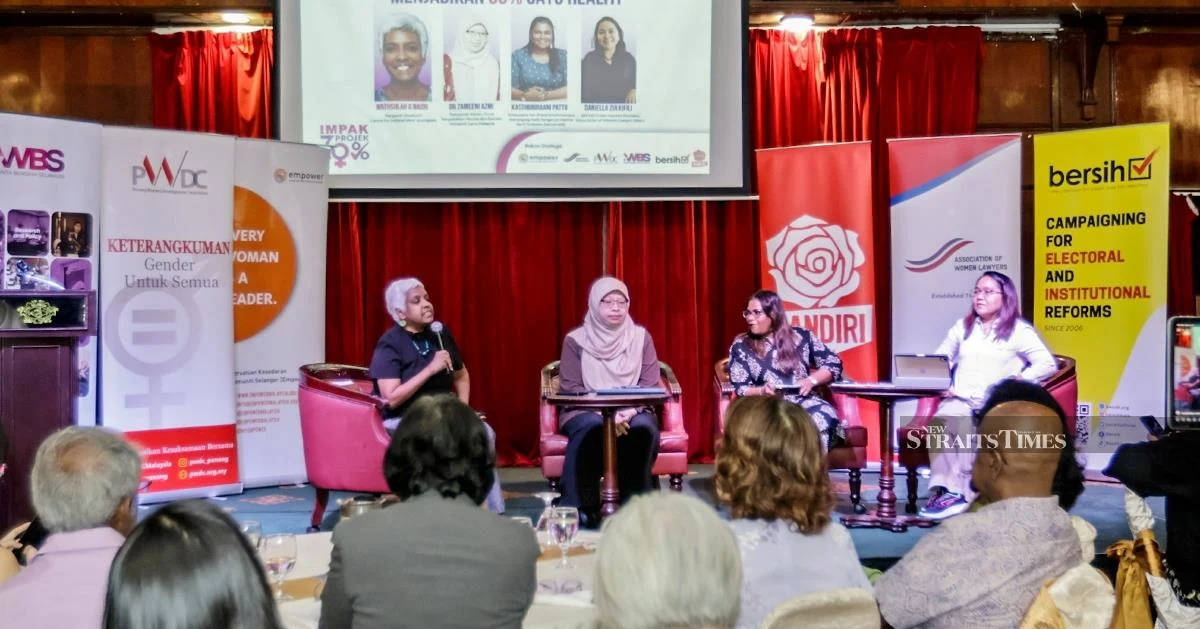
A broad alliance of civil society organisations has formally presented a draft law and memorandum to the Malaysian government, pressing for mandatory quotas requiring political parties to nominate at least 30 per cent women candidates when the country holds its next general election. The submission marks a coordinated push by advocacy groups to address persistent gender imbalances in parliamentary representation and the broader political establishment.
The 30 per cent threshold represents a measured but meaningful target within international benchmarks for gender equity in electoral politics. This figure reflects recommendations from numerous women's rights bodies and sits above Malaysia's current female representation in parliament, positioning it as an achievable yet substantive reform. The symbolism is significant: reaching this level would signal genuine structural change while remaining within realistic implementation horizons for political institutions often resistant to rapid transformation.
The memorandum and legislative framework being advanced by the coalition addresses a longstanding challenge within Malaysian politics. Despite women comprising slightly more than half the national population, their presence in elected office remains disproportionately low, limiting diverse perspectives in policy-making and legislative debates. This underrepresentation has persisted across multiple election cycles, suggesting that voluntary measures and gradual cultural shifts alone have proven insufficient to drive meaningful progress.
Implementing a mandatory quota system would require political parties to fundamentally reassess their candidate selection processes. Rather than relying on traditional patronage networks and party hierarchies that have historically favoured male candidates, parties would need to actively identify, nurture, and promote female politicians. This structural intervention could reshape internal party dynamics and create pathways for capable women who might otherwise be overlooked in competitive nomination battles.
The timing of this submission carries weight in Malaysia's electoral calendar. General elections in Malaysia occur at five-year intervals, with the previous general election held in 2022. The proposed legislation aims to establish clear rules well in advance of the next national vote, giving political parties adequate notice to prepare and adjust their nomination procedures. Early legislative action would also signal government commitment to gender equality as a governance priority.
Regional context matters considerably here. Several neighbouring Southeast Asian nations have experimented with quota systems of varying stringency. Thailand, Indonesia, and the Philippines have implemented different approaches to women's political participation, producing mixed but generally positive results in expanding female representation. Malaysia's civil society organisations are essentially learning from these regional examples while advocating for homegrown solutions suited to the country's political culture and constitutional framework.
The coalition approach itself demonstrates strategic sophistication. By uniting multiple organisations behind a single legislative proposal, advocates create a broader constituency supporting reform and amplify their collective voice. This contrasts with fragmented efforts that individually lack sufficient political leverage. The formal submission of draft legislation—rather than mere calls for action—shows serious intent and provides elected officials with concrete language to debate and potentially adopt.
Opposition or resistance to quota systems typically centres on meritocratic arguments, with critics contending that candidates should be selected primarily on capability rather than gender. Proponents counter that existing selection systems already embed multiple non-merit criteria including party loyalty, personal connections, and factional allegiances. Adding gender considerations simply makes explicit what currently operates implicitly, while correcting demonstrable historical bias.
For Malaysian women interested in political careers, quota legislation would provide tangible structural support currently absent. Young female professionals considering parliamentary runs face uncertain prospects in a system historically dominated by male gatekeepers. Guaranteed candidate positions at a 30 per cent level would reduce arbitrary exclusion and create clearer advancement pathways, potentially attracting talented women who might otherwise channel ambitions into alternative sectors.
The government's response to this submission remains uncertain. While Malaysia has made incremental progress on gender equality in recent years—including greater female representation in judicial and corporate roles—translating commitment into binding electoral legislation represents a more significant political step. Such laws affect the core machinery through which political power is distributed, making adoption inherently controversial among established political figures.
Implementing gender quotas would necessitate amendments to relevant electoral legislation and potentially party regulations. The legislative process itself would reveal which political parties genuinely support women's advancement versus those offering rhetorical support while resisting practical change. Public debate during parliamentary consideration would clarify political positions and create accountability mechanisms for elected officials.
Beyond immediate electoral mathematics, normalising women's presence at higher percentages in parliament carries downstream effects. Increased female representation influences policy priorities, from healthcare and education to economic inclusion, and models female political participation for younger generations. Young girls observing women wielding legislative authority and executive responsibility naturally expand their sense of possible career trajectories.
The submission of this draft legislation represents civil society taking initiative on institutional reform rather than awaiting top-down governmental action. Whether the government acts on these recommendations will test the political establishment's genuine commitment to gender equality as a governing principle versus treating it as symbolic politics divorced from meaningful structural change.

