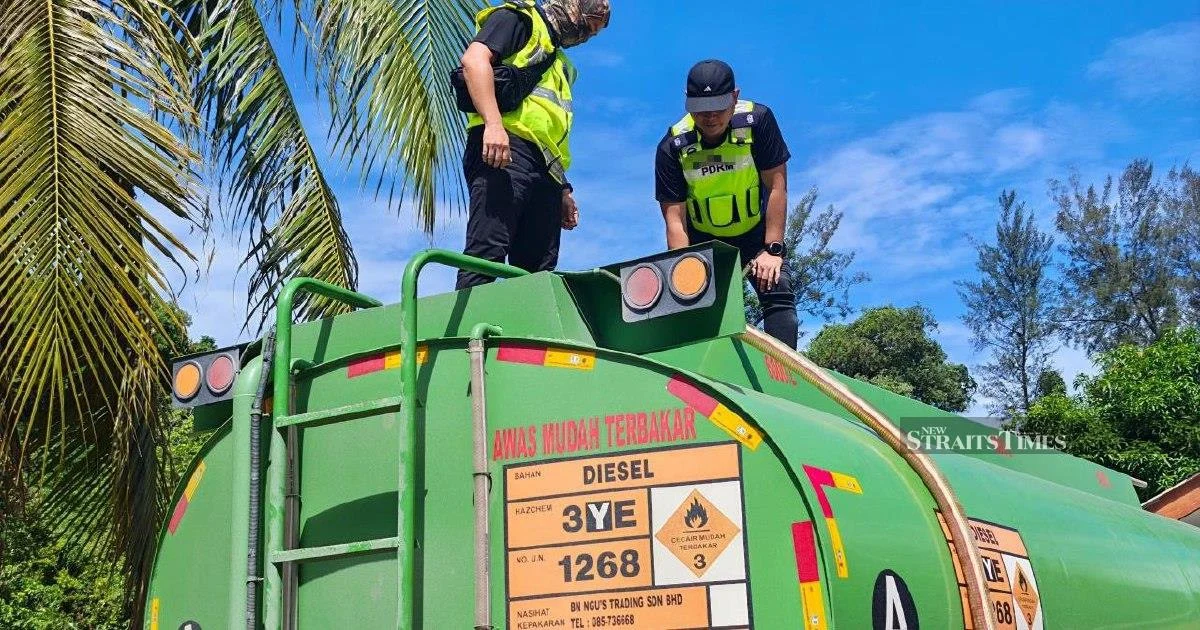
Enforcement authorities in Miri have successfully dismantled what investigators describe as a coordinated operation to illegally divert subsidised diesel fuel through a covert depot hidden within a private residential bungalow. The raid, conducted in the Tanjung Lobang district, resulted in the seizure of 15,000 litres of fuel and the detention of four men suspected of involvement in the scheme.
The discovery represents a significant blow to fuel smuggling networks that have long plagued Malaysia's petroleum sector. Subsidised diesel, a critical resource intended for fishing vessels, agricultural enterprises, and essential transport operators, has become a persistent target for criminal syndicates seeking quick profits through diversion and resale on black markets. The scale of this particular operation—housing thousands of litres in a seemingly ordinary residential property—underscores the sophistication with which such networks operate to evade detection.
The concealment of industrial-scale fuel storage within a residential area reflects the adaptability of smuggling operations, which increasingly exploit civilian property to reduce detection risk. Neighbourhood surveillance and routine traffic patterns provide natural cover for regular tanker movements that might otherwise attract official attention. The use of a bungalow rather than an industrial or warehousing facility suggests deliberate attempts to distance the operation from zones subject to intensive regulatory oversight.
Diesel subsidy diversion has emerged as a chronic economic problem across Southeast Asia. Malaysia's domestic fuel subsidies create arbitrage opportunities that criminals exploit by purchasing diesel at controlled prices and selling it across borders or on informal domestic markets at markups. The practice drains government resources intended to support rural livelihoods and essential industries, while simultaneously undermining legitimate fuel retailers and destabilising supply chains.
The four individuals taken into custody are currently undergoing investigation to determine their roles within the distribution network. Authorities typically pursue charges ranging from smuggling and theft of government resources to engaging in unlicensed fuel trading, depending on evidence of individual culpability and operational involvement. Determining whether suspects were frontline operatives, logistics coordinators, or higher-level organisers remains critical for prosecutors building comprehensive cases.
Enforcement agencies face considerable operational challenges in combating fuel diversion schemes. Unlike narcotics smuggling, which often involves marked illicit substances, diesel appears identical whether obtained legally or through subsidy loopholes. Storage facilities can be rapidly established and dismantled, allowing networks to relocate before detection. The relatively high profitability of the enterprise—particularly given proximity to Brunei and Indonesian borders—continues attracting new criminal participants despite enforcement successes.
The Tanjung Lobang operation's discovery likely resulted from intelligence work, community tip-offs, or patterns detected through fuel purchase monitoring systems. Such raids typically culminate months of investigation, with authorities identifying suspect purchasing behaviour, tracking movements of individuals, and conducting surveillance before executing search warrants. The precision required to locate clandestine depots hidden among residential properties suggests well-coordinated intelligence sharing between maritime, customs, and local police units.
Diesel subsidy fraud imposes direct financial costs on Malaysia's government coffers whilst indirectly harming legitimate stakeholders across supply chains. Fishing communities dependent on subsidised fuel for operational viability compete with subsidised volumes diverted into black markets, raising their effective fuel costs. Agricultural producers and haulage operators face similar disadvantages. The macroeconomic effect across Sarawak's rural and maritime sectors compounds when multiplied across numerous detected and undetected smuggling operations.
Beyond fiscal implications, large-scale fuel diversion poses environmental and safety risks. Unregulated storage in residential areas creates fire hazards and potential for environmental contamination. Unmonitored fuel distribution channels remove quality control safeguards, potentially delivering adulterated or substandard product to end-users. Maritime vessels operating on compromised fuel face engine failure risks in commercial shipping lanes—a public safety concern affecting regional waterways.
The investigation into the four detained suspects will likely examine supply-side connections revealing how they obtained diesel at subsidised rates and demand-side networks distributing the diverted fuel. Such operations rarely function in isolation; they typically connect to broader regional smuggling organisations with established buyer networks. Intelligence gathered from interrogations may facilitate additional enforcement actions targeting upstream suppliers or downstream distribution points.
Moving forward, authorities face ongoing pressure to enhance detection capabilities targeting fuel diversion networks. Investment in monitoring infrastructure, intelligence coordination between regional agencies, and community engagement programmes have proven partially effective but require sustained commitment. The Tanjung Lobang seizure demonstrates that enforcement remains possible even as criminal networks grow increasingly sophisticated in concealment tactics.
The case also highlights vulnerabilities in the subsidy distribution system itself. Policymakers increasingly examine whether targeted subsidies restricted to verified eligible beneficiaries could reduce diversion opportunities whilst maintaining support for industries genuinely requiring fuel assistance. Such structural reforms, implemented alongside enhanced enforcement, represent the most comprehensive response to ongoing smuggling challenges across Malaysia's energy sector.