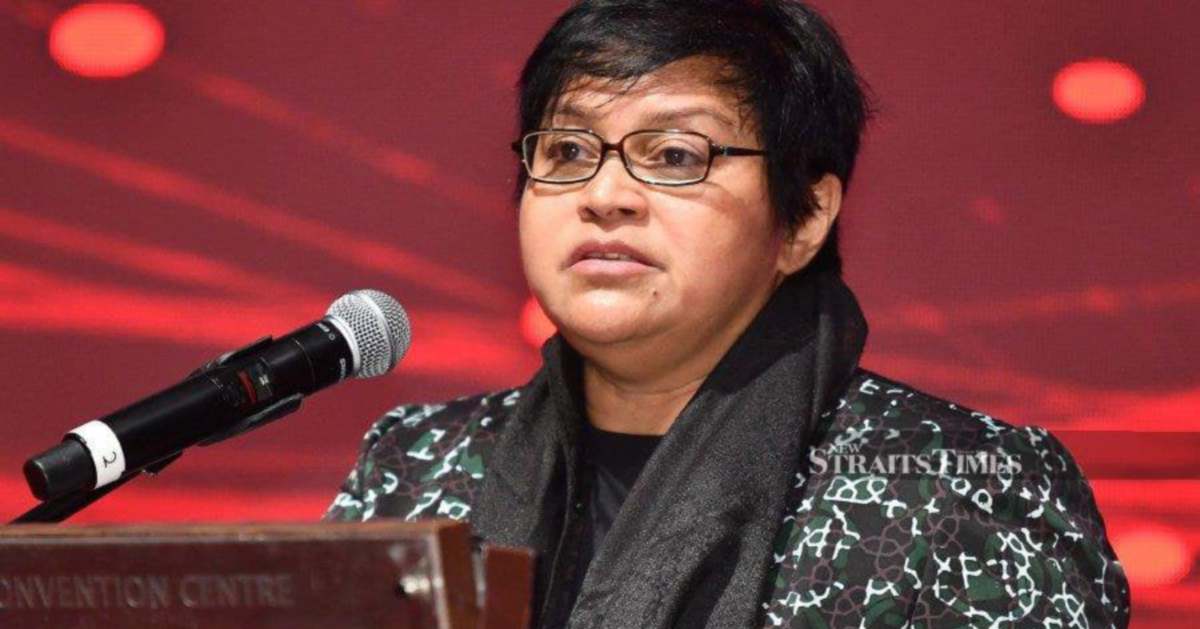
Umno information chief Datuk Seri Azalina Othman Said has cautioned political actors to refrain from speculating about potential coalition arrangements in Johor until the electoral outcome becomes clear. Speaking from Putrajaya, she underscored the importance of allowing the democratic process to conclude before entering negotiations over governmental structures, a position that reflects broader unease within the party about early positioning.
The Umno figure's intervention signals an attempt to manage internal party messaging and prevent fractious public debate over post-election alliances at a sensitive moment. Political coalitions in Malaysia have frequently emerged as contentious matters, with rival factions within larger parties jockeying for ministerial positions and resource allocation before votes are even counted. Such jockeying can undermine campaign momentum and alienate voters who expect their representatives to focus entirely on electoral contests.
Johor, traditionally a Umno stronghold, carries significant weight in national politics. The state's economy represents a substantial portion of Malaysia's southeastern regional output, and its political orientation has historically influenced broader peninsular dynamics. Recent electoral cycles have witnessed intensifying competition in formerly secure Umno territories, with both Pakatan Harapan and other coalitions mounting increasingly sophisticated campaigns across traditionally opposition-weak areas.
The timing of Azalina's remarks reflects underlying uncertainty about the electoral environment. Rather than the confident predictions of massive victories that typically characterise pre-election statements from ruling parties, her emphasis on awaiting results suggests recognition that the outcome may not be as straightforward as hoped. This measured tone contrasts with earlier bravado and hints at internal polling or campaign feedback that indicates a tighter contest than anticipated.
Coalition negotiations in Malaysia's multi-party system have grown more complex in recent years. The country's experience with Sheraton Move-style political realignments and the subsequent Perikatan Nasional government demonstrated how rapidly post-election mathematics can shift political landscapes. Johor voters, observing such developments nationally, may harbour legitimate concerns about parties that appear to treat elections as preliminary steps toward deal-making rather than genuine expressions of public preference.
For Malaysian voters, particularly in Johor, this cautionary statement carries practical implications. It suggests that the state may not present a clear electoral outcome that automatically translates into government formation. Instead, the period following ballot counting could extend into protracted negotiations involving multiple parties, reducing the likelihood of swift policy implementation on key issues like infrastructure investment, employment creation, and educational provision that directly affect households.
The emphasis on post-election discussions also reflects Umno's awareness that premature coalition talk can fragment its own voter coalition. Urban and younger constituents increasingly demonstrate scepticism toward political arrangements perceived as self-serving or divorced from public interest. By publicly committing to allowing the people's verdict to precede governmental negotiations, Umno attempts to position itself as respecting electoral democracy, even if historical practice sometimes diverges from such rhetoric.
Azalina's position carries particular resonance given Umno's recent history of coalition instability. The party's experience governing within Perikatan Nasional and its subsequent repositioning demonstrated how unstable the political arrangements could become when partners possessed incompatible agendas or when smaller parties leveraged their parliamentary numbers for disproportionate influence. A more cautious, sequenced approach to coalition-building might appeal to voters fatigued by constant political turbulence.
The emphasis on awaiting election results also acknowledges evolving standards for political conduct in Malaysia. Civil society organisations and international observers have increasingly scrutinised pre-emptive coalition arrangements as potentially undermining democratic principles. By explicitly stating that coalitions should follow rather than precede electoral outcomes, political leaders like Azalina demonstrate awareness of these shifting expectations, even if implementation often proves inconsistent.
For broader Southeast Asian analysis, Malaysia's coalition politics offer instructive lessons. The region contains numerous democracies where fragmented party systems require post-election negotiations to form governments. How Malaysian parties manage these negotiations—and whether they honour public commitments to sequencing discussions appropriately—influences regional perceptions of democratic maturity and institutional integrity.
The Johor situation also reflects wider questions about state autonomy within Malaysia's federal structure. Johor voters care primarily about state-level governance and resource distribution, yet state governments increasingly operate within federal-level coalition dynamics. This layering of coalition politics at state and national levels simultaneously creates negotiating complexity and reduces voter input into critical decisions affecting their immediate environment.
Moving forward, observers should monitor whether Umno maintains this position consistently or whether campaign developments alter its willingness to discuss coalitions. The stated principle—waiting for results before negotiating—establishes a baseline against which subsequent actions can be measured. If ruling parties or opposition coalitions begin intensive coalition talks before election day, it will signal that such principled statements represent campaign messaging rather than genuine commitment to democratic sequence.

