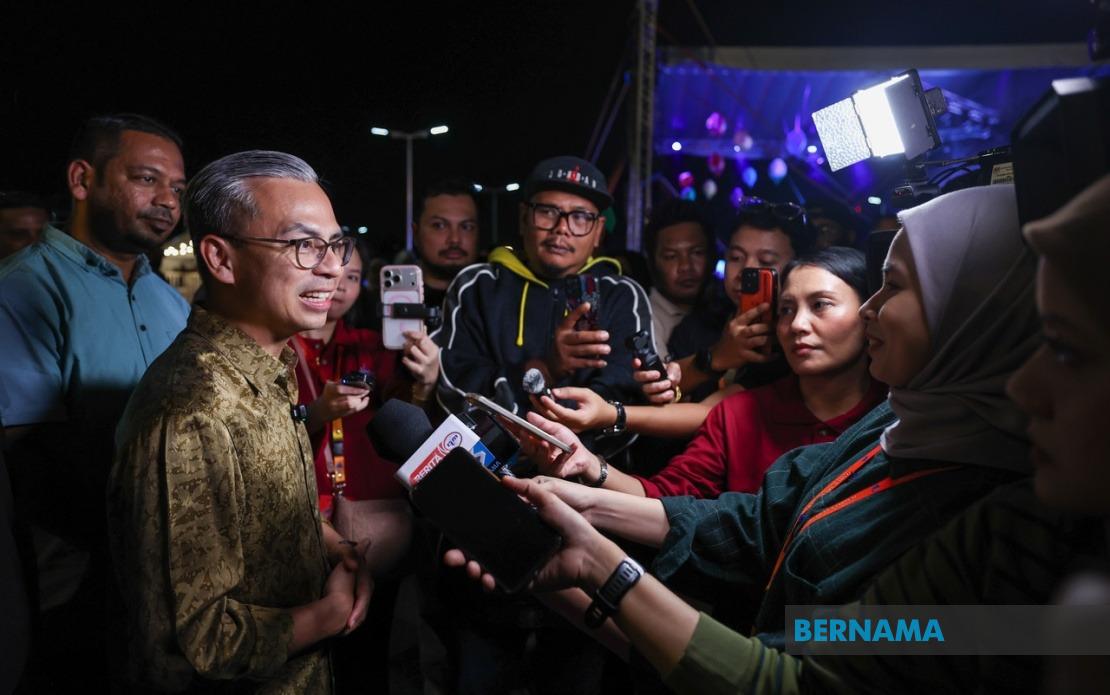
Communications Minister Datuk Fahmi Fadzil has expressed strong satisfaction with the reception accorded to the RIUH Pi HAWANA carnival, viewing it as a crucial venue for elevating Malaysia's homegrown creative sector and entrepreneurial landscape. Speaking at the event in Butterworth on June 19, Fahmi underscored how the carnival delivered on its core mission of bringing diverse artistic talent before the public, while simultaneously providing visibility for small and medium-sized creative enterprises seeking to expand their market presence.
The carnival, staged at the PICCA Convention Centre @ Butterworth Arena, was organised in tandem with National Journalists' Day (HAWANA) 2026, merging celebration of media professionals with a broader showcase of the country's creative economy. Fahmi commended the seamless execution of the programme, noting that logistical competence had enabled the event to achieve its intended impact without the operational hiccups that can undermine such large-scale public gatherings. This operational smoothness, he suggested, reflected thoughtful planning and coordination among all stakeholders involved.
One dimension of the carnival that particularly impressed the minister was its multigenerational appeal and reach. By bringing together established performers alongside emerging artists, the event created intergenerational dialogue around contemporary Malaysian popular culture. Acts ranging from veteran acts like Exists to newer bands including Bunkface, Masdo, and Sakura Band demonstrated the breadth of musical talent currently operating within the domestic scene. This diversity, Fahmi indicated, enriched the public's appreciation of local music and gave younger performers invaluable exposure to live audiences—a critical factor in building sustainable careers in an increasingly competitive entertainment landscape.
Beyond the musical programming, the carnival functioned as a commercial marketplace for the creative and food sectors. The event hosted more than 24 local creative brands and 20 food and beverage vendors, effectively converting the carnival into a commercial exhibition that allowed entrepreneurs direct access to consumer markets. For vendors and creators, such events reduce barriers to reaching new customers and generate crucial revenue streams while building brand recognition across the Penang region and beyond. Fahmi's emphasis on this commercial dimension reflects the government's broader recognition that cultural events can serve dual purposes: enriching public life while simultaneously stimulating economic activity among small businesses and independent creators.
Interactive workshops formed another key component of the carnival experience, enabling visitors to move beyond passive spectatorship and engage directly with creative disciplines. By allowing attendees to explore hands-on creative activities, the carnival addressed a broader cultural imperative: fostering artistic literacy and encouraging grassroots participation in creative practice. Such engagement can cultivate future practitioners, audiences, and informed consumers of Malaysian creative content—benefits that extend well beyond the carnival's immediate dates and geographic location.
Fahmi's call for expanded public attendance, directed particularly toward Penang residents, suggests awareness that such events rely on sufficient visitor volume to achieve financial sustainability and justify future iterations. The carnival's scheduled continuation through Sunday provided a window for word-of-mouth marketing to drive additional foot traffic. By encouraging attendance, the minister implicitly acknowledged that government endorsement carries weight in shaping public perception and participation in cultural programming, particularly when delivered through accessible platforms like his comments to assembled reporters.
Crucially, Fahmi advocated for the RIUH Pi HAWANA carnival to become a recurring fixture within the HAWANA celebration calendar. This positioning reflects strategic thinking about how to institutionalise support for local creatives through regular, predictable platforms rather than sporadic, ad-hoc initiatives. By integrating creative industry showcase into the annual HAWANA framework—which has existed since 2018 and falls under the Communications Ministry purview—the government would signal sustained commitment to creative sector development while building audience anticipation and industry participation year after year.
The Communications Ministry's stewardship of HAWANA through implementing agency Bernama has positioned journalists and media professionals as central to national discourse and professional identity. By appending the RIUH Pi HAWANA carnival to this observance, the ministry effectively broadens HAWANA's scope beyond journalistic circles to encompass the wider creative ecosystem. This expansion reflects contemporary understanding that journalism and creative industries occupy interconnected terrain: both rely on storytelling, audience engagement, and freedom of expression, and both contribute to cultural vitality and democratic discourse.
Organised by MyCreative Ventures, the carnival's commercial structure demonstrates how private enterprise can partner with government institutions to deliver cultural programming. This public-private model, increasingly common in Malaysian event management, distributes financial risk and operational responsibility while enabling government to amplify cultural initiatives without bearing complete financial burden. For MyCreative Ventures, access to government endorsement and coordination with Bernama and the Communications Ministry provides credibility and promotional advantages that enhance the company's market position.
The lineup of 18 live performances—including acts such as Fugo, Budak Nakal Hujung Simpang, and Chelsia Ng—reflected intentional curation designed to balance commercial appeal with artistic diversity. Emerging acts benefit from shared billing with more established performers, gaining exposure to larger audiences than they might command independently. Established acts reinforce their market relevance and maintain audience connection, while the organisers capture the full spectrum of contemporary Malaysian music culture. This curatorial approach requires skilled programming that understands audience expectations while taking modest risks on less familiar names.
For Malaysian creatives and entrepreneurs, Fahmi's endorsement carries practical significance. Government visibility and ministerial support enhance the legitimacy and prestige of participation, potentially encouraging cautious small business owners and independent artists to commit resources to booth space, vendor fees, or performance appearances. The minister's specific mention of wanting to showcase not only veterans but younger talents signals that emerging creatives occupy priority within government thinking about the sector's future—a reassurance for those still establishing themselves.
The broader context underscores Malaysia's ongoing effort to position itself as a regional creative hub and to diversify its economy beyond traditional sectors. Events like RIUH Pi HAWANA serve as visible demonstrations of this ambition, offering concrete evidence that the government recognises and supports creative enterprise. As Southeast Asia's creative industries landscape intensifies—with regional competitors including Thailand, Indonesia, and the Philippines investing heavily in their own creative ecosystems—Malaysia's strategic support for events that showcase domestic talent becomes increasingly consequential in retaining talent and attracting regional audience interest.

