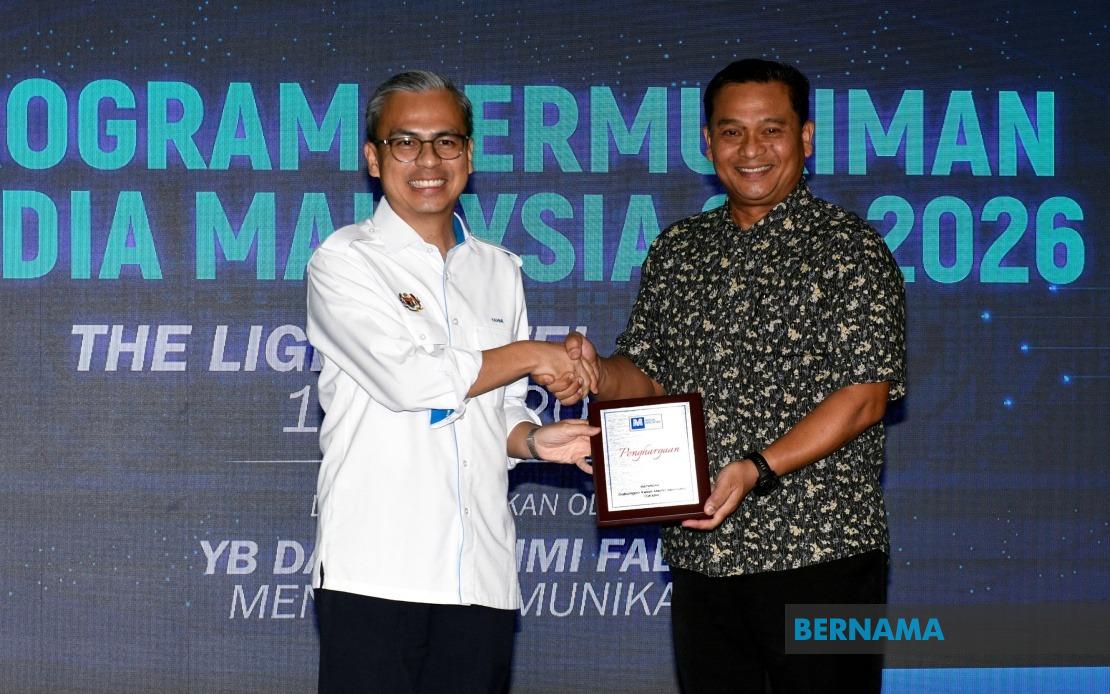
The Communications Ministry is injecting fresh funding into Malaysia's media infrastructure through direct financial support to affiliated state media clubs and the Malaysian Media Clubs Association (GKMM). Communications Minister Datuk Fahmi Fadzil unveiled the allocation during the Malaysia Media Retreat Programme 2.0 in Butterworth on June 19, signalling the government's renewed commitment to bolstering the journalism sector at both grassroots and institutional levels.
The funding structure reflects a tiered approach to supporting the media industry. Each state media club currently holding membership in GKMM will receive RM10,000, while GKMM itself—the umbrella body representing these clubs—has been allocated RM30,000 specifically for activities and programmes addressing journalist welfare. The combined allocation demonstrates recognition that supporting individual practitioners requires both localised initiatives and coordinated national efforts. State media clubs serve as crucial gathering points for journalists across regions, handling everything from professional development workshops to social support for members facing hardship.
Fahmi's announcement carries particular significance given the evolving landscape of Malaysian journalism. The minister explicitly framed the investment as a confidence vote in human journalism, emphasising that artificial intelligence cannot replace the foundational work of professional journalists. In an era when media organisations globally grapple with automation and technological disruption, the government's financial commitment underscores a policy position that preserves employment in the newsroom. This stance differs markedly from industry trends in some developed nations, where newsroom staffing has contracted dramatically as outlets have embraced digital transformation.
The minister's language regarding GKMM's role reveals how the government views the association's function within Malaysia's media ecosystem. Rather than treating GKMM as a labour union—a designation that would trigger different regulatory frameworks and possibly union-related protocols—the government characterises it as an advocacy platform for communicating journalist concerns. This distinction matters substantially in Malaysian politics, where union regulations carry specific implications. By emphasising GKMM's role in surfacing industry issues and channelling professional perspectives to policymakers, Fahmi positioned the association as a collaborative partner in governance rather than an adversarial labour voice.
The timing of this allocation reflects broader policy initiatives within the Communications Ministry. Fahmi referenced the recently developed Malaysian Media Council Act, explaining that government input into media regulation has increasingly incorporated suggestions from industry practitioners. This consultative approach represents a departure from historical patterns where media policy in Malaysia often faced criticism for insufficient journalist and publisher input. By highlighting GKMM's contribution to legislative drafting, the minister signalled that funding these organisations serves practical governance purposes beyond welfare considerations.
Journalist welfare, historically a peripheral concern in Malaysian media policy discussions, now features prominently in official statements. The allocation targets programmes that address material concerns affecting practitioners—financial assistance schemes, professional training, healthcare considerations, and retirement planning. For journalists in smaller states and regional newsrooms earning modest salaries, such support mechanisms provide tangible relief. The RM30,000 to GKMM specifically designates resources toward these welfare initiatives, acknowledging that freelancers and staff journalists in Malaysia's diverse media market operate under vastly different economic conditions.
The presence of senior officials at the announcement—including Communications Ministry secretary-general Datuk Abdul Halim Hamzah, Bernama chief executive officer Datin Paduka Nur-ul Afida Kamaludin, and Bernama editor-in-chief Arul Rajoo Durar Raj—underscores institutional weight behind the commitment. Bernama's participation in the Media Retreat Programme and the announcement itself reflects Malaysia's state news agency's role in shaping government communication with the broader media sector. This institutional presence demonstrates that the allocation represents coordinated policy rather than departmental initiative.
For Malaysian media practitioners, particularly those in state capitals where individual newsroom budgets remain constrained, direct funding to clubs addresses genuine operational challenges. These organisations frequently struggle to maintain office facilities, organise training sessions, or provide emergency assistance to members facing sudden hardship. RM10,000 per state club allows expansion of such programmes across Malaysia's thirteen states and three federal territories, though the per-club amounts suggest expectations for resourceful programme design rather than comprehensive welfare provisioning.
The government's emphasis on preserving journalism employment reflects broader Southeast Asian patterns. As regional media markets face pressures from digital disruption and advertising revenue decline, government support—whether through direct funding, licensing privileges, or subsidy arrangements—increasingly shapes which news organisations and journalists survive. Malaysia's approach differs from some regional neighbours by channelling support through professional associations rather than directly subventing specific news outlets, theoretically maintaining journalistic independence while providing institutional support.
Looking beyond the immediate allocation, Fahmi's comments suggest evolving government thinking about media industry sustainability. Rather than debating whether journalism requires protection or should sink or swim in market conditions, official policy now assumes journalistic preservation as a legitimate government interest. This philosophical shift has practical implications for future policy on broadcasting licenses, digital media regulation, and public service media investment. The RM10,000 and RM30,000 allocations represent relatively modest sums in budgetary terms, but they crystallise a position that government has responsibility for sustaining professional journalism infrastructure.
For GKMM and affiliated state clubs, the allocation opens possibilities for expanded programmes addressing profession-wide concerns. Beyond immediate welfare support, these funds could support journalism training initiatives responding to skills shortages in digital reporting, data journalism, and multimedia production. They could also enable advocacy campaigns around press freedom issues, labour conditions, or industry challenges facing Malaysian media. The flexibility implied in Fahmi's statement—"use it as best as possible"—grants clubs discretion in deploying resources according to identified member needs rather than prescriptive government requirements.
The practical significance of this announcement extends to freelance journalists and smaller newsroom staff who frequently lack access to institutional support networks. State media clubs often provide their most substantial benefit to such practitioners, offering professional community, continuing education opportunities, and mutual assistance mechanisms. By funding these clubs directly, the government reaches journalists who might otherwise operate in isolation, potentially strengthening journalism quality and professional standards across Malaysia's diverse media market. The allocation thus serves both immediate welfare purposes and longer-term sector development, positioning media clubs as strategic institutions within Malaysia's information infrastructure.

