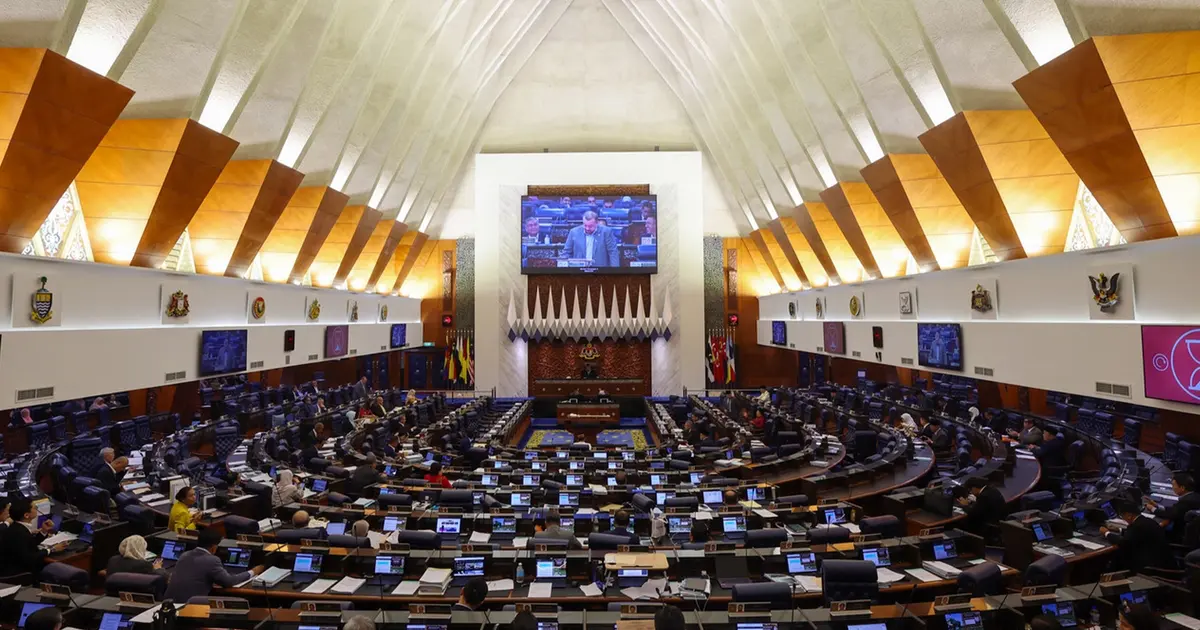
Malaysia's parliament prepares for a significant legislative session beginning Monday, with four major bills slated for debate, headlined by fresh attempts to impose a decade-long tenure restriction on the nation's prime minister. The proposed constitutional amendment, which targets limiting prime ministerial service to a maximum of 10 years, represents a renewed push toward institutional reform following its disappointing performance during the previous parliamentary sitting, where it fell short of the demanding two-thirds supermajority threshold required for constitutional changes in the Dewan Rakyat.
The reintroduction of the prime ministerial term limit proposal reflects broader sentiment among parliamentarians regarding the concentration of executive power within the office. Proponents argue that establishing a fixed ceiling on prime ministerial tenure would strengthen democratic governance by preventing the prolonged accumulation of power, enhancing political stability through predictable leadership transitions, and fostering institutional accountability through natural succession cycles. The proposal has generated considerable debate across Malaysia's political spectrum, with supporters viewing it as essential constitutional modernization and critics questioning whether such measures adequately address governance challenges or merely create artificial constraints on voter preferences.
The mechanics of constitutional amendment in Malaysia impose substantial procedural hurdles that significantly complicate legislative reform. Securing the two-thirds majority required to alter constitutional provisions demands extraordinary consensus across the Dewan Rakyat, reflecting the founders' intention to protect fundamental constitutional principles from casual modification through simple legislative majorities. This high threshold means that the prime ministerial term limit bill's previous failure suggests either insufficient parliamentary support or tactical parliamentary maneuvering that prevented the requisite supermajority from coalescing, prompting the government to table the measure anew in hopes of garnering sufficient backing.
The timing of Monday's parliamentary sitting carries implications for Malaysia's broader governance trajectory. Constitutional reform efforts have ebbed and flowed throughout the nation's democratic history, often correlating with political transitions, electoral shifts, or renewed civic demands for institutional accountability. The resurrection of the term limit proposal indicates government commitment to advancing structural constitutional change, though whether such ambition can translate into legislative reality remains uncertain given the demonstrated difficulty in assembling supermajority coalitions around contentious institutional questions.
Regionally, Malaysia's consideration of prime ministerial tenure restrictions places it within a broader pattern of democratic governance refinement across Southeast Asia. Nations throughout the region have grappled with questions regarding executive term limits, viewing such constitutional provisions as mechanisms for preventing authoritarian drift while maintaining democratic competitiveness. The debate surrounding Malaysia's proposed reform reflects similar conversations occurring across Indonesia, Thailand, and other regional democracies wrestling with balancing effective executive governance against the risks posed by unchecked concentration of presidential or prime ministerial power.
Comparative constitutional practice suggests that fixed executive tenure arrangements generate complex trade-offs. Defenders of such provisions emphasize their role in preventing personality cults, limiting patronage networks' entrenchment, and ensuring regular leadership transitions that invigorate democratic participation. Conversely, critics contend that arbitrary term restrictions occasionally push leaders toward politically damaging lame-duck phases, artificially terminate successful administrations prematurely, or create perverse incentives for accelerated legislative action divorced from long-term governance considerations. Whether Malaysia's proposed 10-year limit would generate net democratic benefits remains contested even among governance scholars and democratic practitioners.
The specific architecture of the proposed term limit merits attention. A 10-year ceiling would encompass either two full five-year terms or potentially permit varied combinations depending on how constitutional drafters structure the restriction. Malaysia's electoral system and the nature of prime ministerial appointment through parliamentary selection rather than direct popular vote introduce particular complexities regarding how tenure limitations would interact with coalition-building dynamics and legislative mathematics that ultimately determine executive leadership.
The broader legislative agenda accompanying the prime ministerial term limit reflects Parliament's ambition to advance comprehensive governance reform during this sitting. Four major bills collectively address institutional questions and presumably tackle significant policy domains that government and parliamentary leadership have prioritized. The simultaneous advancement of multiple major legislative initiatives suggests calculated parliamentary scheduling designed either to maximize reform momentum or to facilitate logrolling arrangements whereby support for particular provisions generates reciprocal backing for other contested measures.
Malaysian civil society and policy observers have expressed varying perspectives regarding the proposed constitutional reforms. Democratic advocates generally welcome attempts to constitutionally strengthen institutional checks and predictable governance transitions, while others raise concerns about the substance of specific proposals and whether Parliament might more productively concentrate on implementing existing constitutional provisions effectively rather than constantly revising the constitutional framework itself.
The parliamentary dynamics surrounding Monday's sitting will substantially influence Malaysia's constitutional trajectory. Success in securing the necessary supermajority for the term limit bill would signal parliamentary consensus on institutional reform and potentially embolden advocates of additional constitutional amendments. Conversely, renewed failure might indicate either insufficient support or parliamentary divisions that impede even widely favored governance modifications, suggesting that institutional change in Malaysia proceeds slowly and requires substantial political capital and coalition-building efforts to advance successfully.
Looking forward, the outcome of Monday's debate will provide crucial indicators regarding Malaysian democracy's capacity for deliberate constitutional self-reformation. Whether Parliament can translate governance reform sentiment into supermajority legislative action ultimately determines not merely the specific fate of the prime ministerial term limit proposal, but also broader implications for Malaysia's future institutional development and democratic maturation during an era when numerous regional democracies actively reconsider constitutional fundamentals.

