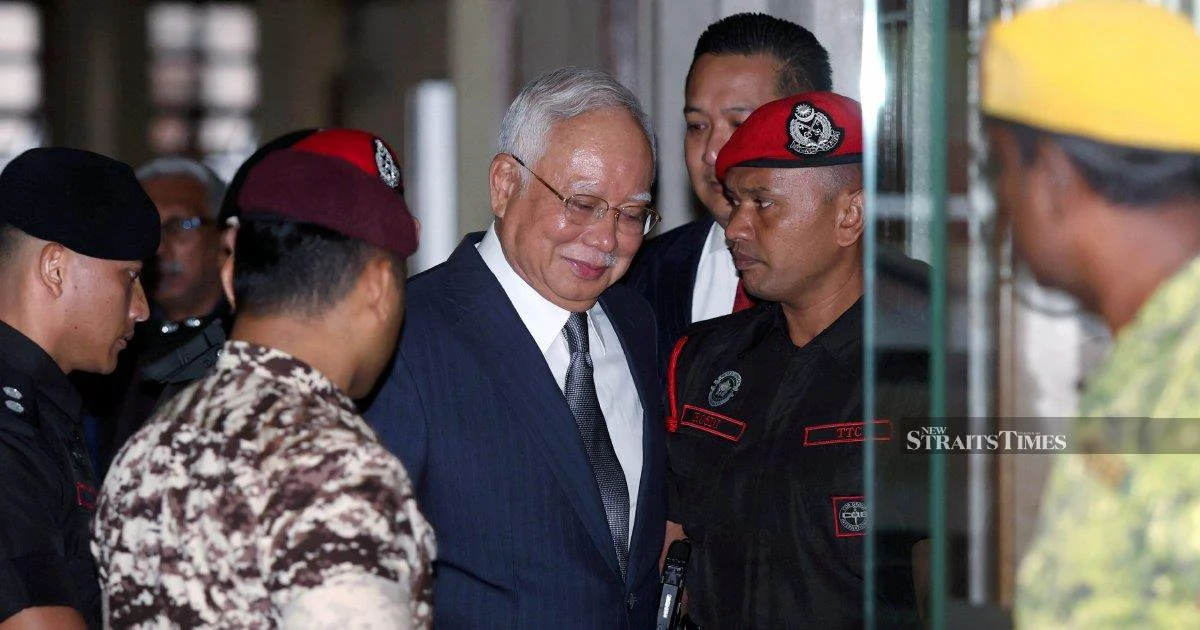
A Malaysian court has delivered a landmark ruling establishing that former Prime Minister Datuk Seri Najib Razak and fugitive businessman Low Taek Jho operated in close coordination to misappropriate vast sums from 1Malaysia Development Bhd (1MDB), the sovereign wealth fund that became the centre of one of the world's largest financial scandals. The judicial finding represents a critical juncture in Malaysia's reckoning with the 1MDB saga, cementing the legal determination that the pair functioned as collaborative agents in the scheme to channel billions of ringgit away from the state fund.
The judge's determination that Najib and Jho Low worked in tandem carries profound significance for understanding the mechanics of the 1MDB theft. Rather than depicting Jho Low as an independent operator who somehow captured control of the fund, the court has established that the former prime minister—who held ministerial responsibility for the fund—actively coordinated with the flamboyant businessman to execute the fund's systematic hollowing out. This collaborative framework underscores the essential role Najib's governmental position played in facilitating the scheme, distinguishing between passive oversight failures and active orchestration of misappropriation.
The 1MDB fund, established ostensibly as an instrument for Malaysia's economic development, had been structured with Najib at its helm as board chairman and finance minister. This institutional positioning granted him singular authority to approve major transactions and investment decisions. The court's finding suggests that Jho Low, despite his private businessman status, could not have extracted such prodigious sums without explicit cooperation from someone occupying Najib's seat of governmental power. The judgment therefore illuminates how sovereign wealth funds remain vulnerable to capture when concentrated authority lacks robust checks and independent oversight.
The scale of the embezzlement has evolved through successive investigations and prosecutions. Over the years, authorities have documented evidence of funds flowing through obscure shell companies, international wire transfers routed via multiple jurisdictions, and asset acquisitions ranging from luxury real estate to contemporary artworks. The total siphoned has been estimated at several billion dollars, making 1MDB among the most egregious cases of state fund theft globally. Malaysian investigators traced how monies authorised for ostensible development projects were diverted into private accounts, with intermediaries structured to obscure ultimate beneficiaries.
Jho Low's ability to remain a fugitive despite Malaysia's extradition requests and Interpol red notices has frustrated authorities for years. The businessman, once a celebrated figure in Kuala Lumpur's exclusive circles known for lavish spending and entertainment, has evaded capture across multiple jurisdictions. His continued absence from Malaysian courts stands in sharp contrast to Najib, who returned to face proceedings and has maintained his not-guilty plea throughout. The contrasting trajectories—Jho Low abroad in flight and Najib domestically defending himself through the legal system—have shaped public perception of their respective culpability and commitment to answering charges.
The judgment arrives within the broader context of Malaysia's post-2018 political transformation. Following the electoral defeat of Najib's ruling coalition, the incoming government under Tun Dr Mahathir Mohamad reopened investigations into 1MDB that had been suppressed under the previous administration. This shift enabled prosecutors and anti-corruption bodies to pursue cases that had languished, ultimately leading to multiple convictions and civil forfeiture actions. The Malaysian public had grown increasingly aware of the scale of the losses and their implications for the nation's financial standing and international reputation.
For regional observers, the 1MDB case has illustrated how corruption in a single nation state can ripple across borders and damage the entire region's investment climate. The involvement of international financial institutions, the movement of proceeds through various offshore jurisdictions, and the subsequent asset recovery efforts by authorities in multiple countries demonstrated the transnational nature of modern grand corruption. Southeast Asian policymakers have cited 1MDB as a cautionary example when debating financial oversight improvements and beneficial ownership transparency measures.
The court's characterisation of Najib and Jho Low's coordination also carries implications for understanding how insider capture occurs within governmental institutions. Rather than framing corruption as the work of isolated bad actors, the judgment suggests a more sophisticated nexus where someone with legitimate institutional power partners with external actors to redirect public resources. This analytical perspective has influenced how development finance institutions and international observers assess governance vulnerabilities in emerging economies.
The ramifications of the judgment extend into Malaysia's ongoing civil and criminal litigation landscape. Multiple cases remain in process, involving former 1MDB officials, banking intermediaries, and international financial advisors allegedly complicit in the scheme. The determination that Najib and Jho Low coordinated their actions provides evidentiary foundation for establishing liability across these interconnected proceedings. Additionally, asset recovery efforts undertaken by Malaysian authorities and international partners may be strengthened by judicial confirmation of the coordinated nature of the misappropriation, clarifying the illicit provenance of contested assets.
For Malaysia's international standing, the ruling underscores the country's judicial determination to pursue accountability despite the political prominence of those implicated. The willingness of Malaysian courts to deliver judgments against a former prime minister has been noted by governance advocates as evidence of institutional resilience. Nevertheless, observers also note that conviction rates and the effectiveness of asset recovery remain critical measures of whether Malaysia's legal system can fully deliver accountability commensurate with the magnitude of the alleged offences and the damages inflicted on the nation's development agenda and international reputation.