The Comprehensive and Progressive Agreement for Trans-Pacific Partnership, comprising twelve of the world's most significant trading economies, has thrown its support behind the emerging US-Iran accord while simultaneously signalling alarm over the broader implications for global commerce. In a joint ministerial statement released following a virtual gathering on Friday, the bloc's representatives stressed that the diplomatic breakthrough carries profound consequences for international trade, particularly regarding the unrestricted movement of crude oil, refined petroleum products, liquefied natural gas, and other energy commodities essential to member economies.
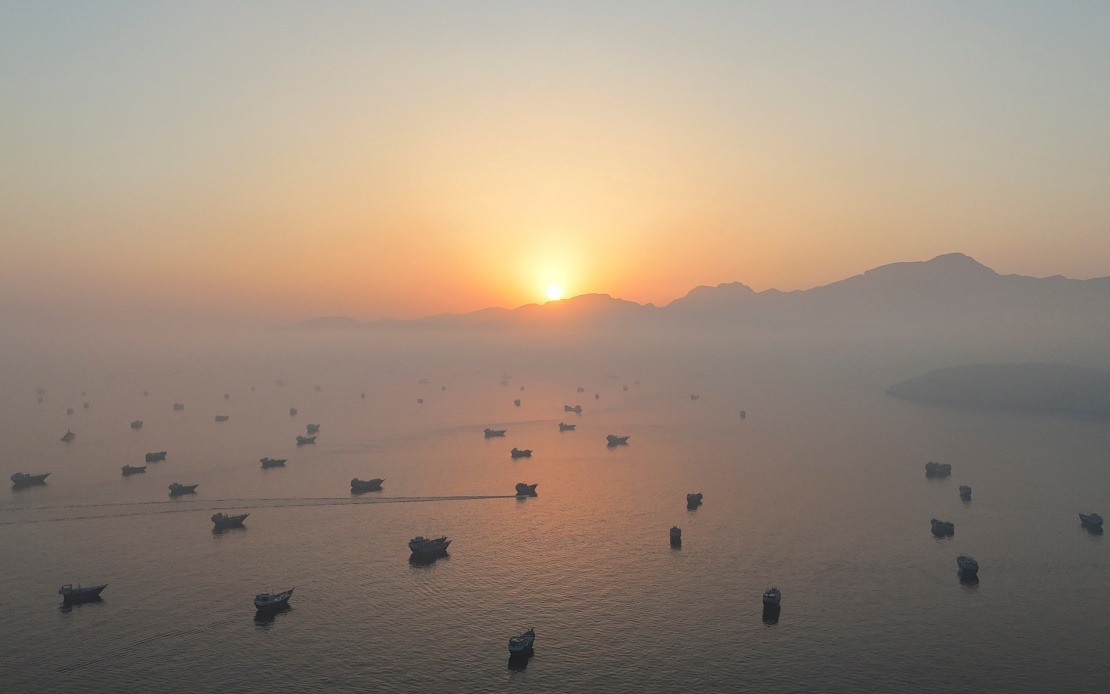
The Strait of Hormuz remains one of the world's most strategically critical maritime passages, with an estimated one-third of globally traded oil transiting through its waters annually. Any disruption to navigation through the waterway reverberates immediately across global markets, driving up energy prices and threatening the stability of supply chains that depend on affordable, predictable fuel costs. For Malaysia and other Southeast Asian economies deeply integrated into regional manufacturing and export networks, uninterrupted access to Middle Eastern energy supplies forms a cornerstone of economic competitiveness. The CPTPP's collective endorsement of efforts to restore safe passage reflects the bloc's recognition that geopolitical tensions affecting this critical chokepoint ultimately undermine growth prospects across the member countries.
Beyond energy security narrowly defined, the ministerial statement articulated concern for the broader constellation of goods vulnerable to Hormuz-related disruptions. Petrochemical products, fertilisers, and numerous raw materials essential to manufacturing and agriculture flow through the strait, and their unimpeded transit carries implications that extend far beyond petroleum markets into food security and industrial competitiveness. The statement's emphasis on minimising trade distortions across these interconnected commodity chains underscores how regional conflicts in the Middle East generate cascading effects across Southeast Asian supply networks, from agricultural production to semiconductor manufacturing.
The ministers reiterated a commitment to rules-based international trade governance, explicitly referencing the United Nations Convention on the Law of the Sea as the appropriate legal framework for resolving disputes over maritime passage and navigation rights. This invocation of UNCLOS carries particular resonance in Southeast Asia, where overlapping territorial claims in the South China Sea have generated ongoing tensions over freedom of navigation and the application of international law. By anchoring the Hormuz question in established legal precedent, the CPTPP sought to position itself as an advocate for predictable, law-governed commerce rather than coercive restrictions or unilateral assertions of control over critical sea lanes.
Central to the bloc's position was its explicit rejection of unjustified trade-restrictive measures, coupled with a call for other trading nations to observe the same restraint. This language targeted not only direct economic sanctions but also the informal trade impediments, tariff escalations, and regulatory barriers that states often employ when geopolitical tensions rise. The statement functioned partly as a cautionary message to major trading powers that unilateral actions justified by regional security concerns risk destabilising the broader international trade system on which all economies, large and small, depend.
The CPTPP also acknowledged the emerging regional initiatives designed to build more robust energy supply chains, notably the Partnership On Wide Energy and Resources Resilience Asia, commonly known as POWERR Asia. This framework emphasises coordination between energy-producing nations and consumer economies, creating structured dialogue channels that can mitigate the destabilising effects of supply shocks. For Malaysia, which sits at the intersection of major energy trade flows and manufacturing hubs, participation in such cooperative arrangements provides mechanisms to stabilise access to critical inputs while building diplomatic relationships with both regional and global suppliers.
Particularly noteworthy was the ministers' explicit acknowledgement of the energy vulnerabilities facing small island developing states, particularly those across the Pacific region. These economies, often dependent entirely on imported energy, face disproportionate risks from any disruption to major shipping lanes or supply routes. The CPTPP's commitment to trade diversification initiatives addressing these vulnerabilities demonstrates how the bloc frames energy security not merely as a technical logistics challenge but as a fundamental equity issue affecting the economic viability of smaller member states.
The virtual gathering itself, held among representatives of Australia, Brunei, Canada, Chile, Japan, Malaysia, Mexico, New Zealand, Peru, Singapore, the United Kingdom and Vietnam, reflected the geographically dispersed nature of the bloc and its investment in maintaining cohesion despite the complexities of coordinating across multiple time zones and political contexts. For Malaysia, participation in CPTPP continues to position the nation as an active stakeholder in shaping the rules governing global commerce, rather than remaining a passive recipient of decisions made elsewhere.
The broader context for this statement involves mounting pressure on global supply chains from multiple sources: geopolitical tensions in the Middle East, trade disputes between major economies, climate-related disruptions, and the lingering effects of pandemic-era logistics bottlenecks. Against this backdrop, the CPTPP's reaffirmation of commitment to open markets and rules-based trade functions as a counterweight to fragmenting pressures that might otherwise push individual economies toward protectionism or bilateral arrangements that exclude less powerful trading partners.
Moving forward, the diplomatic realignment between the United States and Iran, should it progress toward sustained détente, could materially improve the security environment affecting vital sea lanes. However, the CPTPP's statement suggests that member economies are not placing full reliance on any single diplomatic breakthrough. Instead, the bloc is pursuing a diversified strategy encompassing support for diplomatic solutions, investment in supply chain resilience initiatives, and recommitment to legal frameworks that permit predictable, peaceful resolution of maritime disputes. For Southeast Asian economies like Malaysia, this multilayered approach offers protection against future shocks while maintaining space for both cooperation with major powers and advocacy for rules that protect smaller trading nations.

