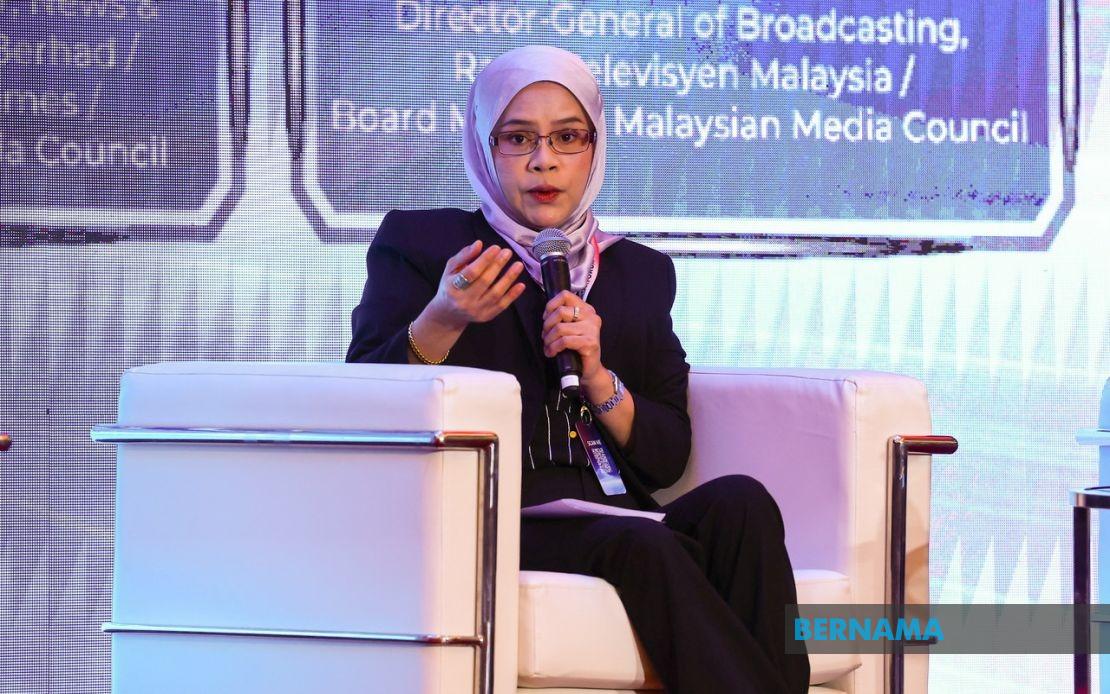
The survival of news organisations in an increasingly digital world depends fundamentally on their commitment to credibility and integrity, according to Farrah Naz Abdul Karim, deputy group managing editor (News and Current Affairs) at Media Prima Bhd. Speaking during National Journalists' Day (HAWANA) 2026 celebrations in conjunction with a Bernama Radio programme, Farrah Naz stressed that these values remain the bedrock upon which public confidence in journalism rests, even as commercial pressures mount across the industry.
With more than two decades spent navigating the news business, Farrah Naz has witnessed the critical importance of maintaining editorial standards. She emphasised that once credibility erodes, the path to restoring public faith becomes extraordinarily difficult. This observation carries particular resonance in Malaysia, where trust in institutions—including the media—has faced multiple challenges in recent years. The remark underscores why maintaining journalistic principles cannot be treated as secondary to revenue generation, regardless of the financial pressures facing newsrooms.
Farrah Naz, who also serves as group editor of the New Straits Times (NST), called for greater responsiveness from information-disseminating bodies when engaging with journalists. She noted that silence from official sources no longer suffices in contemporary communication environments, where news cycles move rapidly and public expectations for transparency have shifted dramatically. This appeal reflects a broader tension in Malaysian media: the need for government and corporate bodies to communicate proactively rather than defensively, and to recognise that media engagement serves mutual interests in informed public discourse.
The conversation around artificial intelligence's role in journalism revealed a nuanced understanding of technology's limitations. While Farrah Naz acknowledged that AI has proven valuable for analysing audience behaviour, generating content, and maintaining consistency in information distribution, she drew a critical distinction between computational efficiency and journalism's human dimensions. AI cannot substitute for reporters on the ground who witness events firsthand, experience their human impact, and exercise the editorial judgment required to determine what stories matter and why. This position reflects a growing consensus among news professionals that technology augments rather than replaces the essential work of journalism.
The escalating challenge posed by misinformation, fabricated news, and deepfake technology featured prominently in her remarks. As these phenomena proliferate across Malaysian and regional digital ecosystems, strengthening media literacy has become urgent. Citizens equipped with critical-thinking tools and knowledge about how to evaluate information sources become more resistant to manipulation. The responsibility extends beyond newsrooms to educators, civil society organisations, and platforms themselves—each must contribute to building a more discerning public.
Farrah Naz emphasised that investigative journalism requires continued investment and protection. As news organisations face resource constraints, the temptation to reduce expensive investigative projects grows. However, this type of reporting remains essential for scrutinising issues affecting citizens' lives and holding authorities accountable. In the Malaysian context, where transparency and accountability remain contested areas, investigative journalism serves as a critical mechanism for exposing wrongdoing and prompting official action.
For young professionals entering journalism and communications fields, Farrah Naz offered practical guidance rooted in industry reality. Academic credentials alone no longer provide sufficient competitive advantage in media markets. Graduates must develop complementary skills and technological proficiency that enhance their value to organisations operating in increasingly crowded, competitive environments. This might encompass data journalism, multimedia production, audience analytics, or other capabilities that traditional journalism training may not emphasise. The advice reflects how the industry has fundamentally transformed, requiring journalists to be more versatile and adaptable than their predecessors.
The HAWANA 2026 theme, "Media Integrity Strengthens Credibility," encapsulates these concerns while offering a positive framing around media's essential social function. The celebration's logo features a bridge symbol, reflecting journalism's role as a connection between citizens and policymakers through accurate information distribution. This metaphor captures an important aspiration: that media, when functioning with integrity, facilitates informed democracy by ensuring that both public and officials access reliable facts. For Malaysia particularly, where diverse communities require trustworthy information channels to coexist peacefully, this bridging function carries significant weight.
The HAWANA 2026 main event, scheduled for June 20 at the PICCA Convention Centre @ Butterworth Arena in Penang, will draw more than 1,200 attendees comprising media professionals and delegates from across ASEAN. Prime Minister Datuk Seri Anwar Ibrahim is scheduled to open the ceremony, signalling government recognition of journalism's importance. The ASEAN participation suggests that concerns about media credibility, misinformation, and digital-era challenges resonate across Southeast Asia, positioning this as a regional conversation rather than a Malaysia-specific issue.
The timing of these discussions matters considerably. As digital platforms increasingly mediate information flows and artificial intelligence reshapes content creation, the human elements of journalism—judgment, ethics, accountability—become simultaneously more difficult to maintain and more essential to defend. Farrah Naz's arguments amount to a defence of journalism as a profession requiring training, standards, and professional identity. In an environment where anyone with internet access can broadcast claims, distinguishing journalism's methodologies and obligations from mere information-sharing becomes critical for maintaining the credibility she champions.
The broader implication for Malaysian media organisations involves recognising that short-term commercial pressures cannot justify compromising the long-term asset of credibility. As audiences have multiple information sources available, they increasingly gravitate toward outlets they trust. This dynamic should incentivise news organisations to invest in quality reporting, transparent editorial practices, and accountability mechanisms. Such investments initially appear costly but ultimately prove economically rational as they build the trust that sustains audience loyalty and advertiser confidence. The challenge lies in convincing ownership and shareholders to accept shorter-term profit impacts for longer-term sustainability—a difficulty experienced across the industry globally.