The Paris Vivatech festival is showcasing a diverse range of technological breakthroughs that could reshape how we approach medical treatment, urban mobility and digital security. Among the standout innovations on display are solutions addressing longstanding challenges in bone surgery, drone capabilities, voice authentication, and athletic performance monitoring—each offering distinct advantages to healthcare providers, logistics operators, security agencies and consumers across Southeast Asia and beyond.
Bone grafting remains one of the most common orthopedic procedures globally, affecting millions of patients annually. Yet the traditional approach of harvesting bone from patients' own bodies carries significant drawbacks. Berlin-based Blueprint Biomed has developed an artificial alternative that eliminates the need for autologous grafts entirely. Chief executive Aaron Herrera explained that using a patient's own bone tissue can lead to graft failure, necessitating additional operations, or triggering unwanted complications. Blueprint's engineered structures employ a clever two-component design: a 3D-printed biodegradable polyester scaffold called polycaprolactone combined with a collagen matrix. The body naturally absorbs both materials—collagen within three months and the polyester within two years—leaving behind properly integrated bone tissue. The company is seeking US$2.5 million (RM10.29 million) in funding as it advances toward human clinical trials, with an ambitious target of implanting its first products in patients by 2028. For Malaysia's aging population and growing healthcare sector, such innovations could reduce surgical complications, shorten recovery periods and improve outcomes for patients requiring bone reconstruction.
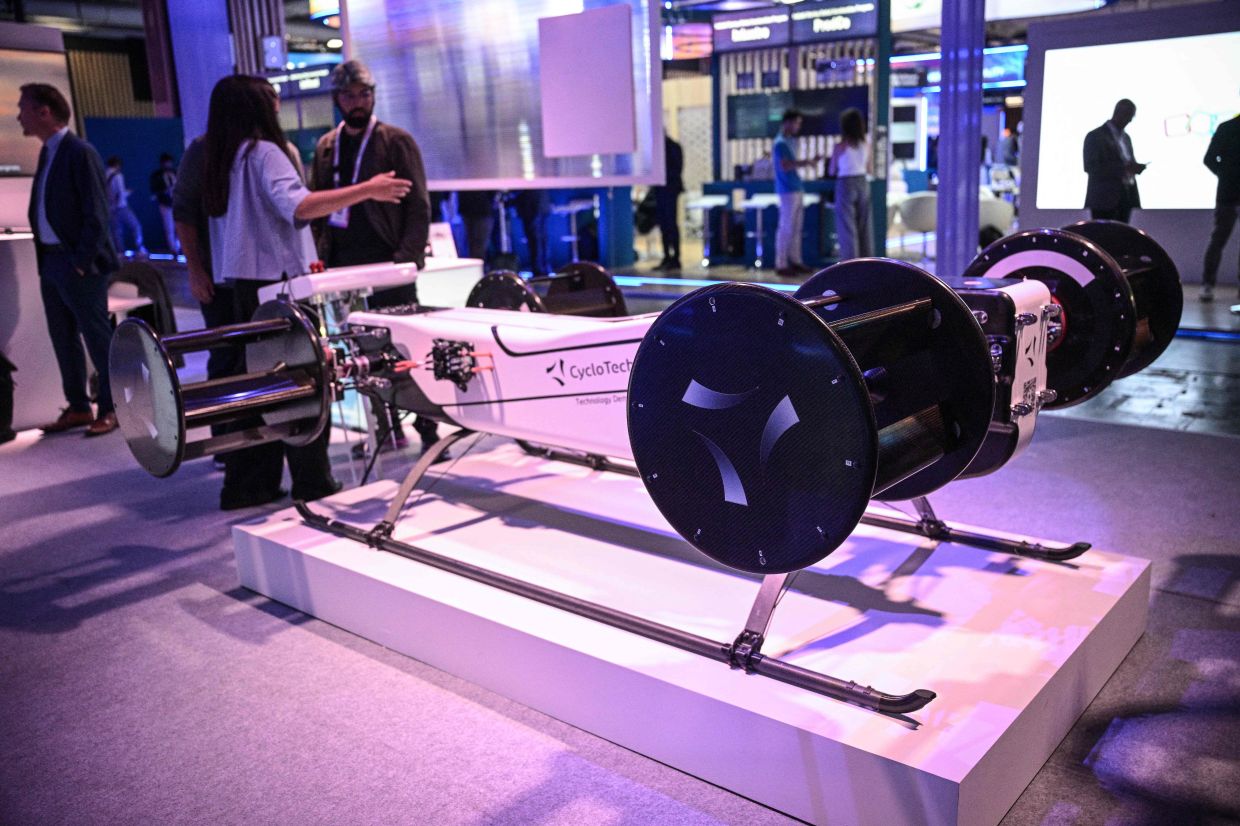
Drone technology has evolved dramatically, from recreational devices to critical tools in military operations, humanitarian deliveries and entertainment. Austrian startup CycloTech is pushing the boundaries of what aerial vehicles can accomplish through revolutionary motor design. Rather than conventional propellers, CycloTech's motors resemble open cylinders with wing-shaped blades, granting unprecedented maneuverability. Marketing chief Andrea Marchsteiner described the advantages: these aircraft can maintain helicopter-like stability in hover mode, accelerate forward like fixed-wing planes, brake mid-air without losing altitude, and even reverse direction—capabilities that transform operational possibilities. The applications range from last-mile package delivery in congested urban areas to air transportation and military operations. With 65 employees and €40 million (US$46 million or RM189.3 million) already raised, CycloTech is actively pursuing additional capital and partnerships with established aerospace manufacturers. For Southeast Asian cities grappling with traffic congestion and last-mile logistics challenges, such technology could prove transformative once regulatory frameworks mature.
The explosive growth of generative artificial intelligence has created an unexpected security threat: deepfake audio. Criminals can now convincingly imitate voices of family members, colleagues or financial authorities to manipulate victims into transferring money or revealing sensitive information. French voice-tech firm Whispeak originally built its platform to authenticate customer identity during banking calls, but has pivoted to detecting fraudulent deepfakes as the threat escalated. Chief executive Florent Van Calster stressed the urgency: with less than ten seconds of someone's voice, bad actors can create convincing impersonations, often using free tools. After three years of development using proprietary AI detection systems, Whispeak claims to have developed the world's most accurate audio deepfake detector, having won first place in multiple international competitions. The company is collaborating with French telecom giant Bouygues to filter incoming calls for deepfake content and alert users when suspicious audio is detected. Van Calster acknowledged that error rates average below one percent, though he noted the technological arms race between deepfakers and defenders will perpetually intensify. For Malaysia's banking sector and telecommunications companies, this capability represents a critical defense against fraud schemes increasingly targeting elderly citizens and high-net-worth individuals.
Athletic performance monitoring has traditionally relied on invasive blood tests or expensive wearable devices that still fail to capture the complete health picture. Hong Kong-based startup PointFit offers a non-invasive alternative through adhesive skin patches equipped with miniature sensors that measure biomarkers—including glucose and cortisol—directly from sweat. Chief executive Kenny Oktavius conceived the technology while still a university student in 2019 and has developed an AI system that calculates a personalized "sweat index" adjusted for individual demographics and environmental conditions. Oktavius highlighted the limitations of existing technology using a striking example: elite marathon runners wearing sophisticated heart-rate monitors still occasionally collapse during competition because pulse data alone provides incomplete insight into physiological status. True medical assessment, he argued, depends on tracking actual biomarkers rather than proxy measurements. PointFit has secured partnerships with Red Bull's Athlete Performance Centre and Puma's Nitro Labs innovation division. Ultimately, the company envisions consumer expansion through retail partnerships with Decathlon and EssilorLuxottica, potentially making performance monitoring accessible to recreational athletes and fitness enthusiasts.
These innovations reflect a broader trend in technology development: solving problems that existing solutions address inadequately. Blueprint Biomed eliminates surgical risks associated with bone grafting. CycloTech grants drones unprecedented operational flexibility. Whispeak protects against emerging voice-based fraud threats. PointFit captures physiological data traditional monitors miss. For Malaysia and Southeast Asia, these advances arrive at a crucial moment as the region invests heavily in healthcare infrastructure, smart cities, financial technology security and sports industry development. The challenge now lies in navigating regulatory approval, establishing manufacturing partnerships, and adapting these solutions to local market conditions and consumer preferences.

