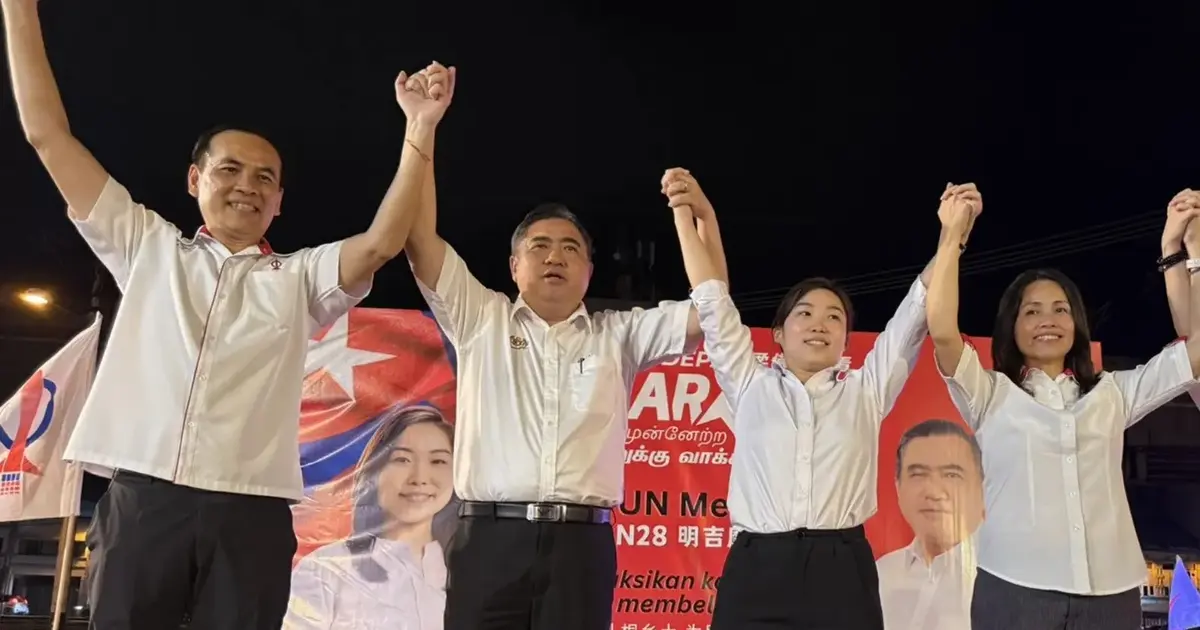
The Democratic Action Party has made a significant shift in its Mengkibol representation strategy, announcing that lawyer Chu Poh Yee will carry the party's colours in the next general election rather than fielding the sitting member who has represented the constituency for two consecutive terms. Party secretary-general Loke Siew Fook made the announcement, marking a notable decision within DAP's candidate selection process for the anticipated electoral contest.
The move signals DAP's confidence in refreshing its parliamentary roster with new talent whilst maintaining its footprint in the Mengkibol area. Chu Poh Yee's legal background brings a professional dimension to the party's representation strategy, with lawyers traditionally playing prominent roles within DAP's political infrastructure. The decision to move away from the incumbent suggests the party has conducted internal assessments regarding both electoral viability and organisational renewal in this particular seat.
Mengkibol, like many parliamentary constituencies across Malaysia, represents a testing ground for parties evaluating candidate effectiveness and community resonance. DAP's choice to introduce a new face indicates confidence that Chu Poh Yee possesses the necessary credentials and appeal to retain or strengthen the party's position in this division. The timing of this announcement, coming well ahead of the general election campaign period, allows the party to begin grassroots engagement and profile-building activities with its chosen representative.
For Malaysian voters following electoral developments, the replacement of long-serving MPs offers both opportunities and uncertainties. Incumbents who have completed two terms bring institutional knowledge and established networks within their constituencies, yet new candidates often energise campaigns through fresh approaches and renewed public engagement. Chu Poh Yee's legal expertise may prove advantageous in addressing constituent concerns related to property matters, contractual disputes, and regulatory compliance—issues frequently raised at parliamentary constituencies across the country.
The broader context of this decision reflects evolving dynamics within the Democratic Action Party as it prepares for the coming electoral cycle. Malaysian political parties increasingly recognise that balancing experienced MPs with emerging candidates creates both continuity and rejuvenation. DAP's willingness to transition beyond the two-term incumbent suggests internal confidence in its organisational depth and the calibre of candidates available within its ranks.
From a regional perspective, constituency-level candidate selections by major Malaysian political parties offer insights into how parties assess electoral competitiveness and demographic shifts. Mengkibol's selection demonstrates that even relatively stable DAP constituencies receive scrutiny and recalibration ahead of general elections. Such decisions, multiplied across dozens of constituencies, cumulatively shape the character and composition of parliament following electoral contests.
Chu Poh Yee's professional background as a lawyer positions her within a demographic increasingly visible in Malaysian electoral politics—women professionals entering parliamentary representation through major political parties. This representation aligns with broader societal conversations regarding gender parity in Malaysian politics and the integration of qualified women into senior political roles at the national level.
The announcement by Loke Siew Fook comes amid DAP's ongoing strategic planning for the general election. Party officials carefully consider multiple factors when finalising candidate lists, including local party strength, demographic trends, incumbent performance, and perceived electoral opportunities. The decision affecting Mengkibol reflects conclusions reached through these multifaceted assessments.
For constituents in Mengkibol, this transition necessitates reassessing their parliamentary representation during the coming electoral cycle. Voters familiar with the outgoing member's tenure will encounter a fresh candidate requiring introduction and evaluation. Such transitions, whilst sometimes contentious within constituencies, occur regularly across Malaysian electoral politics as parties rotate their parliamentary contingents between general elections.
Looking forward, Chu Poh Yee's candidacy will likely become a focal point for local campaign activities and inter-party competition in this constituency. Opposition candidates and other contenders will reference her background and experience, whilst DAP activates its organisational machinery to establish her presence and articulate her policy priorities to voters. The weeks preceding general elections typically see intensified grassroots engagement in constituencies where new candidates are being introduced.
The selection also underscores how Malaysian political parties continuously assess talent distribution and succession planning. By introducing Chu Poh Yee in Mengkibol, DAP demonstrates commitment to developing multiple candidates capable of contesting parliamentary seats effectively. This approach contributes to the broader competitive dynamics of Malaysian electoral politics, where party strength increasingly depends upon the depth of viable candidates available for deployment across diverse constituencies.