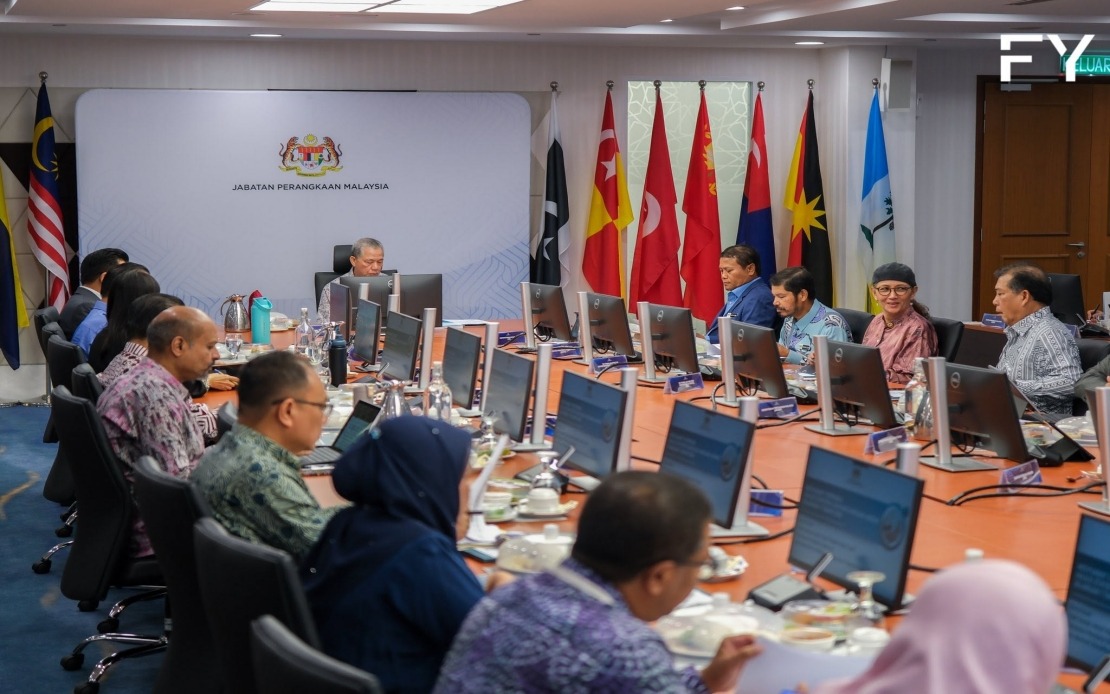
Malaysia's government is doubling down on data analytics and artificial intelligence as cornerstones of its policy-making framework to deliver the ambitions of the 13th Malaysia Plan spanning 2026-2030. Deputy Prime Minister Datuk Seri Fadillah Yusof outlined this strategic direction following a high-level session of the National Statistics and Data Council, signalling that the administration recognises data and statistics as far more than informational resources—they represent vital strategic assets capable of transforming governance effectiveness and strengthening national resilience amid turbulent global conditions.
The timing of this emphasis reflects mounting pressures facing policymakers across Southeast Asia. Countries throughout the region confront an overlapping constellation of challenges: economic slowdowns and currency volatility, regional geopolitical tensions, the accelerating pace of digital transformation, and the existential threat posed by climate change. Against this backdrop, Malaysia's reliance on sophisticated data infrastructure and AI-powered analysis represents an attempt to navigate these headwinds with greater precision and foresight than traditional governance models permit. By embedding data-driven processes into decision-making architecture, the government aims to respond more dynamically to emerging crises while allocating resources with improved efficiency.
Fadillah's comments arrived as Malaysia demonstrated resilience in its recent economic indicators. The nation's gross domestic product expanded at 5.4 per cent during the first quarter of 2026, a performance the deputy prime minister attributed directly to development policies constructed on rigorous data foundations. This connection between evidence-based planning and tangible outcomes serves as a proof-of-concept for the broader institutional shift underway. Yet the 13MP's scope extends well beyond maintaining macroeconomic stability; it encompasses transformative agendas in energy transition, climate mitigation, water security and sustainable development—domains where comprehensive, multi-source data proves indispensable for measuring progress and adjusting course.
Central to this vision is the concept of an integrated national data ecosystem. The deputy prime minister stressed that Malaysia must enhance collaboration spanning government ministries, federal agencies, state administrations, private enterprises, universities and research institutions. Such coordination remains challenging in practice, particularly across Malaysia's federal structure where state governments retain considerable autonomy. The council's agenda reflects ambitions to standardise official statistical protocols nationwide, establish unified data governance frameworks, and create seamless interfaces between administrative systems that historically operated in isolation. These technical undertakings carry profound implications for transparency and accountability in public administration.
The emphasis on secure, ethical data integration reveals awareness of public anxieties surrounding surveillance and privacy in the digital age. Fadillah explicitly referenced the necessity of handling integrated datasets responsibly, acknowledging that Malaysian citizens and international partners increasingly scrutinise how governments harness information technology. The framing suggests an attempt to position Malaysia as a nation pursuing technological advancement while maintaining ethical guardrails—a delicate balance that few Southeast Asian governments have successfully achieved. Building public confidence in data systems requires demonstrable commitments to transparent governance and meaningful safeguards against misuse.
Enhancing big data analytics and deploying AI technologies form the operational core of this agenda. These capabilities promise to unlock patterns within vast datasets that human analysts might overlook, enabling more sophisticated forecasting and optimisation across policy domains. In energy transition initiatives, for instance, AI could optimise renewable energy distribution networks and predict maintenance requirements before failures occur. Within the water sector—increasingly critical as climate variability intensifies—advanced analytics could improve resource allocation, identify leakage within distribution systems, and support long-term planning for water security. Similar applications extend across healthcare, education, urban planning and environmental protection.
The council's agenda encompasses several concrete initiatives designed to operationalise this vision. These include developing a comprehensive database on science, technology and innovation talent—reflecting recognition that Malaysia's competitiveness depends upon cultivating and retaining expertise in high-value sectors. Equally significant are efforts to empower data for youth development programmes and systematise national road asset management. Such diversity demonstrates that data-driven governance encompasses both strategic macro-level challenges and granular operational improvements affecting citizens' daily lives. The integration of administrative data across agencies represents particularly important groundwork, as silos between government departments have historically impeded comprehensive policy analysis.
For Malaysian readers, these developments carry several implications worth considering. First, enhanced data collection and usage by government agencies will likely accelerate, potentially affecting privacy expectations and individual data exposure. Second, policies across sectors ranging from education to infrastructure investment will increasingly reflect algorithmic recommendations rather than purely political or bureaucratic judgments—outcomes that could distribute benefits more equitably or concentrate advantages depending on implementation quality. Third, Malaysia's positioning as a data-driven economy within the ASEAN region may enhance its attractiveness to technology-focused foreign investment and international partnerships.
The deputy prime minister's emphasis on this agenda also reflects Malaysia's broader aspiration to position itself as a regional technology hub and middle-income nation transitioning toward advanced status. Neighbouring Singapore has long leveraged data sophistication and technological prowess as competitive advantages; Malaysia appears intent on narrowing this gap. Yet success depends not merely upon technological deployment but upon building institutional capacity, cultivating analytical talent, and establishing governance cultures where evidence genuinely influences decisions rather than serving primarily symbolic functions.
Fadillah's articulation of these priorities arrives at a moment when Malaysia confronts mounting pressure to deliver tangible improvements in public services, economic opportunity and environmental outcomes. The 13MP represents the government's framework for addressing these expectations across the five-year period. Whether investments in data infrastructure and AI deployment translate into demonstrable improvements in Malaysians' lives will constitute the ultimate measure of this strategic pivot. The council's work over coming months and years will determine whether this emphasis on analytics represents genuine institutional transformation or another aspirational government initiative that struggles with implementation challenges endemic to Southeast Asian bureaucracies.