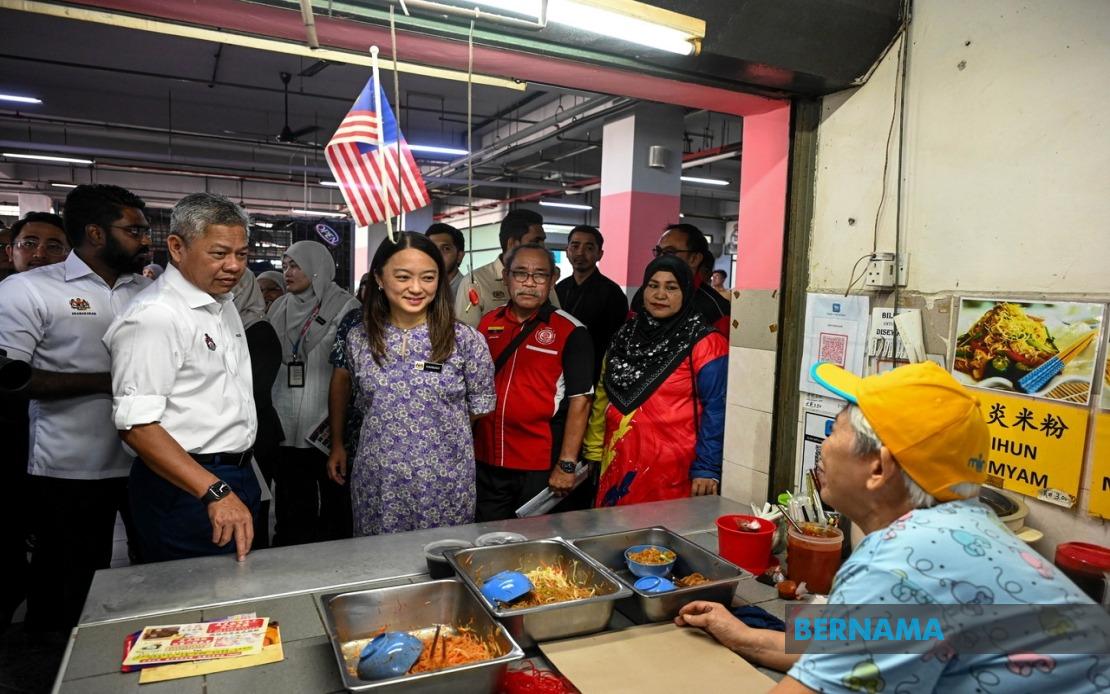
Kuala Lumpur City Hall (DBKL) has announced a substantial financial commitment of RM200 million aimed at transforming the informal food and beverage sector across the capital. The comprehensive modernisation programme, branded as Lestari Niaga @ Kuala Lumpur 2026, will span 287 hawker locations and is expected to uplift the operating standards for more than 11,000 traders and street vendors throughout the city.
Minister in the Prime Minister's Department (Federal Territories) Hannah Yeoh framed the initiative as a deliberate effort to create safer, more organised spaces where informal traders can conduct their business with dignity and efficiency. The programme represents a shift in how Malaysian authorities approach informal economy regulation—moving away from enforcement-driven models toward structured development that acknowledges the economic importance of hawker sectors in urban areas. For traders, this translates into better infrastructure, improved hygiene conditions, and enhanced customer appeal, all factors that have become increasingly critical in the post-pandemic business environment.
The implementation philosophy underlying Lestari Niaga reflects a recognition that hawker modernisation requires careful stakeholder management. Hannah Yeoh emphasised that DBKL maintains a consultative approach when rolling out upgrades and relocation schemes, actively soliciting input from traders, residents, and building management. This multi-perspective approach reflects the inherent tensions in urban hawker management: residents want traffic flow and cleanliness, traders need accessible locations and reasonable operational costs, while building owners seek professional tenancy arrangements. Balancing these competing interests without disadvantaging any group remains central to the programme's credibility and long-term sustainability.
The UTC Sentul hawker project serves as a tangible example of this methodology. A RM1.6 million initiative announced in June, this specific upgrade will replace makeshift stall structures with 20 modern modular kiosks, scheduled for completion by early October. Rather than rushing traders onto the street during reconstruction, DBKL introduced a novel financial assistance mechanism: affected traders will receive monthly payments of RM1,500 during the construction period. This direct cash transfer approach proves more practical than establishing temporary trading zones, which historically suffer from poor locations and low customer volumes, ultimately harming traders' income during the transition phase.
Mayor Datuk Seri Fadlun Mak Ujud justified this financial support strategy by highlighting the inefficiencies inherent in temporary relocation sites. Such arrangements typically impose additional logistics costs, attract fewer customers due to inconvenient locations, and create operational disruptions that small traders can ill afford. By providing direct compensation, DBKL reduces the financial shock that upgrade projects impose on vulnerable informal sector workers. This represents meaningful progress in how government treats informal traders—not as obstacles to urban planning, but as stakeholders whose livelihoods merit protection during necessary infrastructure improvements.
The programme's geographic expansion signals DBKL's commitment to systematic rather than piecemeal modernisation. Simultaneous projects backed by the same financial incentive structure will roll out across multiple locations including Jalan Dato Senu, Pudu Ulu, and Bandar Tun Razak. This coordinated approach prevents the perception of favouritism while spreading the administrative burden and allowing DBKL to develop standardised best practices as they move from one location to the next. The scale of simultaneous implementation also enables more efficient procurement of modular kiosk units, potentially reducing per-unit costs and maximising the reach of the RM200 million allocation.
Underlying the initiative is a categorised approach to hawker classification. Of the 11,000 traders across 287 sites, approximately 4,000 operate as street vendors without fixed premises, roughly 5,000 work within municipal assets or designated hawker centres, and around 1,000 fall into a reapplication category—likely those seeking to formalise previously unlicensed operations. The initial rollout will focus on 224 locations, comprising a diverse range of setup types and business models. This differentiated strategy acknowledges that street vendors, hawker centre operators, and aspiring formal traders face distinct challenges and require tailored solutions.
The Lestari Niaga programme carries particular significance for Malaysia's informal economy at a time when urbanisation pressures and changing consumer behaviour reshape street-level commerce. Hawker sectors across Southeast Asia have faced mounting pressure from formal retail chains, changing eating habits, and increasingly strict municipal enforcement. By investing substantially in modernisation rather than merely regulating informality away, DBKL positions Kuala Lumpur as a city that recognises hawker culture as both a heritage asset and an ongoing economic necessity. The programme sends a market signal that street food vendors can be viable, sustainable businesses if provided appropriate infrastructure and operational support.
For Malaysian readers and observers of urban development policy, Lestari Niaga demonstrates a growing understanding that informal economies cannot simply be formalised overnight through legislation or relocated en masse without economic consequences. The RM1,500 monthly assistance, the focus on consultation with affected parties, and the phased implementation across 287 sites suggest a more pragmatic, trader-centric approach than has historically characterised municipal regulation. Whether this model succeeds will likely depend on consistent implementation, follow-through on promised timeline commitments, and genuine integration of trader feedback into ongoing programme adjustments.
The financial investment itself warrants scrutiny within broader municipal budgeting contexts. RM200 million for 11,000 traders translates to approximately RM18,200 per trader in average capital investment—sufficient for modest infrastructure improvements but not transformative without accompanying operational support and market development initiatives. DBKL will need to ensure that the modernised spaces include adequate waste management, water supply, electrical infrastructure, and perhaps crucially, robust marketing to attract customers once traders relocate into their new kiosks. The success of individual upgrades will ultimately hinge not on infrastructure quality alone, but on whether the new environments support viable commerce.
Looking forward, the Lestari Niaga initiative establishes a template that other Malaysian municipalities might replicate. As Klang, Petaling Jaya, and other urban centres contend with their own hawker management challenges, DBKL's experience with large-scale modernisation, financial support mechanisms, and stakeholder engagement offers valuable lessons. If successful, the programme could reshape how Malaysian cities approach informal economies—not as problems to eliminate, but as assets to develop strategically. For the 11,000 traders directly affected, the initiative represents both an operational upgrade and formal recognition that their contributions to the city's economic and cultural vitality merit institutional support.