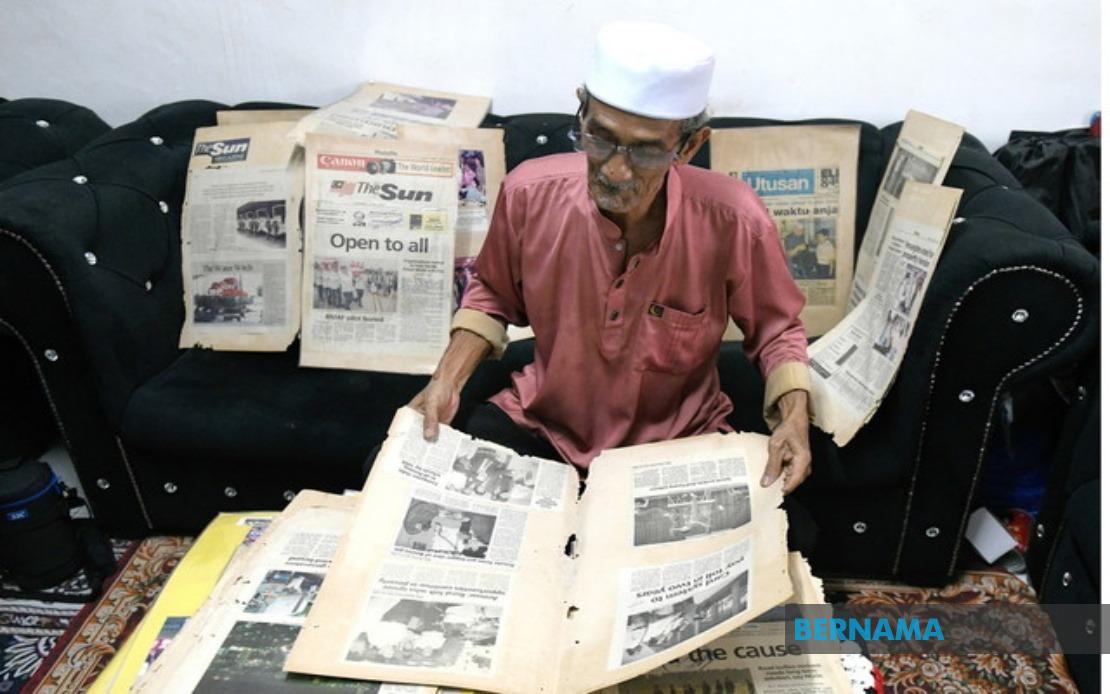
Azmi Sapiei has carried the weight of Malaysia's stories on his shoulders—literally and figuratively—for more than three decades. The 64-year-old veteran photographer and cameraman has endured physical assaults, discarded film rolls, and increasingly heavy equipment throughout a career that traces the technological transformation of broadcast journalism in Malaysia. Now based in Batu Kawan, Sapiei reflects on a professional journey that began in the mid-1980s and reshaped his understanding of what it means to document a nation in real time.
One incident stands out as a stark reminder of the hazards journalists face while pursuing stories. Around 2001, while covering a court case as a photographer for The Sun newspaper, Sapiei was kicked and spat upon by a suspect. The assault was momentary but the lesson enduring: capturing news requires not just technical skill but emotional resilience and physical courage. Such confrontations have become part of the institutional memory of Malaysian newsrooms, rarely discussed but deeply influential in how working journalists approach their responsibilities to the public.
Before joining The Sun, Sapiei spent nearly three years at Bernama, Malaysia's national news agency, a period he describes as formative and disciplinary. During his tenure from 1993 onward, he covered numerous pivotal national events that defined an era. Most notably, in July 1994, Sapiei captured exclusive photographs of Shamsiah Fakeh's return from China to her nephew's residence in Gombak. Shamsiah, a former member of the Malayan Communist Party, represented a significant moment in Malaysian historical reconciliation. Sapiei and a journalist managed to arrive early enough to document the arrival before authorities closed off the area—a classic example of the newsgathering advantage that comes from preparation and timing.
The early 1990s belonged to an analogue world where film reigned supreme. Sapiei shot three rolls of film during the Shamsiah Fakeh assignment, an amount that prompted his editor to dismiss the effort as insufficient. The encounter tested his confidence; editors at that time operated with scarce resources and high expectations, often questioning a photographer's judgment before seeing the developed prints. Yet when the images were processed, every major newspaper in Malaysia carried Sapiei's photographs the following day. That validation, delayed though it was, taught him that persistence in the field and faith in editorial instinct ultimately matter more than immediate approval.
The experience exemplified Bernama's culture of disciplined, mission-driven journalism. Sapiei credits the agency with functioning as a rigorous training ground that produced technically proficient and ethically grounded visual journalists. Bernama instilled in him not merely the mechanics of capturing images but the journalistic values underlying each frame: accuracy, newsworthiness, and contextual relevance. These lessons proved portable across media platforms as his career evolved.
Sapiei's journey to photojournalism was unconventional. He began in factory work before gravitating toward Kuala Lumpur to pursue his passion for photography. He worked independently with several agencies and women's magazines, gaining broad experience across commercial and editorial contexts. This versatility prepared him for the transition to news when the opportunity arose. His progression through multiple organizations—Bernama, The Sun, Bernama TV, and finally RTM Penang—reflected both personal ambition and the shifting landscape of Malaysian media as television increasingly competed with print.
The evolution from film to digital equipment paralleled Sapiei's career arc, presenting both technical and physical challenges. During his tenure at Bernama TV, he operated Betacam cameras, which weighed approximately 12 kilograms. Journalists colloquially referred to these machines as "junk iron" not as insult but as acknowledgment of their unwieldy heft. Carrying such equipment for hours during field assignments demanded considerable physical endurance. Television cameramen, unlike still photographers, could not simply hand off their equipment during shoots; they bore the full weight throughout, often in challenging environmental conditions and under pressure to maintain steady, usable footage.
Caption writing added another dimension to Sapiei's responsibilities during the analogue era. Photographers did not simply deliver prints; they crafted accompanying text that contextualised images for editors and downstream audiences. This requirement deepened Sapiei's engagement with storytelling and forced him to think beyond the visual frame. The captions had to be accurate, concise, and newsworthy—skills that transferable to his later work in video journalism where narration and pacing became paramount.
Beyond the technical and physical dimensions, Sapiei emphasizes that success in photojournalism demands mental fortitude. The profession requires navigating unpredictable circumstances, managing the psychological toll of witnessing traumatic events, and maintaining composure when confronted with hostility or danger. The assault in 2001 was not an aberration but an extreme manifestation of risks inherent to news gathering. Sapiei's three-decade career encompassed incidents both dramatic and subtle—the cumulative weight of which matured his judgment and deepened his commitment to the work.
Recognition came incrementally. In 2006, Sapiei received the Penang State Media Award in the visual electronic media category, acknowledging his contributions to broadcast journalism. More significantly, perhaps, was his retirement from RTM Penang in mid-2020, marking a natural conclusion to a working life that had spanned multiple technological eras and organizational transformations. His transition from active duty allowed him to reflect on legacy and mentorship.
That legacy has already taken root in the next generation. Sapiei's second son, Muhammad Syafiq, now 30, works as a cameraman for Media Prima Television Network. Syafiq's interest in cameras emerged during childhood, nurtured by observing his father's equipment and accompanying him to assignments after completing his Sijil Pelajaran Malaysia in 2016. The younger Sapiei began operating cameras professionally a year later, absorbing not just technical skills but the discipline and ethical commitment that characterize his father's approach to the craft.
Muhammad Syafiq describes his father as more than a parent—as teacher and mentor. The transmission of knowledge includes filming techniques, visual composition, angle selection, and the importance of work discipline while on assignment. These are lessons rooted in three decades of practice, refinement, and occasional failure. They represent the accumulated wisdom of someone who has documented Malaysia's transformation while watching his profession undergo equally profound change. As the younger generation continues this work, they carry forward both the specific technical knowledge and the deeper commitment to truthful, disciplined visual journalism that Azmi Sapiei exemplified throughout his career.