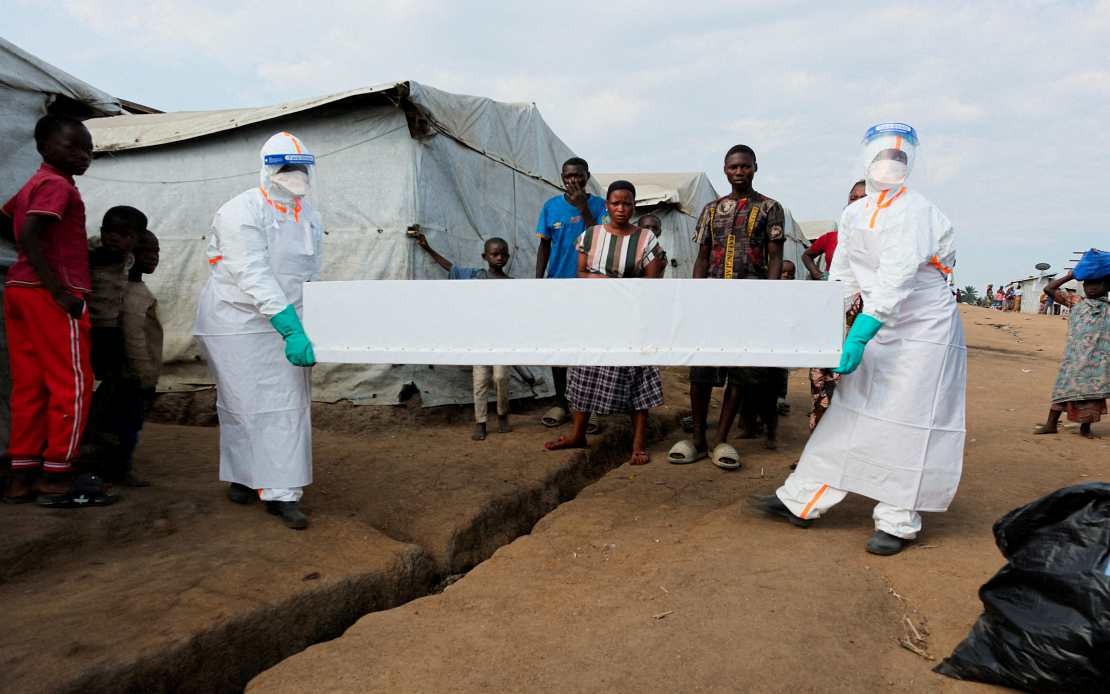
The Democratic Republic of Congo is confronting a rapidly escalating Ebola crisis, with confirmed cases climbing past the 1,000 mark as of late June, according to health ministry data. The outbreak, which was officially declared on May 15, has claimed 254 lives so far, translating to a fatality rate of 25.3 per cent. The acceleration of cases underscores the challenging epidemiological situation facing Central Africa's most populous nation and raises alarm bells across the broader region about potential spillover effects.
The disease's progression reflects the difficulties authorities face in containing transmission within the Democratic Republic of Congo's Ituri, North Kivu and South Kivu provinces, areas already burdened by ongoing instability and limited healthcare infrastructure. Health Minister Roger Kamba acknowledged that while recovery numbers have improved modestly—with at least 100 people discharged—the public health system remains under considerable strain, with 365 patients currently receiving isolation or hospital-based care. The persistence of new infections despite months of coordinated intervention highlights how environmental and social factors continue to enable viral spread in these provinces.
The current outbreak has prompted comparisons to the catastrophic 2014-2016 West African Ebola epidemic, which devastated Guinea, Liberia and Sierra Leone and killed more than 11,000 people. The Africa Centres for Disease Control and Prevention issued an explicit warning that the current situation could mirror or exceed that devastating scale if transmission chains are not rapidly interrupted. This cautionary assessment reflects concerns that the Democratic Republic of Congo's weaker health systems, compounded by security challenges and population displacement, create conditions for exponential case growth.
Response operations continue across multiple fronts, with health authorities maintaining active case investigations and epidemiological surveillance in affected communities. The ministry stressed that prevention activities remain ongoing, though challenges persist in maintaining consistent contact tracing and follow-up protocols. Kamba indicated that the response framework relies heavily on enhanced community communication, expanded diagnostic capacity and improved case management protocols designed to identify infections earlier and isolate cases more quickly.
A significant epidemiological revelation emerged from collaborative research conducted by Uganda's Health Ministry Department of National Health Laboratory and Diagnostic Services alongside the Democratic Republic of Congo's Institute of National Biomedical Research. Scientists confirmed that the causative agent is the Ebola Bundibugyo strain, which arose from a fresh zoonotic spillover event—meaning the virus jumped directly from animal reservoirs to human populations. This finding definitively rules out alternative scenarios where the virus might have circulated undetected for months or persisted silently from a previous outbreak, a distinction that shapes understanding of transmission dynamics and outbreak control strategies.
The confirmation of a novel wildlife spillover event carries particular importance for Southeast Asian nations concerned about emerging infectious disease threats. While Ebola transmission remains geographically concentrated in Central Africa, the mechanisms driving zoonotic spillover—habitat encroachment, bushmeat consumption, climate shifts—operate globally. The outbreak underscores how wildlife-human interface dynamics can trigger pandemic pathogens and demonstrates the necessity for robust disease surveillance systems capable of detecting unusual illness patterns early. Malaysian public health authorities have invested in strengthening laboratory diagnostic capabilities and cross-border disease monitoring networks, lessons derived partly from observing how other regions respond to such crises.
The Democratic Republic of Congo's healthcare response, though constrained by limited resources, reflects lessons learned from previous Ebola outbreaks. Community health workers form the backbone of contact tracing efforts, operating in settings where formal healthcare infrastructure remains patchy. The intensification of diagnosis and case management—bringing suspected cases into health facilities where isolation and supportive care can be provided—represents a critical intervention point. Each day of delay in case identification and isolation potentially amplifies transmission exponentially, which explains the health ministry's emphasis on accelerating these activities despite operational obstacles.
The mortality rate of 25.3 per cent, while somewhat lower than the West African epidemic's peak, remains alarmingly high. This reflects both the Ebola Bundibugyo strain's inherent lethality and the challenges in delivering early supportive care in affected areas. Recovery outcomes depend substantially on rapid fluid replacement, maintenance of electrolyte balance and management of secondary infections—interventions requiring functional medical infrastructure that remains inconsistently available in North Kivu, South Kivu and Ituri provinces.
The recovery of at least 100 patients offers modest encouragement, demonstrating that survival remains possible with appropriate clinical intervention. However, the gap between 1,003 confirmed cases, 254 deaths and only 100 recoveries indicates that roughly 650 cases remain active—either in acute illness phases or under ongoing monitoring. This large patient reservoir represents both a humanitarian concern and an epidemiological risk, as inadequately isolated or monitored patients can continue transmitting virus to healthcare workers, family members and broader communities.
Regional health organisations across East and Central Africa have heightened surveillance at border areas, recognising that continued case growth in the Democratic Republic of Congo increases probabilistic risks of cross-border transmission. Although Ebola transmission requires direct contact with infected blood or body fluids, preventing large-scale outbreaks depends on rigorous early detection and isolation protocols. The situation illustrates how infectious disease control increasingly requires transnational cooperation, coordinated laboratory capacity and shared epidemiological data—principles that extend beyond this particular outbreak to shape pandemic preparedness frameworks across Africa and internationally.

