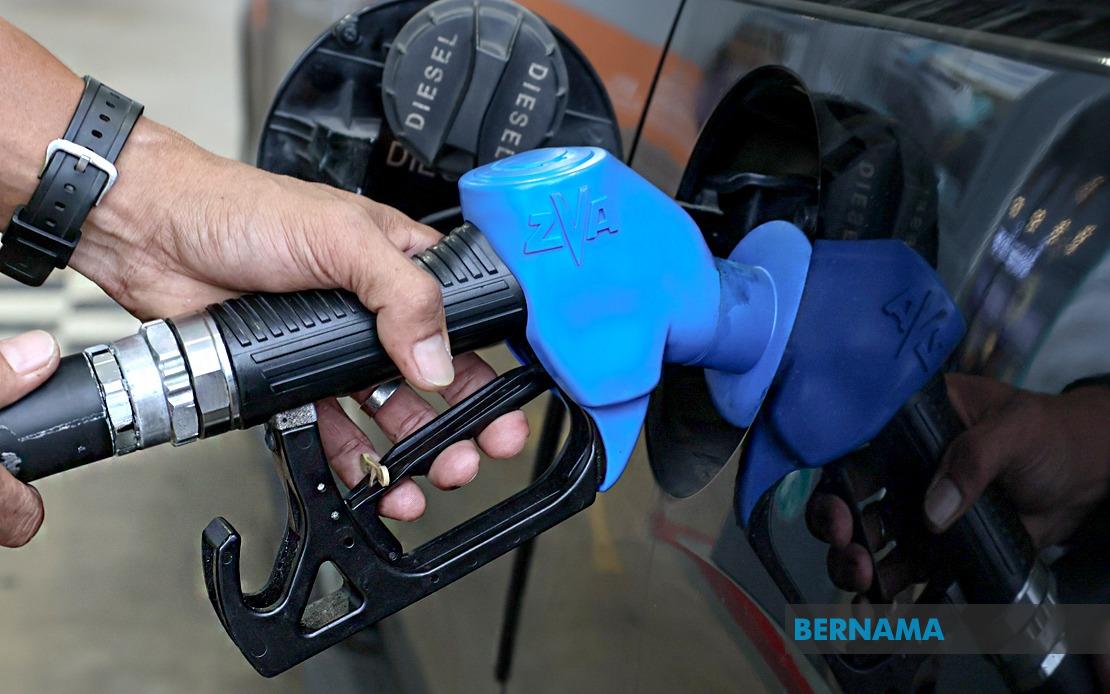
The Malaysian government's decision to reduce subsidised diesel to RM2.10 per litre from July represents a significant intervention aimed at easing operational pressures throughout the country's supply chains. Prime Minister Datuk Seri Anwar Ibrahim's announcement, to be rolled out via the BUDI MADANI RON95 programme with MyKad verification, signals a commitment to rationalising fuel subsidies while maintaining support for consumers and businesses dependent on diesel for their operations.
Economists anticipate the price adjustment will transmit downstream benefits throughout Malaysia's economy, particularly across sectors most vulnerable to fuel cost fluctuations. Dr Nanthakumar Loganathan, a professor of economics at Universiti Teknologi Malaysia's Faculty of Management, emphasises that the agriculture and food distribution networks have consistently cited fuel expenses as a primary driver of retail price increases. By reducing this foundational cost, the policy creates space for traders and logistics operators to absorb expenses without passing additional charges to consumers, potentially stabilising prices for essential goods that rely on diesel-powered transportation networks.
The immediate context involves substantial price disparities that have persisted across Malaysia's regions. Peninsular Malaysia currently experiences unsubsidised diesel retail prices of RM4.37 per litre, whilst Sabah and Sarawak have enjoyed lower rates of RM2.15 per litre due to their geographical circumstances and logistics infrastructure. This harmonisation of pricing across all states represents more than a simple administrative adjustment; it reflects a deliberate policy shift toward creating a more cohesive national subsidy framework that treats all Malaysians equitably whilst recognising regional economic structures.
Dr Novel Lyndon, a political sociology professor at Universiti Kebangsaan Malaysia's Centre for Development, Social and Environmental Studies, contextualises this move as part of broader efforts to minimise subsidy leakages whilst ensuring targeted distribution reaches genuinely vulnerable populations. The previous price disparities, whilst reflecting legitimate regional economic factors, had generated discontent and created perverse incentives that ultimately inflated costs for consumers. By establishing uniform national pricing, the government signals its intention to move toward a subsidy system grounded in demonstrated need rather than geographical accident.
However, experts caution that the policy's success hinges critically on implementation mechanisms and their effects on different population segments. Rural communities in Sabah and Sarawak, which depend substantially on diesel for agricultural operations, fisheries, goods movement, and daily transportation, face particular vulnerabilities if targeted assistance mechanisms prove inadequate. The transition to unified national pricing could impose genuine hardship on small businesses and rural enterprises unless complementary support structures are simultaneously deployed, potentially reversing intended benefits by increasing rather than reducing living costs in vulnerable regions.
The government's choice to employ MyKad as the primary verification mechanism for subsidy distribution addresses long-standing concerns about leakage and misallocation within Malaysia's subsidy ecosystem. Dr Mohd Afzanizam Abdul Rashid, chief economist at Bank Muamalat Malaysia, notes that experience with MyKad-based RON95 subsidy distribution demonstrates the system's operational viability and effectiveness in channelling assistance with precision. This approach simultaneously generates comprehensive fuel usage data, enabling more sophisticated policy planning whilst combating illicit activities including fuel smuggling that drain public resources.
Regarding sustainability, Dr Nanthakumar Loganathan raises the critical question of whether the government can maintain RM2.10 per litre pricing if international crude oil markets experience renewed upward pressure. Absent additional budgetary allocations or alternative supply arrangements, Malaysia's capacity to sustain current subsidy levels becomes contingent on global energy markets remaining benign. The professor suggests the government may require diversified sourcing strategies, potentially engaging suppliers beyond traditional Middle Eastern markets including Russia, to secure supply guarantees that prevent subsidy erosion when international prices spike.
The policy's broader credibility depends substantially on public communication and demonstrable linkages between subsidy savings and tangible improvements in citizens' living standards. Dr Novel Lyndon emphasises that Malaysians will assess the initiative not merely through diesel price reductions but through observable outcomes in infrastructure development, healthcare provision, educational facilities, and broader cost-of-living assistance. Transparent governance and clear explanation of how subsidy rationalisation benefits ordinary citizens prove essential for building public confidence that the government's fiscal discipline genuinely serves the people who elected it rather than serving technocratic efficiency at citizens' expense.
Trade associations and business groups represent critical intermediaries whose response will determine whether cost savings achieve their intended consumer benefit. Rather than permitting logistics firms and retailers to absorb diesel savings as margin expansion, policymakers must encourage transparent transmission of reduced fuel costs into lower prices for consumers, particularly for essentials including fresh produce dependent on refrigerated transport. This requires coordination between government agencies and business sector participants to align private incentives with public policy objectives.
The diesel price adjustment arrives amid broader questions about Malaysia's subsidy trajectory and fiscal sustainability. With energy subsidies consuming substantial government resources, policymakers face genuine tensions between maintaining purchasing power for lower-income Malaysians and ensuring long-term fiscal viability. The MyKad-based targeting mechanism represents one approach to resolving this tension by concentrating benefits on those most dependent on subsidised fuel, though implementation fidelity remains uncertain. Equally important is whether the government simultaneously invests in alternative energy infrastructure and efficiency improvements that reduce Malaysia's underlying dependence on diesel across transport and industrial sectors.
For Southeast Asian observers, Malaysia's experience offers lessons about subsidy design and regional equity. Many neighbouring economies struggle with similar challenges of maintaining consumer purchasing power whilst managing fiscal pressures, particularly in rural areas where transportation depends disproportionately on fuel. The Malaysian government's effort to harmonise pricing whilst employing technology-based targeting suggests potential pathways for other regional governments, though each nation's distinct geography, energy infrastructure, and fiscal circumstances require locally adapted solutions rather than wholesale policy transfer.
The ultimate success of this policy rests on implementation details that will unfold over coming months. Whether businesses genuinely reduce prices for consumers, whether rural communities receive adequate support during the transition, whether the MyKad system functions reliably and equitably, and whether international energy prices cooperate with Malaysia's budget—all remain open questions. What appears clear is that the government recognises both the necessity of subsidy rationalisation and the political and social costs of mismanaging the transition, positioning this policy shift as an important test of its capacity to execute economic reform whilst maintaining social cohesion.

