Financial hardship should not deter qualified students from accepting university places, according to Kelantan branch officials at Universiti Teknologi MARA (UiTM), who say a comprehensive support system exists to help economically vulnerable learners navigate tertiary education. The message comes amid intensifying competition for limited spots in Malaysia's public higher education sector, where many eligible candidates from low-income families decline offers due to inability to afford study and living costs.
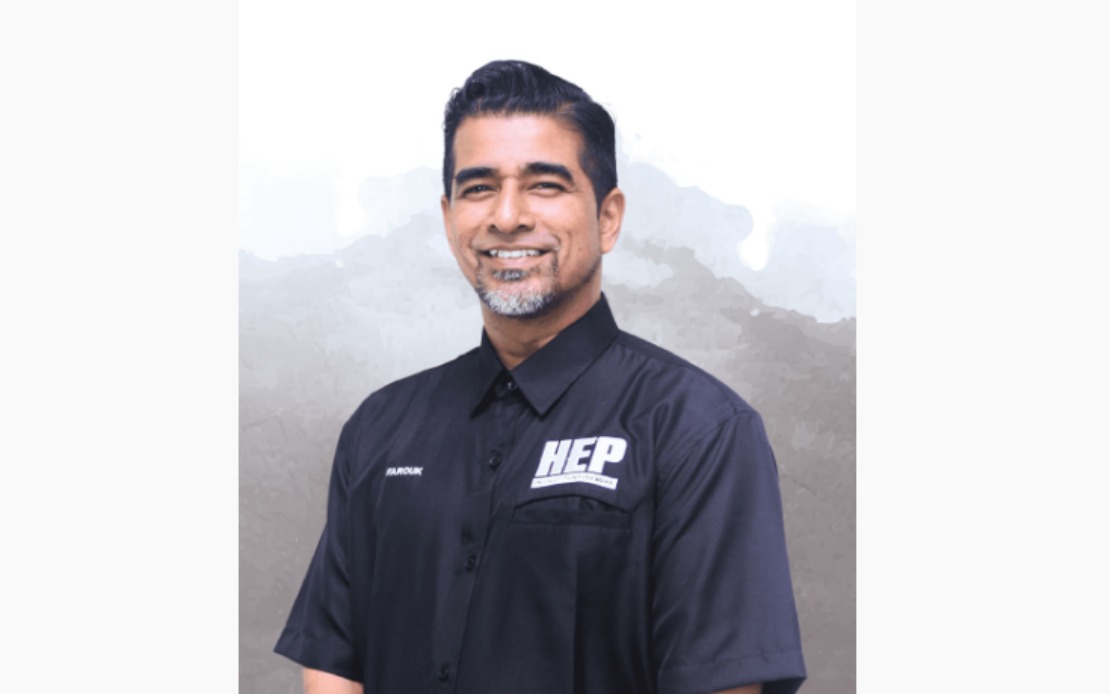
Meer Zhar Farouk Amir Razli, Deputy Rector for Student Affairs at UiTM Kelantan, emphasised that students need not depend exclusively on PTPTN loans from the National Higher Education Fund Corporation, as the institution has established multiple channels to provide relief. Beyond conventional loan mechanisms, the university distributes zakat assistance drawn from Islamic charitable contributions and operates dedicated welfare funds specifically designed to support disadvantaged cohorts. These programmes form part of a broader institutional commitment to ensure that economic constraints do not become insurmountable barriers to educational advancement.
Among the initiatives gaining traction is the Dapur MADANI programme, a residential college initiative that assists students in managing everyday living expenses throughout their academic journey. The scheme recognises that tuition fees represent only one dimension of the financial challenge; accommodation, food, transport, and study materials impose substantial ongoing costs that frequently exceed what families earning below the poverty line can realistically sustain. By providing practical support within campus residential facilities, the programme addresses a critical gap in student welfare infrastructure.
Meer Zhar stressed that prospective students and their families should thoroughly investigate all available assistance mechanisms before making the difficult decision to reject admission. The advisory reflects growing concern that capable individuals from disadvantaged backgrounds are missing educational opportunities that could transform their socioeconomic trajectories, simply because they remain unaware of the safety nets the institution provides. This information gap represents a significant barrier independent of actual financial availability, suggesting that improved communication and outreach could unlock educational access for many otherwise-qualified candidates.
The Rector's Cakna Programme, a community engagement initiative rolled out by the Kelantan campus, exemplifies efforts to bridge this awareness gap. Executed in partnership with grassroots non-governmental organisations operating within Kelantan, the programme identifies newly enrolled students requiring support and connects them directly with available resources. Rather than passively advertising assistance, the initiative takes proactive steps to reach vulnerable populations who may face practical obstacles in accessing university administrative systems or lack familiarity with bureaucratic procedures for claiming support.
The programme's tangible impact became evident through the case of Norzarra Dhania Amir Abdullah, a nineteen-year-old from a low-income household whom campus officials provided with a laptop to facilitate academic preparation ahead of her September semester commencement. The gesture carries symbolic and practical significance, recognising that technological access represents an increasingly non-negotiable component of university studies in the digital age. For students whose families cannot afford computing equipment, such institutional provision eliminates a concrete impediment to participation and academic performance.
Norzarra Dhania's trajectory illustrates the intersection of aspiration, circumstance, and opportunity that characterises many Malaysian students from economically constrained backgrounds. The eldest among seven siblings, she carries family responsibilities uncommon among her peer cohort. Her household depends entirely on her mother's income as a restaurant assistant, a precarious situation exacerbated when her father developed diabetes four years ago, rendering him unable to contribute financially. This scenario reflects structural vulnerabilities affecting numerous Malaysian families, where a single incapacitating illness can plunge a household into economic distress.
Previously, Norzarra Dhania had received an admission offer from UiTM Sarawak but reluctantly declined, unable to afford relocation costs to East Malaysia or the heightened expenses associated with studying far from her support network. The decision represented a painful trade-off between educational opportunity and family economic survival. This year's offer from UiTM Kelantan proved more feasible precisely because geographic proximity reduced transportation costs and enabled her to maintain household contributions while pursuing studies. She will pursue a Diploma in Management, a qualification that could meaningfully enhance her family's long-term earning potential.
Norzarra Dhania's experience encapsulates broader patterns in Malaysian higher education participation. Despite formal meritocratic selection mechanisms, socioeconomic geography shapes educational outcomes substantially. Students whose families live in rural areas or smaller towns may face disproportionate financial burdens if forced to relocate to major urban centres where campus facilities concentrate. An expansion of regional educational infrastructure, coupled with needs-based support mechanisms, therefore represents not merely a welfare concern but an economic efficiency measure enabling fuller mobilisation of the nation's human capital.
The emphasis on reassuring struggling students reflects institutional recognition that implicit messaging matters profoundly. When university communications focus primarily on academic excellence or campus facilities without addressing affordability concerns directly, economically marginalised prospective students may interpret silence as indifference or assume that assistance programmes carry stigma or involve onerous eligibility requirements. By explicitly highlighting support availability and showcasing concrete examples of students from similar backgrounds successfully navigating higher education, UiTM Kelantan addresses psychological barriers alongside material ones.
Competition for public university places in Malaysia has intensified substantially, driven by demographic factors and expanded secondary education completion rates. This tightening access underscores the importance of ensuring that rejection of offers stems from genuine unsuitability rather than financial anxiety. Each declined place represents not merely an individual foregone opportunity but a societal loss of potential talent. From a national development perspective, enabling students like Norzarra Dhania to proceed with their studies generates returns extending beyond individual advancement to encompass broader economic and social benefits.
The initiative also highlights the evolving role of religious charitable mechanisms in higher education funding. The incorporation of zakat assistance within university support frameworks demonstrates how Islamic financial principles can address contemporary educational access challenges. This approach resonates particularly within Malaysia's Muslim-majority context and provides culturally embedded pathways for resource redistribution that complement secular welfare mechanisms.
Looking forward, the experiences documented through programmes such as the Rector's Cakna initiative provide valuable data regarding barriers to higher education access among economically vulnerable populations. Scaling successful models across other public universities could substantially expand opportunities for talented students whose potential would otherwise remain unrealised. The challenge ahead involves balancing fiscal constraints with equitable access, ensuring that Malaysia's higher education system functions as a mechanism for social mobility rather than reproduction of existing economic hierarchies.