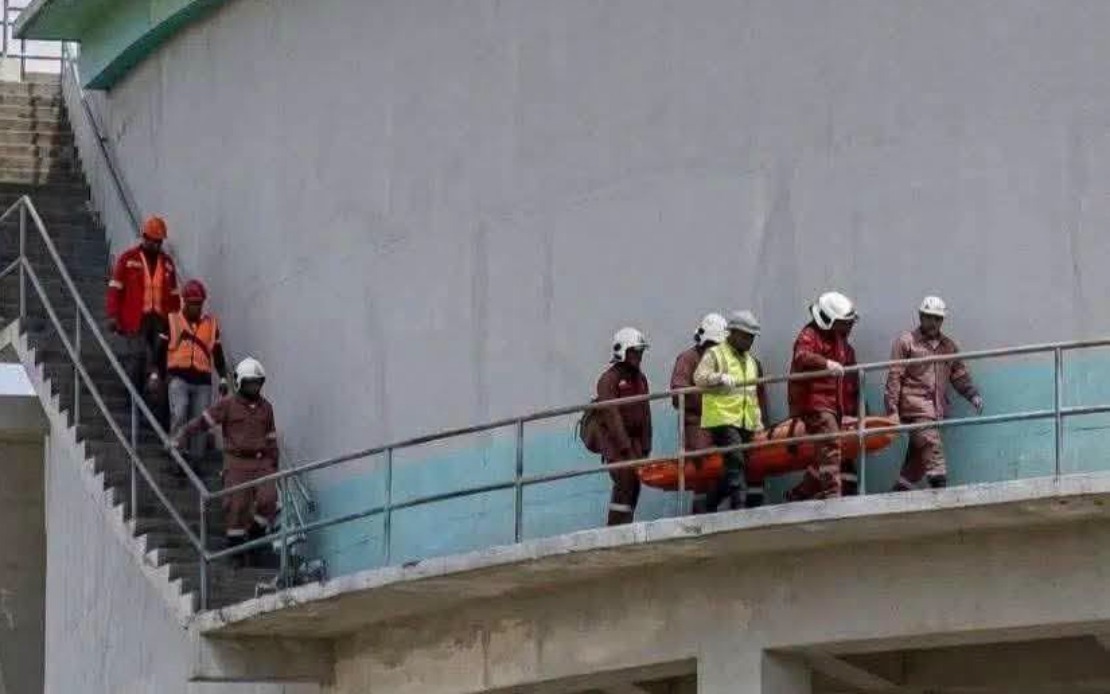
The Department of Occupational Safety and Health (DOSH) has commenced formal investigations into a workplace fatality that claimed the life of an industrial trainee during water tank cleaning operations at Menara Saujana Perdana 1 in Sungai Buloh, Selangor, on June 16. The incident has prompted renewed scrutiny of safety standards in confined space work, a particularly hazardous category of industrial activity that continues to pose significant risks to Malaysian workers.
Director-general Hazlina Yon announced that field investigators from the Selangor DOSH office have already visited the location and implemented a prohibition notice preventing any disturbance to the accident scene. This precautionary measure is standard practice in fatality investigations, ensuring that evidence remains intact for forensic analysis and factual reconstruction. The agency is systematically collecting statements from witnesses and relevant personnel who were present at or near the site during the incident.
The investigation is proceeding under Sections 15, 17 and 18 of the Occupational Safety and Health Act 1994, legislative provisions that establish the legal framework for employer obligations and the duty of care owed to all workers and affected parties. These sections enumerate the responsibilities that organisations must discharge to protect the safety, health and welfare of their workforce. Should the inquiry uncover breaches of occupational safety regulations, DOSH has signalled that enforcement action commensurate with the violations will be pursued.
Confined space work represents one of the most perilous categories of industrial activity, requiring meticulous planning, comprehensive risk assessment and rigorous control measures before any employee enters such an environment. Hazlina's statement underscores the non-negotiable requirement for employers to obtain proper work permits and implement protective protocols prior to allowing personnel access. The tragic outcome in Sungai Buloh exemplifies why these procedural safeguards exist and why their consistent application remains crucial to preventing similar catastrophes.
Employers operating in Malaysia carry an explicit legal obligation to conduct thorough hazard identification and risk assessment exercises for all work activities, particularly those classified as high-risk operations. This foundational step must precede any commencement of actual work. The assessment process should not be perfunctory but rather a detailed, documented examination of potential dangers and the appropriate mitigation strategies required to neutralise or substantially reduce those risks. The gap between regulatory requirements and workplace practice remains a persistent concern across Malaysian industries.
The DOSH director-general emphasised that industrial trainees and newly recruited workers engaged in high-risk activities must receive comprehensive occupational safety and health instruction tailored to their specific tasks. This training obligation extends beyond generic awareness sessions to include detailed briefings on the particular hazards they will encounter, the control measures in place, and the proper execution of established safe work procedures. Equally important is the requirement for competent supervision—workers must be overseen by individuals with proven expertise in the activity and the ability to identify unsafe conditions or practices in real time.
The institutional responsibility for worker safety ultimately rests with employers and operational management. Hazlina's statement reinforced that organisations must prioritise the safety and health considerations of all participants in work activities, including not only direct employees but also contractors, vendors and temporary workers like the trainee in question. The inclusive language reflects a regulatory philosophy recognising that workplace accidents do not discriminate based on employment status; a fatality is equally tragic whether the victim is a permanent staff member or a trainee on contract.
Malaysia's industrial safety record has improved incrementally over recent years, yet fatalities in confined space operations remain disproportionately prevalent. Factors contributing to these incidents frequently include inadequate pre-entry assessments, insufficient atmospheric testing, missing or defective personal protective equipment, absent rescue procedures, and poor communication between supervisors and workers. The incident in Sungai Buloh will likely trigger broader discussions within regulatory circles and industry associations about whether current enforcement mechanisms are sufficiently rigorous and whether penalties currently imposed create adequate deterrence.
For employers and safety officers across the manufacturing, construction, utilities and facilities management sectors, the DOSH investigation serves as a reminder of the critical importance of strict procedural adherence. Confined space protocols are not bureaucratic obstacles but rather life-saving frameworks developed through decades of accumulated knowledge regarding what goes wrong in these environments. The regulatory framework in Malaysia, while comprehensive on paper, depends entirely on consistent implementation by organisations committed to worker protection as a genuine operational priority rather than a compliance checkbox.
As the investigation progresses and witness statements are compiled, DOSH will likely issue guidance clarifying the specific gaps in safety management that contributed to this fatality. Industry bodies may subsequently circulate advisories to their membership, and certification bodies may incorporate findings into training curricula. However, transforming tragedy into systemic improvement requires not only regulatory action but voluntary adoption of best practices by employers who recognise that the true cost of workplace accidents extends far beyond financial penalties to encompass lost lives and damaged communities. The DOSH investigation into the Sungai Buloh incident represents an opportunity to reinforce this message across Malaysian workplaces.

