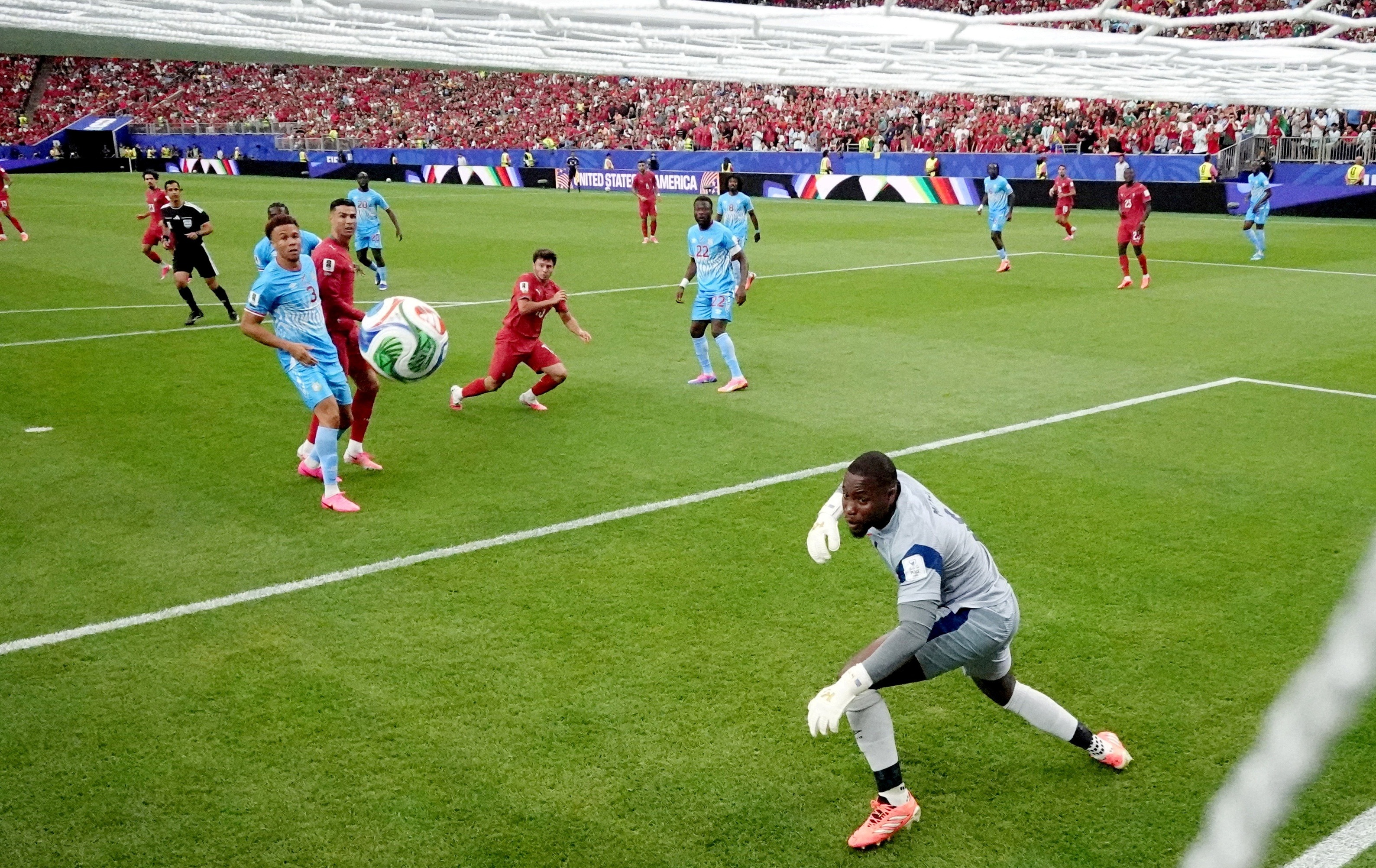
In a stunning result that will reverberate through African football, the Democratic Republic of the Congo defied expectations to hold Portugal to a 1-1 draw in their Group K encounter at Houston Stadium on Wednesday. The outcome represents a watershed moment for the Congolese programme, as it marks their first point ever garnered in World Cup competition—a remarkable achievement for a nation that has waited over five decades for such validation on football's grandest stage.
Portugal began with all the momentum, striking first through their midfield maestro Joao Neves, whose decisive header in the 6th minute gave the European side an apparent stranglehold on proceedings. The goal arrived following a well-executed left-flank move orchestrated by Pedro Neto, who delivered the telling cross with precision. Early command of the match appeared to position the Portuguese as clear favourites to accumulate three points, yet the script would shift dramatically before the interval.
Despite maintaining territorial dominance throughout the opening 45 minutes, Portugal struggled to compound their advantage. The inability to generate additional scoring opportunities would prove costly, as defensive lapses and missed moments gradually eroded their position. The Congolese defensive unit showed resilience and tactical discipline, absorbing pressure whilst remaining organised and compact. This defensive solidity would become the foundation upon which their remarkable equaliser was built.
With time running out in the first half, DR Congo struck with a thunderous reply in the 45+5th minute. Yoane Wissa rose majestically above goalkeeper Diogo Costa to power home a header, levelling the scoreline and igniting scenes of celebration that transcended sport. This goal carries extraordinary significance—it represents the first World Cup strike for DR Congo since the nation participated under the name Zaire in 1974, a gap of precisely 52 years. For millions of Congolese supporters, the moment symbolised vindication and progress after decades of World Cup campaigns yielding empty results.
The second half saw both sides adjust their approaches, with neither team managing to break the deadlock despite genuine efforts to claim victory. Portugal's attacking players, led by the ever-dangerous Cristiano Ronaldo, pressed forward seeking the breakthrough their early dominance had promised. Ronaldo's presence, as always, commanded the opposition's attention and shaped tactical decisions. Yet DR Congo's collective commitment to their defensive shape and timely interventions neutralised the Portuguese threat repeatedly.
The Congolese performance improved noticeably as the match progressed, suggesting a team growing in confidence and tactical awareness. Their willingness to transition quickly on the counter-attack created occasional moments of danger, reminding Portugal that complacency would prove punishing. The final whistle brought scenes of jubilation in the Congolese camp—not merely for escaping defeat, but for achieving something tangible and historic.
Portugal's disappointment was palpable, particularly given their superiority in possession and territorial control. A side that entered as heavy favourites found themselves frustrated by organised opponents who maximised their limited opportunities and refused to fold under sustained pressure. The result suggests Group K will prove far more competitive than pre-tournament analysis suggested, with Portugal unable to establish the dominant position their quality ordinarily commands.
The implications of this draw reverberate beyond the immediate fixture. DR Congo ascended to the summit of Group K standings based on points and superior goal difference, whilst Portugal occupy second place. This positioning grants the Congolese psychological advantage moving forward, potentially transforming their entire tournament trajectory. For a nation whose World Cup history has consisted of early eliminations and frustration, this result provides foundation for genuine optimism.
From a broader African perspective, DR Congo's performance vindicated the quality and tactical sophistication that exists within continental football. The region has increasingly demonstrated capacity to compete with established European powers, and this draw exemplifies that progression. DR Congo now possesses genuine opportunity to advance from the group stage, something that would constitute another historic achievement for African football.
The tournament's unpredictability was thrown into sharp relief by this encounter. Established hierarchies cannot be assumed; determination and tactical organisation can overcome technical advantages. As DR Congo and Portugal prepare for subsequent group matches, both will reassess their ambitions. For the Africans, the path to the knockout stages suddenly appears achievable; for the Portuguese, the burden of expectation has shifted markedly.