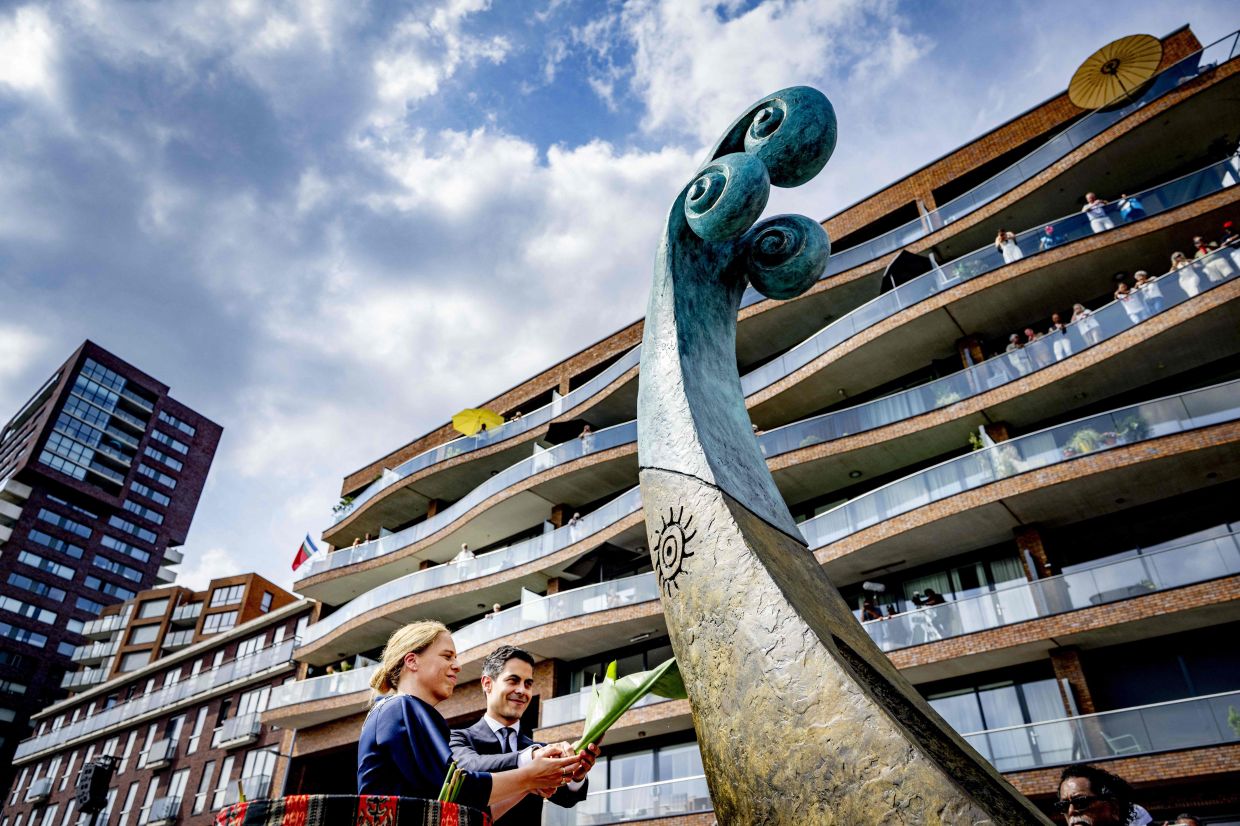
The Netherlands took a significant step towards reckoning with a troubling chapter of its post-colonial history when Prime Minister Rob Jetten delivered a formal apology to members of the Moluccan community in Rotterdam on Sunday. The ceremony, attended by hundreds of Moluccans and marked by visible emotion, represented a belated acknowledgement of injustices inflicted upon people from Indonesia's spice islands who became trapped in a cycle of broken governmental commitments and social marginalisation spanning more than seven decades.
The roots of this dispute trace back to the complex geopolitics of Southeast Asia following the Second World War. When Indonesia launched its independence struggle against Dutch colonial rule in the post-war period, many Moluccans—inhabitants of the strategically important Moluccan archipelago in eastern Indonesia—sided with the Dutch military forces occupying the region. This choice, made during the turbulent decolonisation process, fundamentally altered the trajectory of their lives and set in motion consequences that would reverberate through generations.
When Indonesia successfully secured independence in 1949, the Dutch government faced a significant practical and political problem: approximately 12,500 Moluccans who had fought for the colonial military faced potential danger if they remained in their homeland. Rather than finding solutions within Indonesia itself, Dutch authorities organised a state-sponsored transfer programme that transported these individuals to the Netherlands. The arrangement was presented as temporary, with the understanding that Moluccans would remain only briefly before returning to their native islands once conditions normalised and international agreements were finalised.
Yet this promised homecoming never materialised. The Dutch government abandoned its commitment to repatriate the Moluccan population, leaving them stranded in an unfamiliar country with little preparation for long-term integration. The discharged former soldiers and their families were housed in appalling conditions across the Netherlands, often confined to segregated accommodation with minimal services. Government authorities made scant effort to facilitate employment or help Moluccans establish themselves within Dutch society, effectively condemning them to a state of permanent limbo—neither welcomed as new residents nor permitted to return home.
The psychological and social toll of this betrayal intensified with each passing year. First-generation Moluccans, many of whom had sacrificed their safety and security by fighting alongside the Dutch, found themselves treated as disposable remnants of empire. By the 1970s, their children—second-generation Moluccans born into or raised in the Netherlands—had reached adulthood harbouring deep resentment towards the Dutch state. This accumulated frustration erupted into periodic violent actions as young Moluccans sought to draw attention to their plight and the systemic injustice perpetrated against their community.
The formal apology took shape with the unveiling of the Ulu Kora monument on Rotterdam's Lloydkade, the very quay where the first vessels carrying Moluccans had docked in 1951. The symbolism was deliberate and powerful—acknowledging the precise historical moment when the Dutch government began its decades-long failure to honour its international obligations. Jetten's remarks, delivered to an audience many of whom carried photographs of deceased relatives, conveyed genuine contrition whilst acknowledging the inherent limitations of words.
During his address, Jetten enumerated the specific failures that warranted apology: the shabby reception afforded to arriving Moluccans, the inadequate and demoralising housing conditions, the systematic invisibility of a community excluded from mainstream Dutch life, the shattered dreams of returning home, and the intergenerational trauma experienced by families separated by circumstance and time. For many in attendance, this recognition of particular harms represented the first time the Dutch state had explicitly named and validated their suffering.
The trajectory of Moluccan treatment in the Netherlands also reflects broader patterns in how European nations have managed the aftermath of colonialism and empire. Unlike some post-colonial populations in European countries, Moluccans occupied a particularly precarious position—they were neither immigrants who had chosen their destination nor fully integrated citizens with clear legal standing. Their status as allies of the colonial power paradoxically rendered them vulnerable, transforming them into embarrassing symbols of a lost colonial project.
Prime Minister Jetten's careful articulation of the apology's limits—his acknowledgement that words alone cannot undo historical injustice or restore what was lost—demonstrates the complexity facing nations attempting to address colonial-era wrongs. The Dutch government cannot undo seventy years of separation from homeland, nor can it resurrect the lives and opportunities lost to a generation kept in intentional suspension between two worlds. Yet the formal recognition carries significance for survivors and descendants seeking validation of their experiences.
For regional observers and particularly for Indonesian audiences, this apology carries implications extending beyond bilateral Dutch-Indonesian relations. It represents a rare instance of a Western nation formally accepting responsibility for post-independence mistreatment of populations during the decolonisation process. The gesture may prompt reflection across Southeast Asia about how former colonial powers continue to reckon—or fail to reckon—with their legacies beyond the formal end of colonial rule.
The Moluccan experience also underscores how geopolitical decisions made in moments of crisis can trap populations in unintended consequences lasting generations. Young Moluccans who chose sides during Indonesia's independence struggle could not foresee that their loyalty would result in permanent exile. Their descendants inherited a profound sense of displacement, caught between an ancestral homeland that had moved on and a host nation that refused to fully accept them.
Moving forward, the apology establishes a foundation for potential policy adjustments and recognition programmes addressing Moluccan community needs within the Netherlands. Many survivors and descendants remain alive, and their testimonies, struggles, and resilience deserve ongoing institutional acknowledgement. The monument itself becomes a permanent physical marker reminding the Dutch public of a shameful episode in their national history—one that demands remembrance precisely because it violated fundamental principles of honour, reciprocity, and human dignity.
Ultimately, this apology represents a moment when state power acknowledges its failures towards a vulnerable population. Whether it catalyses meaningful material remedies, enhanced historical education, or continued official support for the community remains to be seen. What seems certain is that after seventy years of abandonment and invisibility, the Moluccan community has finally compelled the Dutch government to face its record and speak the words of accountability that were long overdue.

