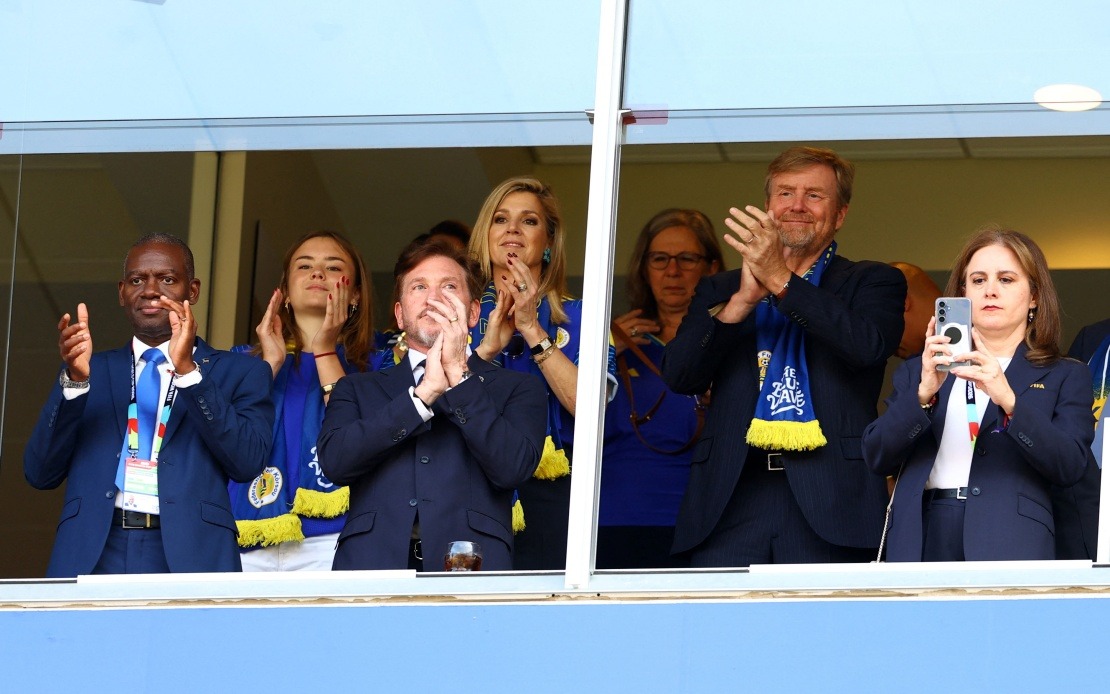
King Willem-Alexander and Queen Máxima of the Netherlands orchestrated an ambitious sporting itinerary on Saturday, attending two World Cup matches across different American cities to support the teams under their royal purview. The midday encounter between the Netherlands and Sweden in Houston showcased a dominant Dutch performance, with the European side crushing their Scandinavian opponents 5-1 in a decisive group-stage clash. Hours later, the royal couple travelled to Kansas City to witness Curaçao's impressive holding of Ecuador to a goalless draw, a result that enhanced the Caribbean island nation's prospects of advancing from the tournament.
The dual attendance highlighted the distinctive constitutional arrangement that defines Willem-Alexander's reign. As King of the Netherlands, his sovereignty extends beyond continental Europe to encompass several constituent countries within the Kingdom of the Netherlands, with Curaçao among the most prominent. This arrangement grants the monarch a legitimate claim to champion both nations' sporting endeavours, a privilege rarely afforded to any world leader. The decision to personally witness both matches represented more than ceremonial obligation; it demonstrated active engagement with populations across the kingdom's diverse geography and cultures.
The Netherlands' comprehensive victory over Sweden proved a commanding statement of intent as the tournament progressed. Five goals represented clinical finishing and tactical superiority, positioning the Dutch team favourably ahead of their final group-stage assignment against Tunisia. The victory provided substantial momentum for the knockout phases, with qualification appearing increasingly probable based on goal differential and points accumulated. Queen Máxima and King Willem-Alexander's presence at the Houston stadium underscored the nation's football heritage and the monarchy's role in celebrating sporting achievement among their subjects.
Curaçao's performance against Ecuador deserved particular commendation given the island's modest population and limited resources relative to larger football nations. Securing a draw against a South American opponent, historically formidable in World Cup competitions, constituted a significant accomplishment for the Caribbean team. The result kept Curaçao's qualification hopes alive, contingent upon their upcoming encounter with Ivory Coast determining whether they could secure the points necessary for progression. The equalising defensive discipline displayed offered encouragement to supporters who had witnessed their nation punch above its weight on football's grandest stage.
The royals' wardrobe selections throughout the day reflected their commitment to acknowledging both nations represented. Wearing traditional orange at the Netherlands match and switching to Curaçao's blue colours for the evening fixture demonstrated symbolic solidarity with each team's identity and supporter base. Such gestures, whilst seemingly minor, carry significance in football culture, where colour coordination represents affiliation and pride. Video footage released by the Curaçao Football Association captured the monarchs celebrating and dancing with team members in the dressing room following the Ecuador match, portraying a relaxed rapport between the royal household and sporting representatives.
Willem-Alexander expressed his satisfaction with the weekend's scheduling during broadcast commentary, noting the distinctive privilege of supporting multiple teams competing in the same tournament. His observation that the kingdom possessed "double the number of teams we can cheer on" captured the enthusiasm surrounding this unusual circumstance, where personal interest aligned perfectly with constitutional responsibility. The monarch acknowledged his hope that both nations would progress deep into the competition, a sentiment that reflected genuine engagement rather than perfunctory well-wishing. Such remarks humanised the monarchy whilst reinforcing the connection between the crown and the sporting passions of diverse populations within the kingdom.
This World Cup represented a historically uncommon situation where territories under the same sovereign authority fielded competitive teams simultaneously on football's premier stage. The Netherlands and Curaçao had both qualified for the tournament, creating circumstances that maximised the monarchy's opportunity to demonstrate the interconnected nature of the kingdom's constituent parts. For Malaysian observers familiar with multi-ethnic and multi-cultural governance structures, Willem-Alexander's approach offered an illustrative example of how constitutional monarchies navigate complex relationships between centre and periphery within politically unified yet culturally distinct territories.
The scheduling logistics required careful coordination, with the 1,600-kilometre distance between Houston and Kansas City necessitating rapid travel to accommodate both matches within a single day. The royal couple's willingness to undertake such exertion highlighted the priority they assigned to honouring commitments toward both nations' football communities. Such demonstrations of presence carry weight in smaller jurisdictions where direct royal engagement remains comparatively infrequent, strengthening emotional bonds between the monarchy and populations who might otherwise experience the crown as distant or abstractly positioned.
Looking forward, the convergence of the Netherlands and Curaçao's World Cup campaigns provided the monarchy with ongoing opportunities to celebrate sporting excellence across the kingdom. Should both nations progress to knockout stages, Willem-Alexander and Máxima would face continued demands to navigate the logistical and diplomatic complexities of supporting competing teams. Nevertheless, the Saturday double-header demonstrated their commitment to this balancing act, treating each nation's participation with equivalent ceremonial respect. For Southeast Asian readers accustomed to diverse political structures and multi-layered governance arrangements, the Dutch monarchy's approach to constitutional pluralism offered instructive parallels regarding how traditional institutions adapt to contemporary sporting nationalism and transnational kingdoms.

