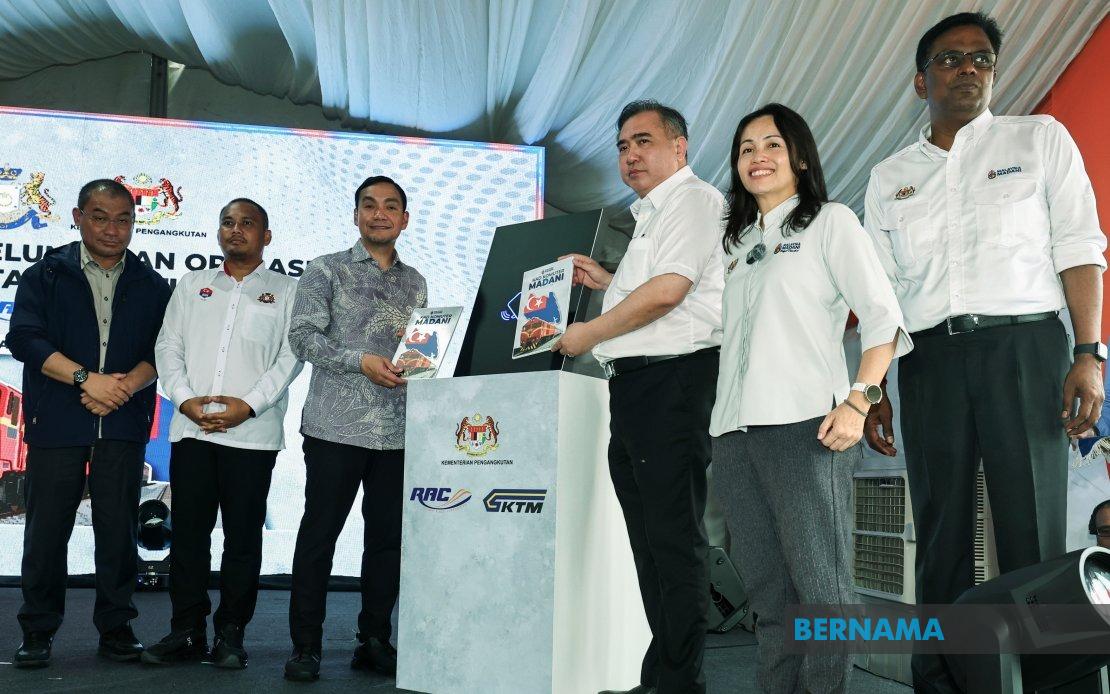
Johor Menteri Besar Datuk Seri Onn Hafiz Ghazi has underscored the strategic importance of the Elevated Autonomous Rapid Transit (E-ART) initiative in safeguarding Johor Bahru's traffic flow once the Johor Bahru-Singapore Rapid Transit System Link commences operations in 2025. Speaking at the launch of the Southern Shuttle train service at KTM Kulai Station, Onn Hafiz positioned E-ART as a foundational component of the state's broader transport infrastructure agenda, essential to managing the anticipated surge in cross-border passenger volumes.
The E-ART project represents a significant departure from conventional road-based congestion mitigation, offering an automated, elevated transit corridor that can operate independently of existing traffic patterns. As Johor Bahru grapples with rapid urbanisation and mounting commuter pressures, this technology-driven approach appeals to planners seeking to decouple public transit capacity from ground-level gridlock. The system's elevation allows it to bypass congested intersections and bottlenecks that plague conventional bus rapid transit schemes, potentially offering faster journey times and greater reliability for passengers.
Onn Hafiz's comments reflect growing concerns about Johor Bahru's readiness for the transformative impact of the RTS Link. The city, home to approximately 1.8 million residents—a figure nearly equivalent to Penang's entire state population—currently operates without comprehensive elevated rapid transit infrastructure. When the RTS Link opens, authorities anticipate a marked increase in commuter traffic as workers and shoppers from both sides of the Causeway opt for the faster rail alternative to driving. This modal shift, while positive for air quality and congestion reduction overall, will concentrate passenger volumes at RTS stations and supporting transport hubs, creating new bottlenecks if alternative distribution systems are not in place.
The menteri besar acknowledged that interim measures, though necessary, offer only temporary relief. Park & Ride facilities expansion and intelligent traffic management systems at JB Sentral address immediate concerns but cannot fundamentally reshape Johor Bahru's transport capacity. These short and medium-term interventions are essentially holding actions, designed to buy time for transformative projects like E-ART to reach fruition. By framing E-ART as the solution that short-term measures cannot provide, Onn Hafiz signalled both the urgency and the scale of infrastructure development required.
Johor Bahru's role as Malaysia's primary international gateway heightens the strategic stakes. The city experiences substantial cross-border movement daily, with tens of thousands of Malaysians commuting to Singapore and vice versa. The RTS Link will intensify this flow, potentially making Johor Bahru the country's busiest transport node. Without complementary infrastructure like E-ART, the gains from the RTS Link—reduced travel times, improved connectivity—could be offset by congestion at feeder routes and distribution networks, frustrating passengers and dampening enthusiasm for public transport adoption.
The presence of Transport Minister Anthony Loke and Deputy Communications Minister Teo Nie Ching at the Kulai Station event underscored federal commitment to the transport portfolio. This ministerial attendance signalled tacit endorsement of Onn Hafiz's push for E-ART acceleration, suggesting alignment between state and federal transport visions. Such coordination is essential, given that major transit infrastructure typically requires federal funding approvals, land acquisition across municipal boundaries, and integration with existing national transport networks. Onn Hafiz's public call for swift implementation, backed by federal officials present at the event, reflected a unified approach to addressing projected congestion.
The E-ART concept itself represents an evolution in Southeast Asian urban mobility thinking. Rather than expanding road networks—an approach with diminishing returns in densely developed areas—E-ART leverages automation and elevated corridors to add capacity without consuming ground-level urban space. For Malaysian planners, this model offers a template applicable beyond Johor Bahru; cities like Kuala Lumpur and Georgetown face similar congestion challenges and might benefit from similar elevated rapid transit frameworks. Success in Johor Bahru would validate the approach regionally and potentially influence transport planning across the ASEAN corridor.
However, the E-ART project faces implementation hurdles common to major infrastructure ventures. Cost overruns, construction delays, technical challenges, and land acquisition disputes frequently plague large-scale transport projects in Malaysia and the region. Onn Hafiz's emphasis on expedited implementation reflects awareness that delays could render the system obsolete or insufficient if the RTS Link opens without adequate feeder infrastructure. The window for completing E-ART before or concurrent with RTS Link operations is narrowing, making timely project mobilisation critical.
The demographic argument Onn Hafiz deployed—comparing Johor Bahru's 1.8 million residents to Penang's state population—carries weight in policy circles. It emphasises that Johor Bahru, though a single city, warrants infrastructure investment comparable to entire states, challenging bureaucratic mindsets that may underestimate its strategic importance. This framing helps justify E-ART's capital intensity and helps secure budgetary priority in federal allocation processes where competing demands from multiple states create zero-sum competition for resources.
Looking ahead, E-ART's success will depend on seamless integration with the RTS Link, bus networks, and traditional rail systems. Passengers must be able to transfer easily between modes, with coordinated schedules and unified ticketing systems. Johor Bahru's transport authority will need to function as an integrated mobility operator rather than managing independent networks. The Southern Shuttle launch at KTM Kulai, which Onn Hafiz used as a platform for his E-ART advocacy, exemplified this integration mindset—adding incremental capacity through expanded rail services while pushing for transformative projects.
The menteri besar's framing of E-ART as a federal intervention that residents will feel and appreciate speaks to the political dimension of infrastructure planning. Major transport projects create tangible benefits—reduced commute times, lower transportation costs, improved air quality—that voters directly experience. By championing E-ART publicly and linking it to RTS Link readiness, Onn Hafiz positioned his state government and the federal administration as responsive to citizen concerns about mobility and quality of life. This political narrative, combined with genuine infrastructure needs, creates momentum for project advancement.
Ultimately, Onn Hafiz's insistence on E-ART reflects a realistic assessment of Johor Bahru's future. The RTS Link will transform the city into a major international transport hub; without corresponding investment in internal mobility systems, this status risks becoming a curse rather than a blessing, as congestion overwhelms roads designed for a different era. E-ART, despite its significant cost and technical complexity, represents a forward-looking approach to metropolitan development in Southeast Asia, positioning Johor Bahru as a city prepared for 21st-century urban challenges.