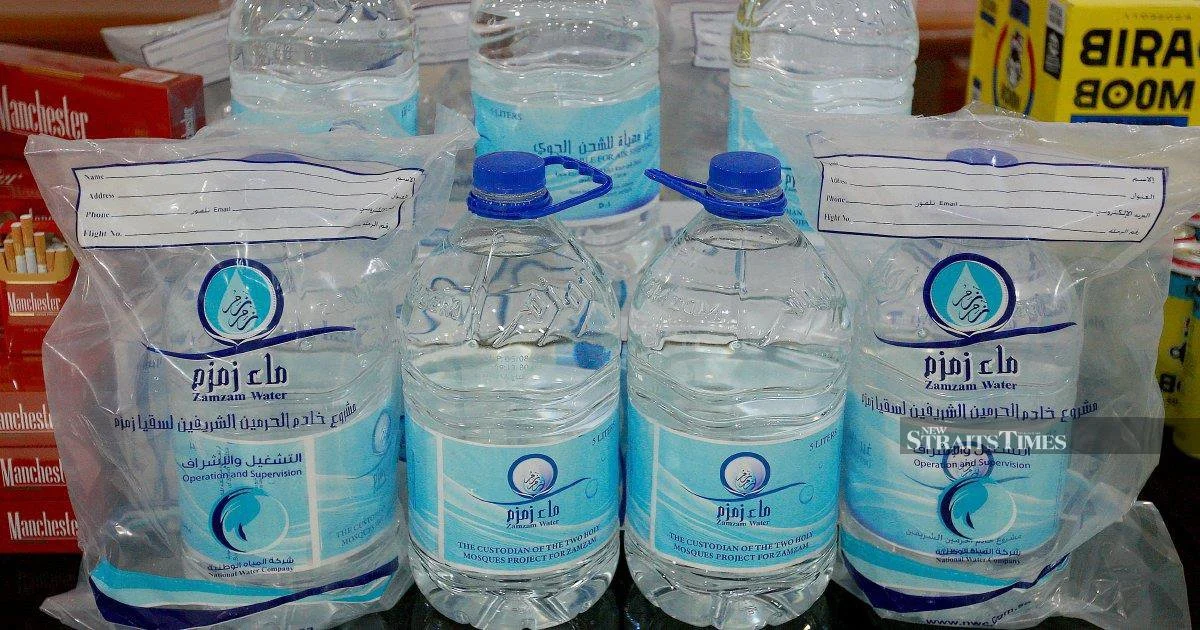
A ride-hailing driver operating in the Klang Valley has been handed a significant financial penalty by the Magistrate's Court in Klang following his conviction for attempting to bring prohibited goods into Malaysia. The court found the individual guilty of importing 5,500 bottles of zam-zam water through West Port, the country's primary container port, in what authorities describe as an enforcement action against unlawful import activities.
The RM101,750 fine represents a substantial penalty under Malaysia's customs and import control regulations, which strictly govern the entry of goods into the country regardless of their religious or cultural significance. The case, concluded in the Klang Magistrate's Court, underscores the authorities' commitment to maintaining control over goods crossing Malaysia's borders and preventing circumvention of established import procedures. The offence dates back approximately five years, suggesting a considerable period between the attempted importation and the judicial outcome.
Zam-zam water, sourced from the sacred well in Mecca and held in high regard by Muslims worldwide, presents a unique regulatory challenge for Malaysian customs authorities. While the substance itself is not inherently prohibited, the importation of zam-zam water is subject to Malaysia's strict customs procedures and import licensing requirements. The case highlights how even items with significant religious importance to Malaysia's Muslim majority must comply with the country's standard import regulations, which exist to ensure product safety, traceability, and proper documentation.
The driver's involvement in the e-hailing sector raises questions about how individuals operating in the gig economy may become entangled in commercial activities beyond their primary employment. The transportation and ride-hailing industry, which has expanded rapidly across Southeast Asia including Malaysia, occasionally intersects with informal commercial ventures, though this case appears to involve a deliberate attempt to import goods outside proper channels. The conviction suggests that regardless of occupation or the nature of the commodity, individuals attempting to bypass customs procedures face serious legal consequences.
West Port, located in the Klang area of Selangor, serves as one of Malaysia's busiest maritime gateways and handles thousands of containers daily. Enforcement activities at such major ports are critical checkpoints in Malaysia's overall customs operations, and the identification of contraband or improperly documented shipments represents routine but essential work by port authorities and customs officers. The case demonstrates that even relatively small-scale smuggling attempts—in terms of container volume—are detected and investigated to completion.
The legal proceedings concluded five years after the alleged offence occurred, reflecting the sometimes lengthy timescale involved in customs investigations and prosecution. This delay between the original violation and final conviction is not unusual in Malaysian legal proceedings, particularly for complex customs cases involving documentation review, port records analysis, and the gathering of evidence. The extended timeline may also reflect the judicial system's workload and the procedural requirements for building a solid case.
For Malaysia's Muslim population, which comprises the majority of the country, zam-zam water holds considerable spiritual and cultural significance. However, the case illustrates that religious or cultural importance does not exempt goods from standard import controls and documentation requirements. Authorities maintain these procedures to verify product authenticity, ensure hygiene standards are met, and prevent trafficking of counterfeit or contaminated items that might fraudulently claim to be authentic zam-zam water. The regulations represent a balance between respecting religious practices and maintaining public health and consumer protection standards.
The conviction and penalty may serve as a deterrent to others considering similar unauthorized import schemes. The substantial fine amount—more than RM100,000—sends a clear signal about the seriousness with which Malaysian authorities treat customs violations. For individuals working in transportation sectors or considering involvement in informal goods trading, the case demonstrates that circumventing established import procedures carries significant legal and financial risks.
The enforcement action also reflects Malaysia's broader commitment to maintaining effective customs controls and border security. In an era of expanding international trade and the rise of e-commerce and informal trading networks, maintaining the integrity of formal import channels remains a priority for government agencies. The case, though involving a relatively modest quantity of a particular commodity, represents the type of persistent enforcement activity that underpins Malaysia's overall customs regime and helps prevent larger-scale smuggling operations from taking root.
The outcome raises implications for those seeking to import goods with religious or cultural significance into Malaysia, emphasizing that proper licensing, documentation, and adherence to official import procedures are non-negotiable requirements. Whether items are destined for personal religious use or commercial distribution, they must pass through appropriate channels and receive necessary approvals. This principle applies equally to zam-zam water, prayer oils, religious texts, or other faith-related items that may be sought by Malaysia's diverse religious communities.

