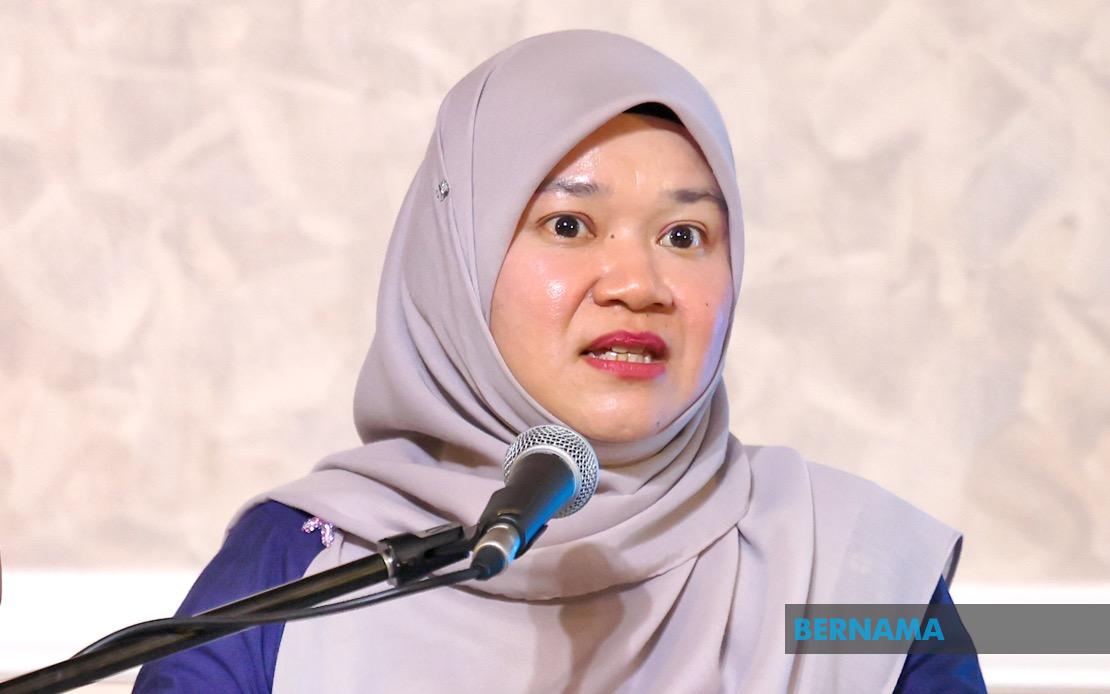
Education Minister Fadhlina Sidek, who leads the women's wing of Parti Keadilan Rakyat, has escalated her response to an artificial intelligence-generated video by filing a formal police report, signalling zero tolerance for what she characterises as a calculated attack on her reputation and integrity.
The PKR Wanita chief released a statement condemning the circulated video as inherently malicious, emphasising that its creation and distribution represent a deliberate effort to undermine her standing and discredit her character. Such incidents involving AI-manipulated content targeting public figures have grown increasingly common across Southeast Asia, raising fresh concerns about the weaponisation of deepfake technology in the political sphere.
Fadhlina's decision to pursue official channels reflects a broader pattern among Malaysian political leaders responding to misinformation campaigns. By filing the report, she has invited formal police investigation and requested that authorities pursue legal remedies consistent with existing statutes governing defamation, falsehoods, and potentially the Communications and Multimedia Act. The move demonstrates that targeted individuals are shifting from passive responses to proactive engagement with law enforcement.
Beyond her personal grievance, Fadhlina has broadened the conversation to encompass systemic issues affecting women in Malaysian politics. She has appealed to all stakeholders—civil society, political parties, media organisations, and the broader public—to adopt a unified stance against character assassination and sexual harassment weaponised against female politicians. This framing elevates the incident from individual victimisation to a question of institutional and societal responsibility.
The proliferation of deepfake and AI-generated content presents a particular vulnerability for women in public life across Malaysia and the region. Female politicians face disproportionate levels of online harassment and malicious manipulation compared to their male counterparts, with synthetic media offering new tools for perpetrators seeking plausible deniability. Fadhlina's statement implicitly acknowledges this gendered dimension, calling for collective recognition of these asymmetric vulnerabilities.
Malaysia's existing legal framework provides several potential avenues for addressing such conduct. The Penal Code contains provisions on defamation and criminal intimidation, while the Communications and Multimedia Act addresses false and offensive content transmitted online. However, enforcement and prosecution of deepfake-related offences remain nascent areas, with few precedents establishing clear accountability mechanisms. Fadhlina's police report may thus serve a precedent-setting function, potentially clarifying how authorities should approach AI-generated defamatory material.
The timing and nature of such attacks often correlate with periods of political sensitivity or when targeted individuals occupy positions of heightened visibility. As Education Minister, Fadhlina operates at the centre of policy debates affecting millions of Malaysians, making her subject to intensified scrutiny and, potentially, coordinated disinformation campaigns. The incident underscores how technological sophistication can be deployed to distract from substantive policy discourse or undermine confidence in institutional leadership.
Responses from fellow politicians and civil society organisations will shape whether this incident catalyses meaningful institutional responses or remains an isolated case. Some jurisdictions in the region have begun drafting specific legislation addressing synthetic media, recognising that traditional defamation and harassment laws, drafted before AI capability reached current sophistication levels, may inadequately address the harm and difficulty of proving origin and intent. Malaysia may face similar legislative pressures if such incidents multiply.
Fadhlina's call for collective action carries implications beyond individual protection. It suggests potential coordination among women politicians across party lines to establish shared standards for responding to such attacks, developing mutual support mechanisms, and advocating for stronger institutional guardrails. Such solidarity, if realised, could meaningfully shift the cost-benefit calculation for those considering similar attacks against female public figures.
The broader context involves global recognition that artificial intelligence technologies, while offering legitimate applications, simultaneously lower barriers to creating credible-appearing false content. Researchers have documented increasing sophistication in generative AI, making detection of synthetic media progressively more difficult for untrained observers. Public figures, institutions, and platforms face mounting pressure to develop verification mechanisms and literacy initiatives enabling citizens to critically evaluate digital content they encounter.
For Malaysian readers, the incident highlights the vulnerability of public institutions and individual officials to technological exploitation. As AI tools become more accessible and capable, the question of accountability for malicious use—rather than the technology itself—assumes critical importance. Fadhlina's police report represents an assertion that legal and institutional remedies exist for such conduct, even as technological capability races ahead of regulatory frameworks.
The resolution of this case may influence how Malaysian authorities approach future AI-related defamation incidents, potentially establishing precedents for evidence collection, investigation methodology, and prosecution standards. Whether the police investigation yields concrete results and how courts subsequently adjudicate such matters will shape the practical efficacy of existing legal tools against evolving forms of harassment and disinformation targeting public figures in Malaysia.

