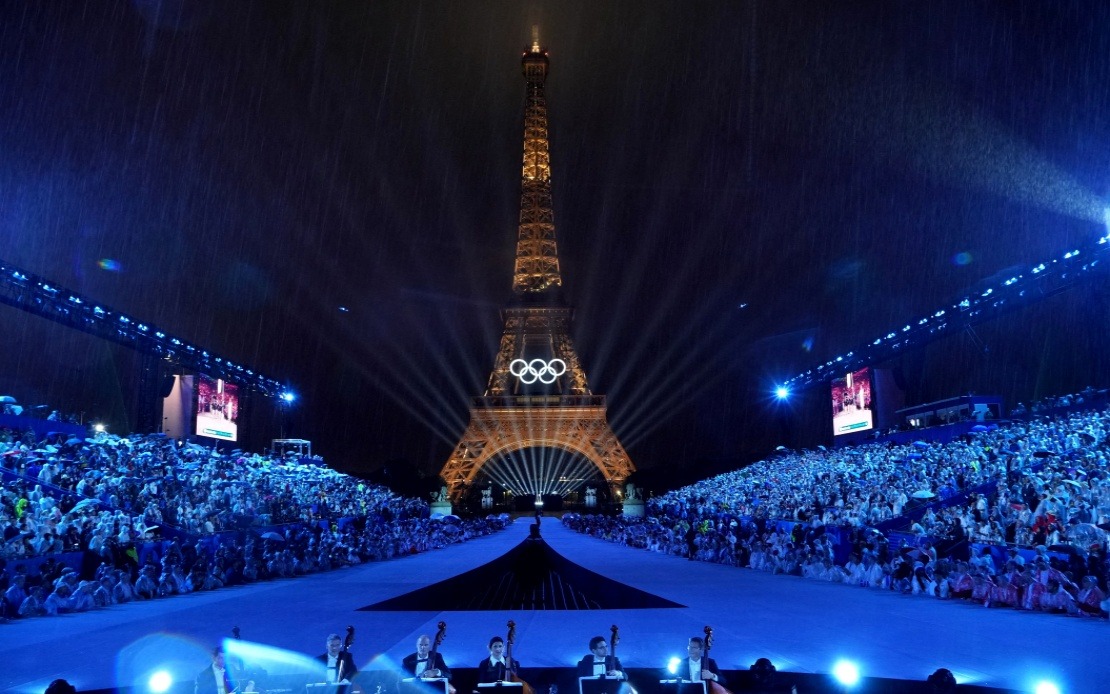
France's most visited monument, the Eiffel Tower, took the unusual step of closing its doors at 4 pm local time on Tuesday, curtailing operations hours earlier than scheduled in response to dangerously high temperatures gripping the capital. The management company Sete (Societe d'Exploitation de la tour Eiffel) announced the decision through official channels, emphasizing that protecting the wellbeing of both employees and visitors had become the paramount concern during the intensifying weather crisis.
The early closure disrupted the visitor experience for thousands of tourists planning afternoon visits. Guests holding tickets for time slots commencing at 11.30 am onward for stair access, or from 12 noon for lift access, became eligible for automatic refunds without requiring further action. The last entry to the monument was restricted to 12.15 pm, effectively wiping out half the usual operating day and forcing significant logistical adjustments for tour operators across the city.
The Eiffel Tower's closure represented just one casualty of the extreme conditions afflicting Paris. The Louvre Museum, another cornerstone of French cultural tourism, announced concurrent measures to manage the heat stress on visitors and infrastructure. Beginning June 24 and extending through June 27, the world's most visited art museum would shutter at 4 pm instead of its customary 6 pm closing time, representing a two-hour daily reduction across four consecutive days when temperatures were forecast to remain dangerously elevated.
Meteo-France, the national meteorological authority, confirmed that Paris had already reached 36 degrees Celsius by 4 pm on Tuesday, with projections indicating even more severe conditions would materialize on Wednesday. The capital was bracing for maximum temperatures approaching 38 degrees Celsius, placing the city in genuine heat emergency territory. These are not merely uncomfortable conditions but reach thresholds where heat-related health risks escalate substantially, particularly among vulnerable populations including the elderly, very young children, and those with pre-existing medical conditions.
The geographical scope of the crisis extended far beyond the confines of Paris itself. Meteo-France placed 54 departments across mainland France under red alert status, representing the highest category in the national heatwave warning system. An additional 35 departments received orange alert designations, meaning roughly two-thirds of France faced exceptional heat conditions. This represented a coordinated national emergency response rather than a localized phenomenon affecting only the capital region.
The red alert classification carries significant implications for emergency services, healthcare infrastructure, and public utilities. When France invokes its highest heatwave alert level, it signals that temperatures have reached dangerous extremes with potential for widespread public health consequences. Local authorities typically activate emergency protocols, mobilize additional medical personnel, and issue public guidance on heat-safety measures. The simultaneous placement of so many departments under red alert suggested an unusually severe weather pattern affecting the country's core regions.
The decision by major cultural institutions to voluntarily curtail operations reflected a calculated assessment of risk management. Beyond the immediate discomfort of visiting world-class attractions in extreme heat, extended time in direct sunlight on metal structures or in densely packed indoor museum spaces during high temperatures presents genuine hazard. Staff members working in such environments face particular risks, and employers have clear legal obligations to maintain safe working conditions. The Eiffel Tower operates at significant heights with limited shade, making voluntary closure a pragmatic protective measure rather than merely cautious corporate policy.
For Southeast Asian visitors planning European summer holidays, this situation underscores how climate variability now affects even the most iconic and well-resourced tourist destinations. Malaysia's year-round tropical climate, while sometimes bringing high temperatures, generally includes mechanisms for visitor adaptation through abundant shade, air-conditioned indoor spaces, and cultural norms around heat management. French summer conditions, increasingly concentrated into intense episodes, can catch both local populations and international visitors unprepared for the abruptness and severity of extreme heat events.
The broader context reveals how European infrastructure and expectations are being challenged by changing weather patterns. Major attractions in Paris were designed and typically operate under assumptions about summer temperatures that no longer reliably hold. The voluntary closure of the Eiffel Tower due to heat represents not failure but rather responsible adaptation—a recognition that maintaining historical standards during unprecedented conditions requires operational flexibility. For tourism-dependent economies throughout Europe, balancing operational continuity with visitor safety and worker protection has become an increasingly complex calculation.
The incident also illustrates divergent climate resilience profiles globally. While Malaysia and other tropical Southeast Asian nations have developed extensive experience managing year-round heat through architectural design, operational practices, and public awareness, temperate-zone destinations are now confronting similar challenges within compressed seasonal windows. The relative newness of such extreme episodes in France explains the precautionary approach, contrasting with the routine heat management that characterizes tropical tourism infrastructure.
Forecast conditions extending through Thursday suggested the exceptional temperatures would persist, leaving major Parisian attractions facing multiple days of operational constraints. The Louvre's four-day closure reduction would occur during peak summer travel season, affecting tens of thousands of visitors. Travel agencies and tour operators were likely scrambling to reschedule visits, reroute itineraries, and manage customer expectations as the weather emergency unfolded.
From a labor perspective, the early closures provided relief to staff members who would otherwise face increasingly unbearable working conditions throughout afternoon and evening hours. Museum workers, ticketing personnel, security staff, and maintenance teams all benefit from reduced exposure during the hottest portions of each day. The decision reflected recognition that employee safety carries equal weight with visitor protection, a principle increasingly formalized in European labor regulations and corporate policies.

