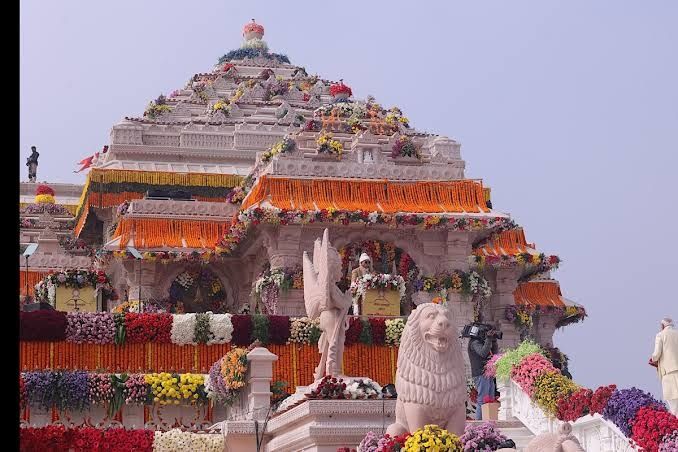
Indian police have arrested eight individuals suspected of orchestrating a significant embezzlement scheme at Ram Mandir, the monumental Hindu temple in Uttar Pradesh that has become emblematic of Prime Minister Narendra Modi's Hindu-nationalist political agenda. The arrests, announced by authorities on Thursday 25 June, emerged following a criminal investigation into irregular handling of offerings and donations at the site, which was ceremonially opened by Modi himself in 2024 with considerable political pageantry.
The temple occupies deeply contested ground in Ayodhya, having been constructed on the ruins of the Babri mosque, a 16th-century Islamic structure that stood for approximately five centuries before being demolished in 1992 by Hindu activists. That controversial demolition proved transformative for Modi's Bharatiya Janata Party, then positioned in opposition, and catalysed the political movement that would eventually propel the party to national dominance and displace the secular Congress party from power. The Ram Mandir project thus carries singular symbolic weight within India's current political landscape, representing the fulfilment of a core ideological commitment to Hindu nationalist restoration.
The eight individuals now in custody held various positions within the temple's operational structure, with most employed in roles directly involving the receipt, counting, and safeguarding of monetary donations and precious metal offerings—gold and silver items contributed by millions of devotees. Their alleged actions constitute multiple criminal offences including breach of trust, theft, criminal conspiracy, and corruption, according to the government's formal statement. The Special Investigation Team, established by the Uttar Pradesh state government under Chief Minister Yogi Adityanath, has been tasked with determining the full scope of the suspected theft ring.
While official channels have remained circumspect regarding quantification of the alleged losses, opposition political parties and news media investigations suggest the embezzlement may have reached more than US$20 million—a figure that would represent a staggering proportion of the temple's operational revenue. The contrast between this suspected theft and the temple's original construction cost of approximately US$240 million, entirely funded through voluntary public contributions, underscores the vulnerability of faith-based financial systems to institutional malfeasance. For a temple erected purely through grassroots Hindu devotional giving, the discovery of internal theft strikes at the moral foundation of the entire enterprise.
The scandal has provoked visible distress among the temple's donor base and broader Hindu community. Viti Saxena, a 44-year-old homemaker who contributed to the temple's coffers, articulated the profound sense of betrayal now circulating among the faithful. She expressed anguish that her personal donation and those of millions of others may never have reached their intended religious purpose, instead potentially disappearing into private criminal networks. Her characterisation of the affair as "a matter of global shame" reflects the embarrassment felt by devotees who had conceived of their contributions as sacred acts of worship and community investment.
The timing of this scandal presents acute difficulties for Modi's political positioning. The Ram Mandir inauguration was carefully orchestrated as a defining moment of Hindu nationalist achievement, attracting international media attention and reinforcing the government's claims to represent the authentic aspirations of Hindu India. The subsequent discovery of what appears to be systematic internal theft at the temple's highest operational levels threatens to undermine public confidence not merely in the shrine's administration but potentially in the larger political project that the structure symbolises. For secular opposition parties and Modi critics, the allegations provide material evidence of institutional rot within spaces the government has championed as central to national spiritual renewal.
Uttar Pradesh Chief Minister Adityanath, addressing the matter through official channels, has pledged that investigative processes will proceed without favour or exemption. His assurance that "no guilty person will be spared" carries both reassuring and threatening implications—reassuring to the public that accountability mechanisms will function regardless of suspects' institutional positions, yet implicitly acknowledging the seriousness of the allegations and the need for visible justice to restore public confidence. The state government's commitment to transparency in the investigation reflects awareness that anything less than thorough accountability risks deepening reputational damage to both the temple and the government's broader governance credentials.
The alleged theft assumes particular significance within the regional and international context of Hindu-Muslim communal relations in South Asia. The Ram Mandir's very existence remains contested terrain in Indian politics, symbolising Hindu majority aspirations to certain devotees while representing religious displacement and communal triumphalism to others. Any perception that funds contributed to this ideologically charged project were diverted through criminal networks rather than furthering its sacred purpose becomes ammunition in broader debates about the temple's legitimacy and the political movements that championed its construction.
For Malaysian and Southeast Asian readers, the Ram Mandir scandal offers cautionary perspective on the vulnerabilities of faith-based institutional finance across the region. Many religious organisations throughout Malaysia, Singapore, and beyond operate on comparable models of voluntary donation collection, trust-based financial stewardship, and lay governance structures. The Indian case demonstrates how inadequate accounting systems, insufficient oversight mechanisms, and weak internal controls within religious institutions can enable large-scale embezzlement to proceed undetected. The prevalence of cash donation systems in temples, mosques, churches, and other houses of worship across Southeast Asia creates structural conditions for similar abuses, highlighting the importance of strengthened governance and transparent financial practices within faith communities.
As the investigation unfolds, the Ram Mandir theft case will likely generate significant political consequences within India and international attention to questions of accountability within Hindu nationalist institutions. The scandal complicates the narrative of Hindu nationalist governance as a corrective force for national renewal and institutional integrity, particularly given that the temple project itself was championed as an exercise in reclaiming Hindu cultural and spiritual patrimony. The need to prosecute substantial theft from this signature monument creates awkward optics for a government that has consistently emphasised moral and spiritual regeneration as central to its political identity.

