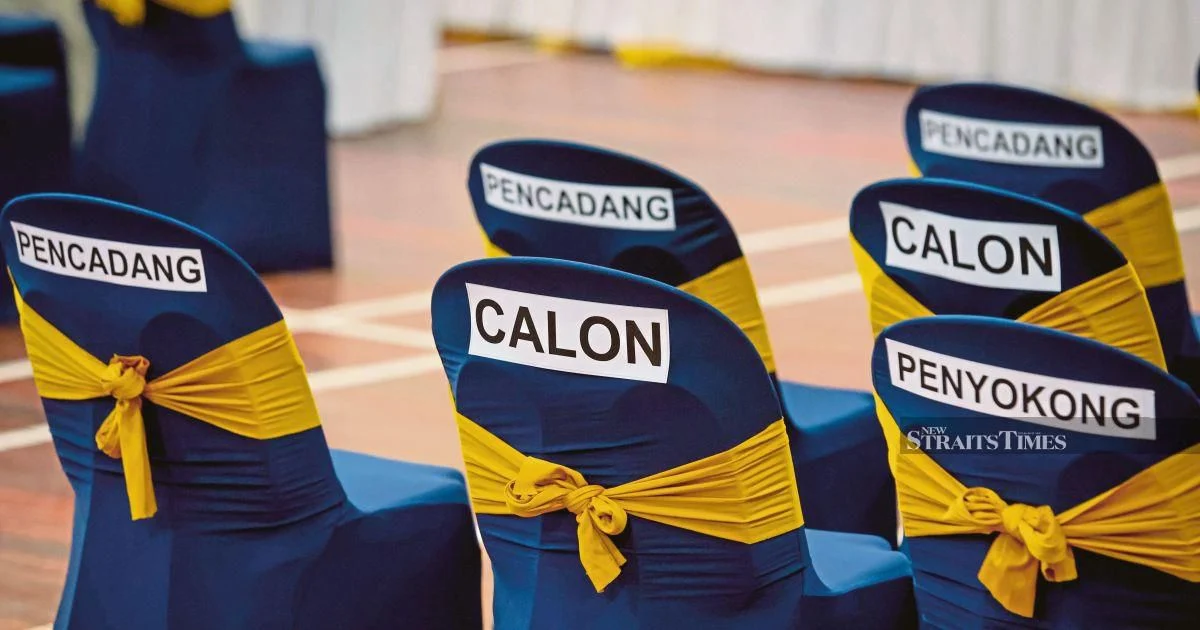
The Election Commission of Malaysia has formally announced that nominations for the 16th Johor state election will proceed on Saturday, June 27, setting the wheels in motion for what promises to be a significant political contest in one of the country's largest and most consequential states. The announcement, made in Johor Baru, represents a critical juncture in the electoral calendar and underscores the administrative machinery already in preparation across the southern peninsula.
The Commission's decision to proceed with the scheduled nomination date comes despite meteorological forecasts indicating potentially severe weather conditions, with storm warnings already in circulation for the period. Rather than postponing proceedings, the EC has instead prioritised transparency and advance notice to all stakeholders, allowing candidates, party officials, and administrative personnel adequate time to prepare contingency measures and ensure their participation is not hindered by external circumstances.
Candidates and their representatives have been explicitly urged to adhere strictly to all established procedures and requirements throughout the nomination process. The EC's emphasis on compliance reflects broader concerns about maintaining electoral integrity and ensuring that all participants understand the regulatory framework governing their candidacy. This messaging appears designed to prevent procedural irregularities that might later become grounds for legal challenges or disputes following the election itself.
The Johor election carries particular significance within Malaysia's broader political landscape. The state has historically been a stronghold for the Barisan Nasional coalition, though recent political realignments and the emergence of competing coalitions have rendered the outcome considerably less predictable than in previous electoral cycles. Control of Johor's 56 state assembly seats would constitute a meaningful prize for any political coalition, potentially influencing both state governance and federal political calculations.
The nomination process itself represents the formal beginning of the electoral campaign period, when candidates must register with the EC and have their candidacies officially recognised. This procedural step is essential to the democratic framework, establishing the roster of individuals who will contest each constituency and providing the public with transparent information about their candidates. The concentrated timing of nominations—with all candidates filing on a single day—creates a logistical and administrative burden that the EC must manage efficiently.
Weather considerations present a practical challenge that extends beyond the nomination day itself. Johor's geography and the broader peninsular context mean that monsoonal and tropical weather patterns are commonplace during this period of the year. The EC's determination to proceed suggests confidence in the state's institutional capacity to manage candidate processing and voter information dissemination even under challenging atmospheric conditions. Modern electoral administration in Malaysia has become sufficiently robust to accommodate weather-related complications without derailing the fundamental schedule.
The timing of the election has implications for political parties across the ideological spectrum. Opposition parties see an opportunity to challenge entrenched incumbents in a state where dissatisfaction has periodically surfaced, while ruling coalition parties face pressure to consolidate their traditional support base. The nomination period will reveal the extent to which each party has invested resources in candidate selection and constituency organisation, with the field of contestants providing early indicators of electoral competitiveness.
For Malaysian voters in Johor, the nomination day marks the transition from speculation about possible candidates to concrete information about who will actually contest their constituencies. This transparency serves a democratic function, enabling constituents to assess the quality and credentials of their choices well before voting day. The public nature of nomination proceedings also creates opportunities for civil society organisations to monitor the process and document any irregularities or concerns about electoral administration.
The EC's explicit reminder about compliance requirements carries particular weight given past instances where nomination disputes have resulted in candidate withdrawals or legal interventions. By signalling in advance that rigorous adherence to regulations is expected and monitored, the Commission aims to minimise such complications. This preventive approach reflects lessons learned from previous electoral cycles and represents an evolution in Malaysia's electoral governance.
From a regional perspective, the Johor election demonstrates the ongoing vitality of Malaysia's electoral system and the continued significance of state-level politics within the federal structure. Unlike many Southeast Asian nations, Malaysian states retain meaningful legislative and executive authority, making state elections substantively important rather than merely symbolic contests. International observers often regard these contests as barometers of political sentiment and institutional health.
The logistics of conducting simultaneous nominations across all state constituencies require coordination between the EC's central apparatus and district-level officials. The storm warning adds an additional layer of complexity, potentially affecting transportation and communication infrastructure. However, the EC's proven capacity to manage previous elections under difficult circumstances suggests that weather considerations, while notable, will not fundamentally disrupt the process.
Looking toward the broader implications, the June 27 nomination day establishes a fixed point in the Johor electoral calendar. Subsequent stages—including campaigning, early voting, and polling day itself—will follow predetermined intervals established by constitutional and electoral law. This clarity allows all participants to plan strategically and ensures that the electoral timetable remains transparent to both politicians and the public.

