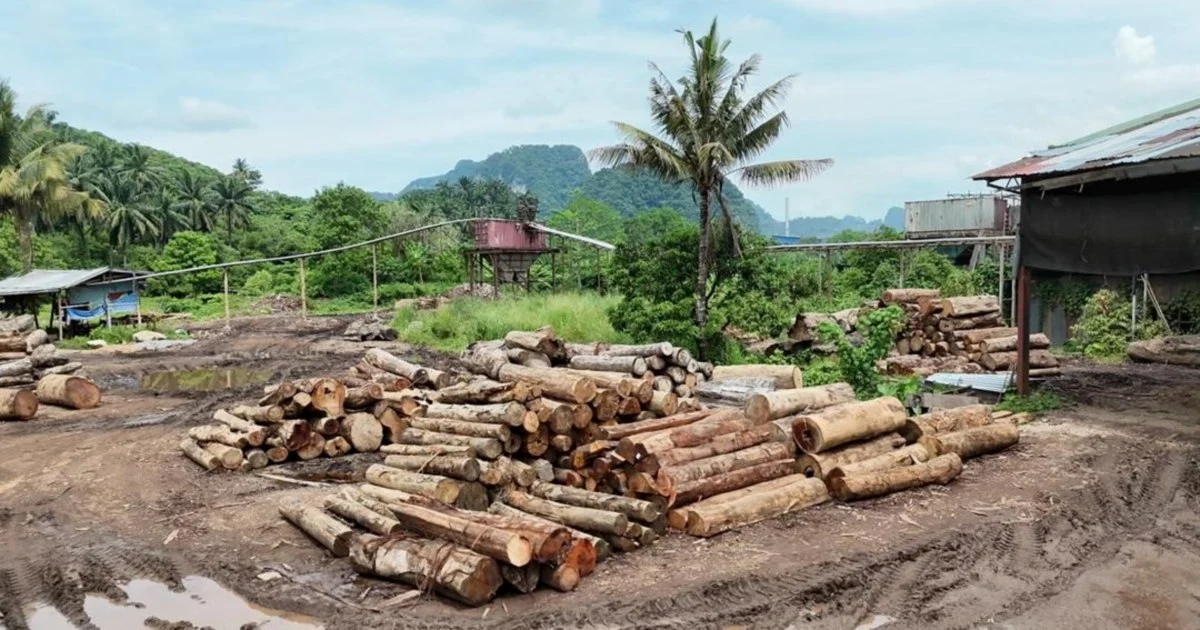
Authorities have moved decisively against illegal timber operations across the East Coast, detaining eleven suspects and recovering assets worth RM2.43 million in simultaneous raids conducted across Kelantan and Terengganu. Among those apprehended are four Indonesian nationals, underscoring the transnational dimension of Malaysia's ongoing battle against unauthorised logging and the trafficking of forest resources.
The coordinated enforcement action reflects intensifying efforts by forest and environmental authorities to clamp down on what remains a persistent and costly criminal activity in the region. The seizure of substantial quantities of timber and heavy machinery in a single operation demonstrates the scale at which illicit logging networks operate, often exploiting porous borders and taking advantage of gaps in enforcement capacity that extend across both Malaysian and Indonesian territories.
Kelantan and Terengganu have long been focal points for timber-related offences, given their vast forest reserves and geographic proximity to Indonesian forest areas where similar illegal activities flourish. The involvement of foreign nationals in these operations points to broader smuggling networks that typically involve local collaborators, corrupt officials, and organised trafficking routes that move stolen timber through processing facilities and ultimately into legitimate supply chains. Such clandestine operations not only deprive Malaysia of valuable natural resources but also distort markets, undermine legitimate timber producers, and accelerate forest degradation.
The recovery of machinery alongside timber stocks suggests authorities disrupted active processing or staging operations rather than simply intercepting transit shipments. Equipment used in illegal logging—ranging from chainsaw operators' tools to heavy machinery for extraction and transport—represents significant capital investment by criminal syndicates. Seizing this infrastructure strikes at operational capacity and increases the cost of replacing assets, thereby dampening enthusiasm among those financing such ventures.
The presence of four Indonesian nationals among the detainees raises important questions about cross-border cooperation and the effectiveness of bilateral enforcement mechanisms. Timber smuggling networks frequently utilise workers from neighbouring countries who accept lower wages and bear disproportionate criminal risk, while financiers and senior organisers remain insulated from direct apprehension. Intelligence sharing between Malaysian and Indonesian authorities has improved in recent years, yet coordination challenges persist, particularly when operations occur in remote border regions with limited surveillance infrastructure.
The RM2.43 million valuation attached to seized goods represents a significant dent in criminal proceeds from a single operation, though experts estimate this constitutes only a fraction of timber that successfully exits the region through informal channels. For context, Malaysia has historically lost billions of ringgit annually to forest crime, with estimates suggesting illegal logging accounts for a substantial portion of timber harvested from protected forests. When multiplied across numerous smaller undetected operations, the cumulative loss to the nation's natural capital becomes staggering.
Legitimate timber operations in Malaysia have repeatedly complained about unfair competition from illegal suppliers who avoid licensing fees, forest management costs, and environmental compliance expenditures. Such underground networks create market distortions that disadvantage law-abiding operators and depress prices, forcing consolidation and job losses within formal sectors. The raids therefore carry economic significance beyond merely recovering stolen property, as they theoretically level the playing field for compliant businesses.
The legal framework governing forest offences in Malaysia provides substantial penalties, including imprisonment and substantial fines, yet prosecution success rates and deterrent effect remain subjects of debate among environmental advocates. Many detected offenders emerge from correctional facilities and return to illegal activities, suggesting that punitive measures alone prove insufficient without complementary interventions addressing root economic drivers. Poverty, limited livelihood alternatives, and regional income disparities create vulnerability to recruitment by timber trafficking networks that offer immediate financial rewards.
Forward-looking enforcement strategy increasingly incorporates technology adoption, including satellite monitoring of forest cover changes, drone surveillance of remote areas, and biometric data collection facilitating transnational suspect identification. However, technological capabilities require sustained funding, specialised training, and inter-agency coordination that stretches thin budgets in federal and state governments. The East Coast states, whilst relatively well-resourced compared to some Malaysian jurisdictions, continue advocating for enhanced support.
International market demand for Malaysian timber, both legal and illicit, remains robust despite global sustainability commitments. Illegal shipments frequently find buyers through deliberately opaque supply chains involving re-labelling, false documentation, and port-level corruption. Addressing this dimension requires parallel interventions targeting end-market countries through supply chain due diligence requirements and consumer awareness campaigns emphasising timber legality verification.
The detention of eleven individuals and asset recovery represent tactical successes within a broader strategic struggle. Authorities acknowledge that resource constraints limit the proportion of illegal operations they can detect and interrupt, creating risk environments where actors perceive enforcement as sporadic rather than inevitable. Shifting this calculus requires sustained commitment, adequate resourcing, and sophisticated intelligence operations that few Malaysian agencies currently maintain at necessary scale.