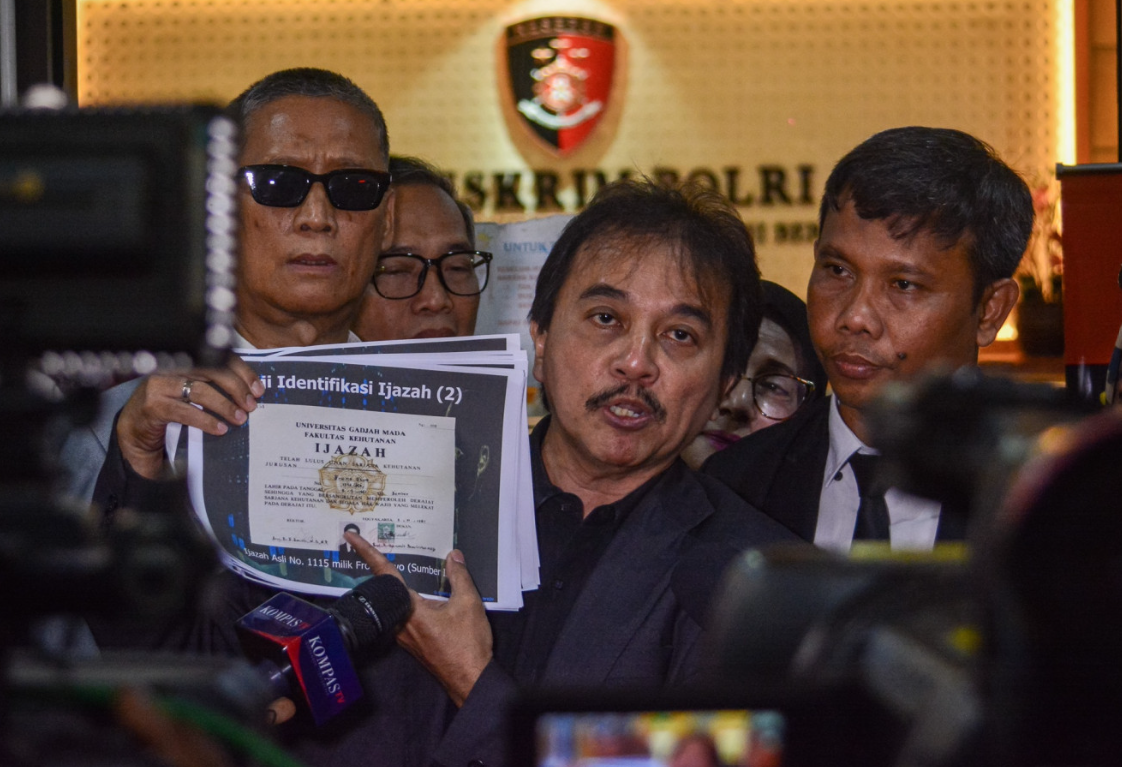
The Jakarta Police have taken former youth and sports minister Roy Suryo and health activist Tifauzia 'Tifa' Tyassuma into custody over allegations of defamation connected to disputed claims about former president Joko 'Jokowi' Widodo's academic credentials. Both suspects were apprehended at their homes on Friday morning, according to Roy's legal counsel Ahmad Khozinudin, marking a significant turn in a prolonged dispute that has dominated Indonesian political discourse for years.
The General Crimes Directorate of the Jakarta Police confirmed that the detention followed standard procedure as the investigation progresses toward the second stage, which involves transferring the case to the Jakarta Prosecutor's Office for further action. Investigation director Sr Comr Iman Imanuddin explained at a press conference that the measure was procedurally necessary to prevent administrative bottlenecks and ensure all required steps—including medical examinations and evidence verification—are completed before the handover to prosecutors occurs early in the week ahead.
Roy, who held ministerial rank during the presidency of Susilo Bambang Yudhoyono, and Tifa face additional accusations that they falsified electronic documents to substantiate their public assertions that Jokowi's diploma lacked authenticity. These charges carry weight under Indonesia's Electronic Information and Transactions (ITE) Law, legislation that permits sentences of up to six years imprisonment for convicted offenders. The severity of the potential penalty underscores how seriously authorities are treating the allegations of document manipulation alongside the core defamation charges.
This latest development represents a major intensification of a saga that first erupted on social media platforms in 2019, when questions about the legitimacy of Jokowi's university diploma began circulating among online communities and subsequently attracted broader public attention. Rather than fading from discourse, the matter evolved into a series of formal legal confrontations, including a civil lawsuit initiated in 2022 and subsequent police investigations and court proceedings that extended into 2025, demonstrating the persistent nature of the dispute across multiple institutional channels.
The controversy reached a critical juncture in May 2025 when Indonesia's National Police formally declared the diploma authentic following their investigation and subsequently closed their initial inquiry into forgery allegations. That closure appeared to settle the matter officially, yet the resolution proved temporary. During a case review conducted in July 2025, critics including Roy Suryo reiterated their objections to the police findings, suggesting that segment of public opinion remained unconvinced by the official determination and unwilling to accept the institutional verdict on the disputed credentials.
The detention of Roy and Tifa has triggered immediate legal pushback from their defence team. Lawyer Refly Harun publicly criticized the decision to hold his clients in custody, contending that the measure was disproportionate given that the case would not transfer to prosecutors until Monday and that both individuals had consistently appeared for all police summonses and maintained their reporting obligations. His challenge to the detention highlights fundamental tensions within the judicial process regarding appropriate pretrial measures and whether custodial detention serves legitimate investigative purposes or functions as punitive action before any conviction.
The defamation investigation has ensnared multiple parties throughout its progression. Police previously identified six additional individuals as suspects under the same ITE Law provisions, though authorities subsequently withdrew charges against three of them—Eggi Sudjana, Damai Hari Lubis and Rismon Sianipar—after mediation efforts achieved resolution. This pattern of selective prosecution and conditional withdrawal suggests authorities may be calibrating the investigation's scope based on cooperative attitudes from various defendants, a dynamic that raises questions about consistency in legal application.
For Malaysian observers, this episode illustrates how claims regarding political figures' credentials can metastasize into prolonged institutional conflicts with significant legal consequences. The case demonstrates how social media-originated allegations can transcend digital spaces and trigger formal criminal investigations, prosecutorial action, and potential imprisonment, establishing a cautionary precedent regarding the intersection of online speech, defamation law, and political controversy. The involvement of both institutional figures like Roy and civil society activists like Tifa indicates how credential disputes can mobilize diverse opponents united by suspicion of official accounts.
The broader implications extend to Southeast Asia's regulatory environment surrounding online speech and institutional accountability. Indonesia's ITE Law, similar to legislation in several neighbouring jurisdictions, provides mechanisms through which defamation allegations can result in criminal prosecution rather than remaining confined to civil remedies. This approach differs from some Western legal frameworks and creates particularly high stakes for individuals who publicly challenge official narratives, potentially deterring scrutiny of institutional claims about prominent figures' qualifications and backgrounds.

