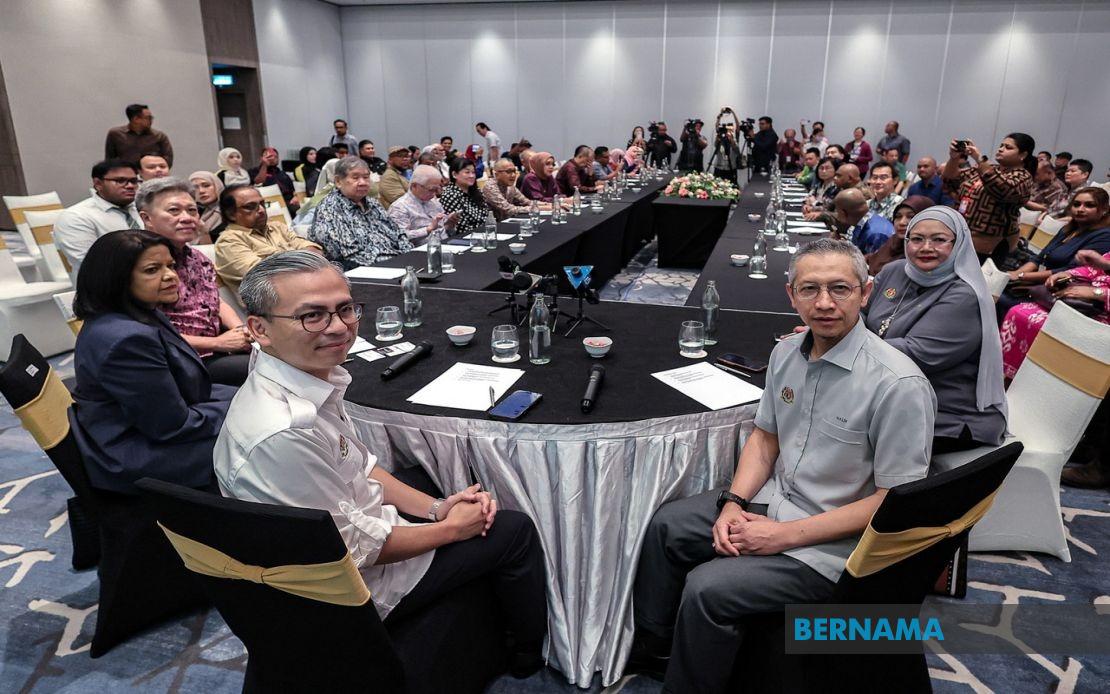
Communications Minister Datuk Fahmi Fadzil has proposed establishing a recurring retreat with media practitioners as a permanent feature of future National Journalists' Day (HAWANA) celebrations, signalling a commitment to structured dialogue between government and the fourth estate. Speaking during a press conference following a two-hour ministerial dialogue with media representatives at the HAWANA 2026 event in Butterworth, Fahmi outlined plans to formalize what has historically been ad hoc engagement into a systematic mechanism for addressing industry concerns.
The proposed retreat framework would leverage the expertise of the Malaysian Media Council (MMC), which Fahmi indicated would coordinate organizational logistics to ensure each session operates with professional standards and achieves its intended objectives. This delegation to MMC represents a strategic approach, positioning the independent council as a neutral facilitator between government interests and media industry voices—a role that underscores the importance both sectors attach to maintaining constructive relations despite periodic tensions.
Fahmi articulated the retreat's primary function as a comprehensive feedback mechanism, envisioning it as a venue where media practitioners can present views, strategic insights, and concrete proposals directly to government decision-makers. The scope extends beyond immediate operational concerns to encompass broader structural issues affecting journalism as a profession and media organizations as businesses. This inclusive framework acknowledges that sustainable journalism depends on addressing multiple dimensions simultaneously—from economic viability to regulatory clarity.
Among the substantive areas for potential discussion, Fahmi specifically identified policy matters and legislative amendments affecting the sector. The explicit mention of existing acts and laws signals openness to revisiting regulatory frameworks that may have become outdated or constraining. For Malaysian media operators navigating an increasingly complex regulatory environment—particularly regarding digital content, data protection, and platform liability—such an institutionalized review mechanism could prove valuable in advocating for rules that reflect contemporary industry realities.
The economic dimension emerged as a central preoccupation during the dialogue. Fahmi articulated a critical challenge confronting mainstream media organizations: the systematic extraction of content value by social media platforms without corresponding financial compensation to original creators or publishers. This phenomenon, whereby news content generated at significant cost flows freely into Facebook, TikTok, and other platforms that capture advertising revenue, has devastated media business models globally and created particular difficulties for Malaysian newsrooms dependent on advertising income. The minister's acknowledgment of this structural imbalance suggests potential government receptiveness to interventions—whether through regulation, negotiation, or support mechanisms.
Recognizing that platform engagement transcends any single government's authority, Fahmi indicated the Communications Ministry stands ready to facilitate and support discussions between MMC and major social media companies regarding fair compensation and content rights arrangements. This positioning reflects international precedent, notably Australia's News Media Bargaining Code and emerging European regulatory approaches, while acknowledging that Malaysian solutions must accommodate the region's competitive dynamics and platform market structures. The willingness to assist in brokering such arrangements demonstrates recognition that media sustainability increasingly depends on securing sustainable revenue from digital distribution channels.
The ministerial delegation attending the dialogue underscored governmental seriousness about the engagement. Communications Ministry secretary-general Datuk Abdul Halim Hamzah and deputy secretary-general (Strategic Communications and Creative Industry) Datuk Bahria Mohd Tamil provided bureaucratic heft and technical expertise. Their presence alongside Fahmi signalled this represented considered government policy rather than ceremonial attendance, suggesting that concrete follow-up mechanisms would likely track outcomes from subsequent retreat sessions.
The assembly of media leadership—including Malaysian National News Agency (Bernama) chairman Datuk Seri Wong Chun Wai, Bernama CEO and HAWANA 2026 working committee chair Datin Paduka Nur-ul Afida Kamaludin, and Malaysian Media Council chairman Tan Sri Nallini Pathmanathan—reflected the event's significance within journalism circles. The participation of senior management from established local media organizations indicated broad institutional investment in establishing this dialogue framework as a meaningful avenue for collective advocacy and collaborative problem-solving.
For Malaysian readers and media stakeholders, the proposal signals potential openness to addressing longstanding grievances about digital content monetization and regulatory clarity. The formalization of retreat sessions offers media practitioners predictable opportunities to present evidence-based arguments for policy adjustments, moving beyond reactive crisis management to proactive institutional redesign. This structural innovation may prove particularly valuable as the media sector continues navigating technological disruption, evolving audience consumption patterns, and competitive pressures from digital-native platforms.
The initiative also reflects broader regional trends, as Southeast Asian governments increasingly recognize journalism's role in democratic governance and social stability. By institutionalizing government-media dialogue, Malaysia positions itself among regional peers thoughtfully engaging with digital transformation challenges confronting legacy media institutions. The proposal acknowledges that sustainable journalism requires neither complete state protection nor unregulated market forces, but rather structured partnership addressing shared concerns about industry viability and institutional credibility.
Implementing these retreat sessions effectively will require demonstrating that government genuinely incorporates media feedback into policy formulation—a test of political will beyond initial rhetorical commitment. The credibility of this framework ultimately depends on observable outcomes: whether subsequent legislative amendments reflect media industry input, whether government advocacy with platforms produces tangible results, and whether the retreat mechanism evolves beyond ceremonial status into a consequential policymaking channel. Success would establish HAWANA retreats as significant events in Malaysia's media governance calendar.

